
Pax Silica seen boosting Northern Luzon property demand
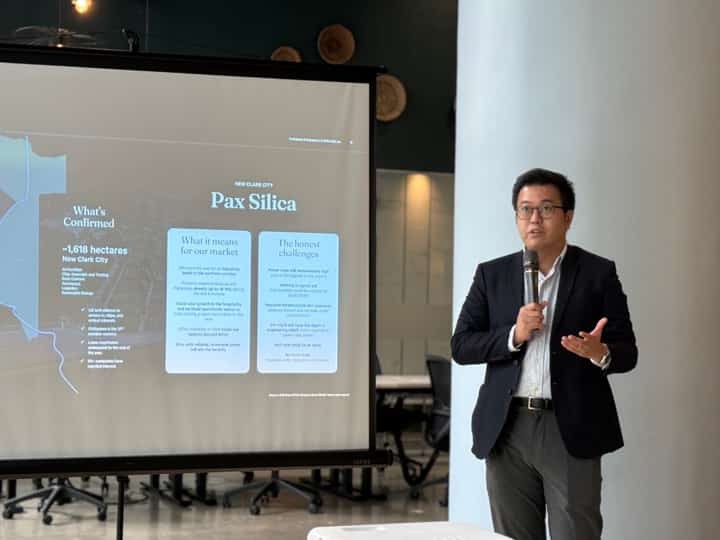
The Philippines’ inclusion in the proposed bilateral “Pax Silica” framework is expected to drive new demand for industrial and commercial real estate in Northern Luzon, particularly in New Clark City, according to property consultancy CBRE.
Speaking at a press briefing Tuesday, CBRE Head of Industrials and Logistics Michael Glindro said the initiative could also help the Philippines catch up with regional peers as the artificial intelligence (AI) industry expands.
“It’s not just going to be manufacturing-developed, but that corridor, of course, residential, commercial, the likes. Again, [the government has] to create that support system, that ecosystem, to help encourage these companies to locate here,” he said.
The Pax Silica framework covers a 1,618-hectare master-planned area in New Tarlac identified for potential industrial and high-technology developments. Proposed investment areas include advanced semiconductor assembly, hyperscale data centers, aerospace, logistics and renewable energy infrastructure.
CBRE said more than 50 multinational technology companies have expressed interest in the project, with lease negotiations expected to begin in late 2026. The consultancy expects the main impact on real estate demand to emerge between 2028 and 2030 as site preparation progresses.
Anticipated investments are already putting upward pressure on property values in surrounding areas. CBRE said land values in Bulacan and Pampanga have risen by 15 to 16 percent over the past six months, driven by expectations for infrastructure development and industrial spillover.
Glindro said, however, that the scale and timing of real estate activity will depend heavily on infrastructure readiness, particularly power and water.
“I think some of the gaps in our infrastructure could be addressed by the ease of doing this sustainably. Because increasing the capacity of power requires a lot of permits, a lot of approvals,” he said.
He noted that relatively high electricity tariffs and the availability of specialized engineering talent could affect the ability of semiconductor and data center projects to fully utilize their sites.
“That’s where our gap is in terms of our peers in ASEAN, where we really have to build that capability, that capacity, in terms of power, in terms of water, to make this excellent initiative come to fruition,” he said.
CBRE also stressed the need to develop the workforce needed to support higher-value industries.
“We really need to build that capability in terms of a harder infrastructure on the talent side. Because, again, it’s a wasted opportunity if Filipinos aren’t able to work for these companies,” Glindro said.
He added that the Philippines could attract overseas Filipino workers currently employed by similar companies while training future workers for higher-value jobs.
President Ferdinand Marcos Jr. and government officials have said Pax Silica could help move the Philippines into higher-value manufacturing and technology, while business groups have broadly supported the project while calling for greater Filipino participation and value capture.
Critics, however, have raised concerns over dependence on foreign capital and US strategic interests, as well as potential pressures on land, water, agriculture and Indigenous communities.