
Antiquated responses
While the mayors may be doing what they can to de-clog the drainage systems and put up floodwalls and barriers, there’s the suspicion that they’re not really seeing the bigger picture.

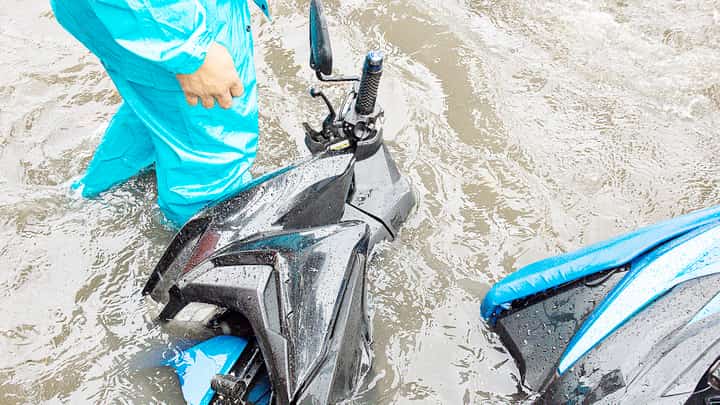
Following the sudden heavy rain in the metro on Friday morning, some roads are already in knee-deep floods especially along Kalaw in Manila.
Photograph by john carlo magallon FOR DAILY TRIBUNE
Unmistakable last week in the wake of the Metro Manila-wide floods triggered by the enhanced southwest monsoon was the vocal criticism of local political bosses.
Typical, for instance, was a viral social media post, also reported by mainstream media, of a Parañaque City resident who complained that despite the Olivarez dynasty’s firm grip on power, the resident “still can’t feel any improvements” due to the perennial flooding in the city.
After also complaining about the shortcomings in the city’s rescue of her stranded family, the resident then pleaded with Mayor Edwin L. Olivarez: “We need transparency, we need accountability.”
Olivarez, as I write this, has yet to give a substantive response to the resident’s complaints.
But whatever Olivarez’s response — and for that matter the response of any other Metro Manila mayor to last week’s floods in their respective areas — the fact is the complaints exposed the mayors as being as antiquated as the drainage systems.
While the mayors may be doing what they can to de-clog the drainage systems and put up floodwalls and barriers, there’s the suspicion that they’re not really seeing the bigger picture.
And the bigger picture would show that their current approach to flood control is “so fundamentally misaligned with the metro’s geography and lifestyle that flooding would persist,” pointed out flood control expert Dr. Ramon Abracosa.
“The solution requires not just better maintenance, but a redesign of the urban landscape,” Abracosa told a news outfit last year.
In short, what Abracosa was saying was that the local leaders lacked imagination, creativity, and foresight, and they should be made to realize that the old solutions were useless in the face of Metro Manila’s fundamentally changed urban conditions.
While it’s true that Metro Manila will still flood as it is basically “a sprawling, low-lying urban flood plain,” experts agree that geographic disadvantages, and even lately the climate crisis, aren’t the main problems.
Instead, it’s “decades of poor urban planning, catastrophic waste mismanagement and deep-seated institutional failures that transformed a natural occurrence into a recurring national disaster,” Abracosa said.
Nonetheless, experts say Metro Manila’s flooding is fixable if only local leaders keep abreast of modern solutions to flooding.
Disaster resilience expert Butch Meily, for instance, believes effective flood control will rely on nature-based solutions, particularly in redirecting or catching floodwaters.
“Copenhagen has sponge parks that use green infrastructure like sunken lawns and underground tanks to manage excess water. Reforesting is important too,” says Meily.
Trees, Meily adds, hold water and reduce the chance of flooding. Part of what makes Metro Manila so susceptible to flooding, he said, is because so many farms and green spaces had been turned into subdivisions and into concrete infrastructure.
Of course, it’s impossible to reverse urbanization. But it’s important that the government and land developers upgrade the old drainage systems into systems that would not only prevent floods but also store floodwaters.
“BGC is a good example. It never floods because back when BGC was built, then DPWH Secretary Babes Singson constructed a five-story cistern that captures the water runoff when it rains. LGUs can build rain catchment areas or similar cisterns to capture excess water which can then be used during the dry season,” Meily said.
Similarly, the Quezon City government is now actively building underground cisterns beneath basketball courts and sunken flood lawns. The other clueless Metro Manila mayors should undertake similar worthwhile initiatives, too.