
Angeles City promotes its lanterns and ‘lubenas’
‘Ing Lubenas ning Pasku 2024’ saw the participation of eight barangays, carrying their attractive, hand-crafted lanterns, the outstanding feature of the Kapampangan folk Catholic tradition held during the Christmas season


The heritage district of Angeles City in Pampanga, scintillated with more than a hundred Christmas lanterns as residents and devotees of eight barangays gathered together for “Ing Lubenas ning Pasku 2024” on 14 December.
Held before the actual start of lubenas, the special event was a showcase of creativity of local communities as manifested in eye-catching, hand-crafted lanterns, the outstanding feature of the folk Catholic tradition held during the Christmas season.
The lanterns were all lit up, powered by portable generators or batteries, adding to their attractiveness, as the barangay groups participated in a procession in the early evening, after a Mass, starting at the Holy Rosary Parish Church, going around the city proper, and ending at the church, where a program followed.
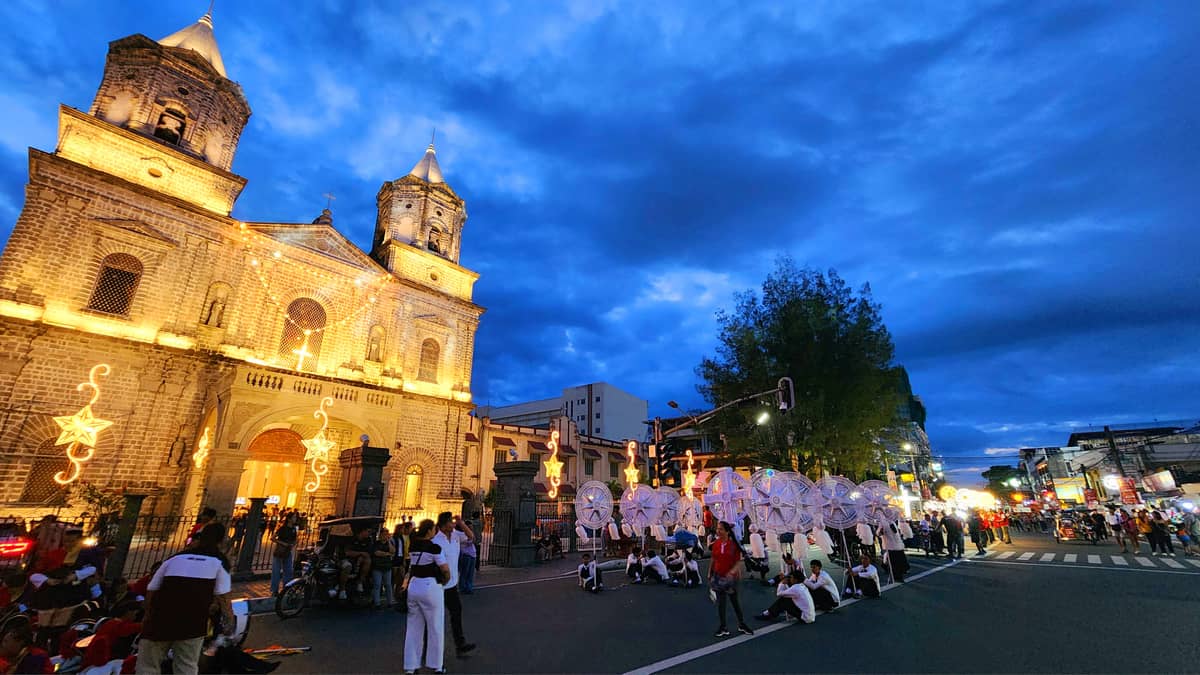
Participants from different barangays getting ready for the procession in front of the Holy Rosary Parish Church in Angeles City’s heritage district.
Photographs by Roel Hoang Manipon for the Daily Tribune
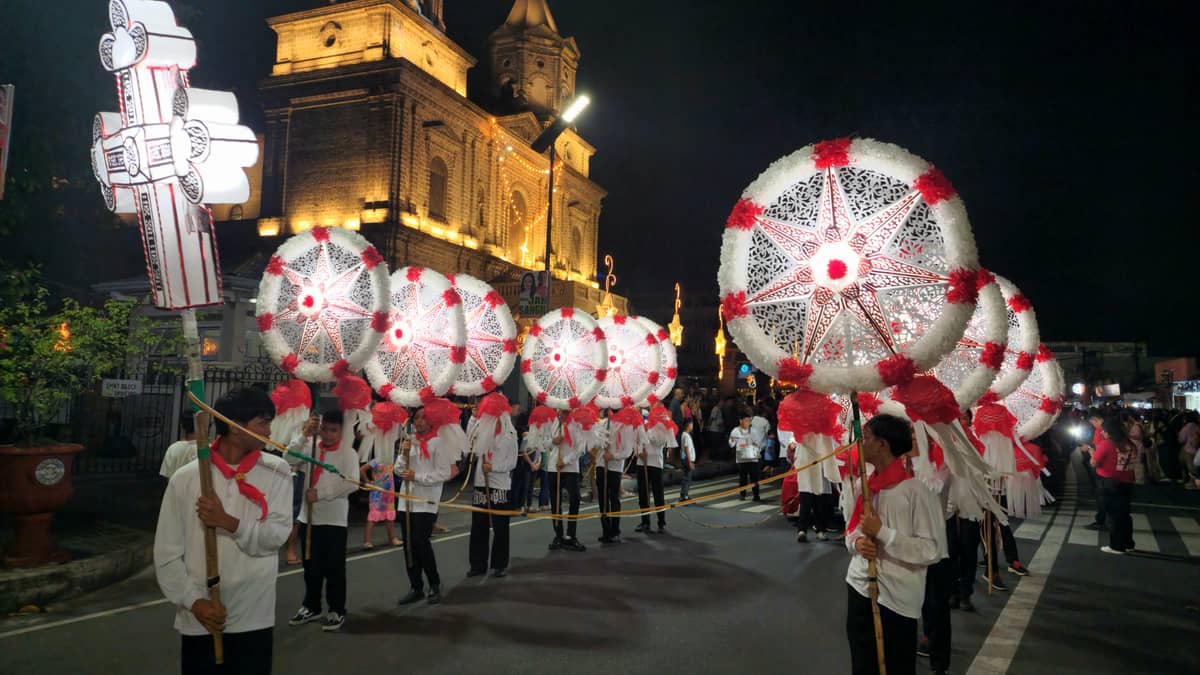
Eye-catching lanterns marked the lubenas presentation.
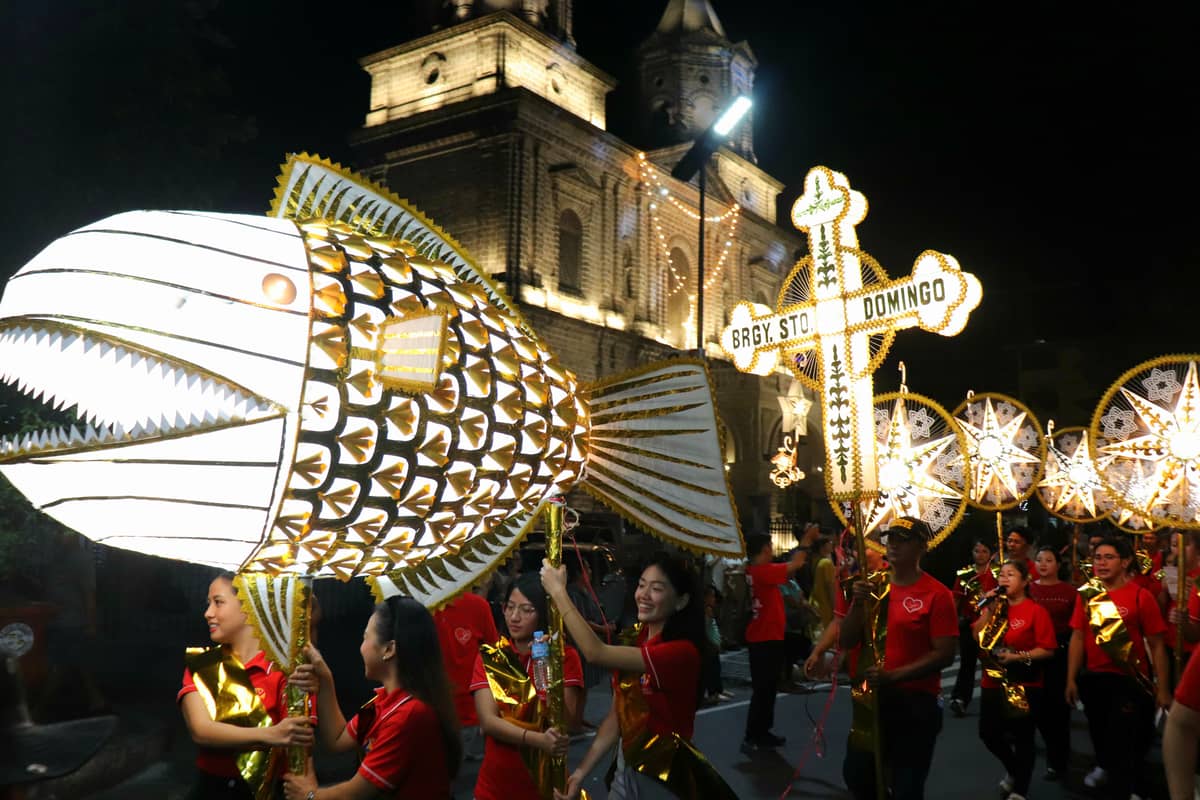
A lantern in the shape of a fish, a symbol for Jesus Christ, of the barangay of Santo Domingo.
The barangay of Cutcut showcased the lanterns created by the family of 66-year-old Renato “Rene” Feliciano Calma, who is considered one of the city’s master lantern makers and who has introduced several ways of making the lanterns, including the intricate designs. While not coming from a lantern-making family, he is able to pass on the knowledge and skill to his children, to his own community and even to other towns, such as Magalang, where the lubenas was recently revived.
Most of these lanterns were made of paper with bamboo frames, but other materials were also used such as dried vines in the lanterns of Santa Teresita.
Aside from Cutcut and Santa Teresita, the other participating barangays were Malabanias, Pampang, Pandan, Pulungbulu, Santo Domingo and Santo Rosario.
Organized by the city government and attended by local politicians, the program was held on Santo Entierro Street, in front of the church, the city’s only cobblestone road that is still existing, where each barangay presented a three- to five-minute performance, including elements of dance, singing, street drama and formation making using the lanterns to the accompaniment of an official song, composed for the event.
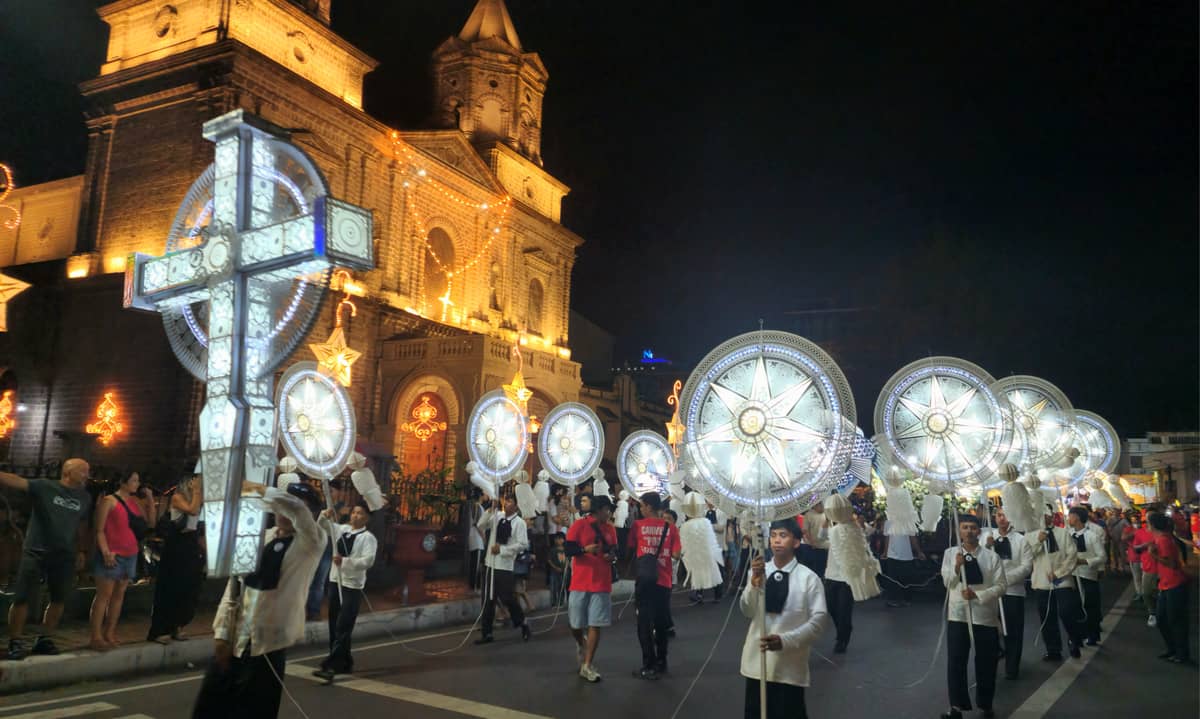
The lubenas participants from the barangay of Cutcut.
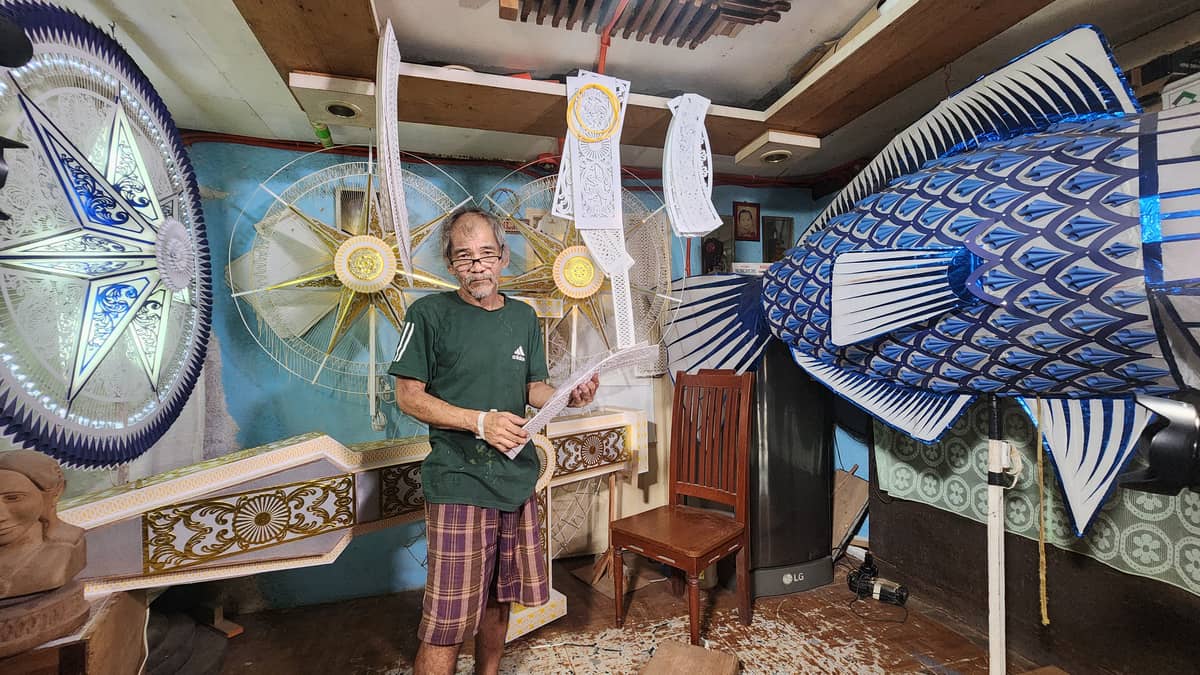
Renato F. Calma, widely regarded as one of the best lantern makers of Angeles City, in his home in the barangay of Cutcut.
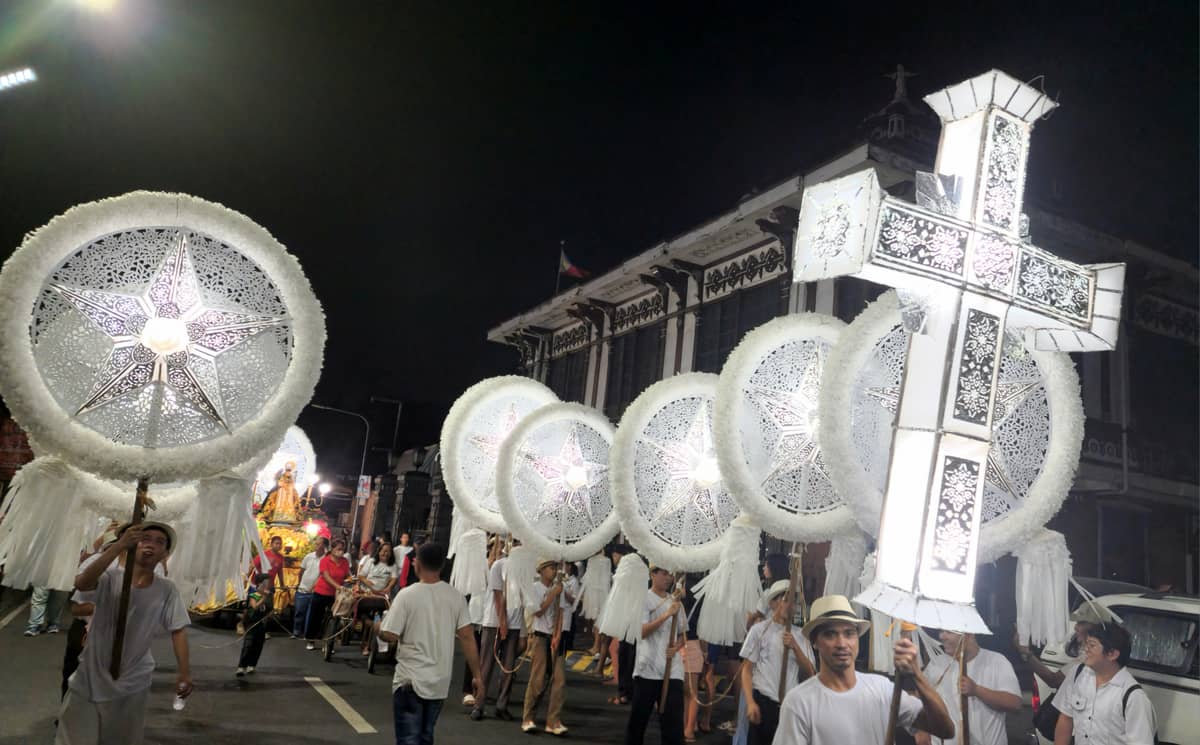
A cross-shaped lantern leads the procession.
This part of the event is a very recent addition, more along the line of recently created touristic festivals that pervade the country. A similar event is being held in the neighboring town of Magalang, where a lantern design competition is also held. The Angeles City event did not involve a formal competition, but each participating barangay received a cash incentive of P100,000 and certificate of recognition from the city government, led by its Mayor, Carmelo “Pogi” Lazatin, Jr. to the delight of participants. These are efforts in reinvigorating a dying practice that is traditionally sustained by local parishes and communities.
Held for nine days before Christmas, from 16 to 24 December, in Pampanga and Tarlac, the lubenas is a devotional procession on the eve of the simbang bengi, the dawn Mass. It is a small, usually solemn, event within a barangay and centered around its chapel. It is believed that the ritual started in early 1800s, and the name was derived from the word novena.
The devotees held lit candles during the novena procession with coverings to prevent the wind from blowing out the flames. Eventually, lanterns were used, first lit by candles and then by gas lamps and electric light bulbs. The lanterns evolved from simple forms into star-shaped ones with designs. The Kapampangans are believed to have pioneered the Christmas lanterns, which have become an icon of Filipino Christmas celebration.
The present format of the lubenas includes a cross-shaped lantern leading the procession, followed by people holding poles with 12 lanterns, arranged in two rows, representing the 12 apostles of Jesus Christ. Sometimes, a lantern in the shape a fish, a symbol of Jesus Christ, is included, usually placed behind the 12 lanterns. At the tail of the procession is the image of the barangay’s patron saint, carried on the shoulder or mounted on a carroza, bedecked with flowers and illumined by a giant lantern behind it, and singers singing “Dios te Salve.”
The final lubenas on the eve of Christmas, in which processions of different barangays converge at the church, is called maitinis in some towns, preceding the Misa de Gallo.
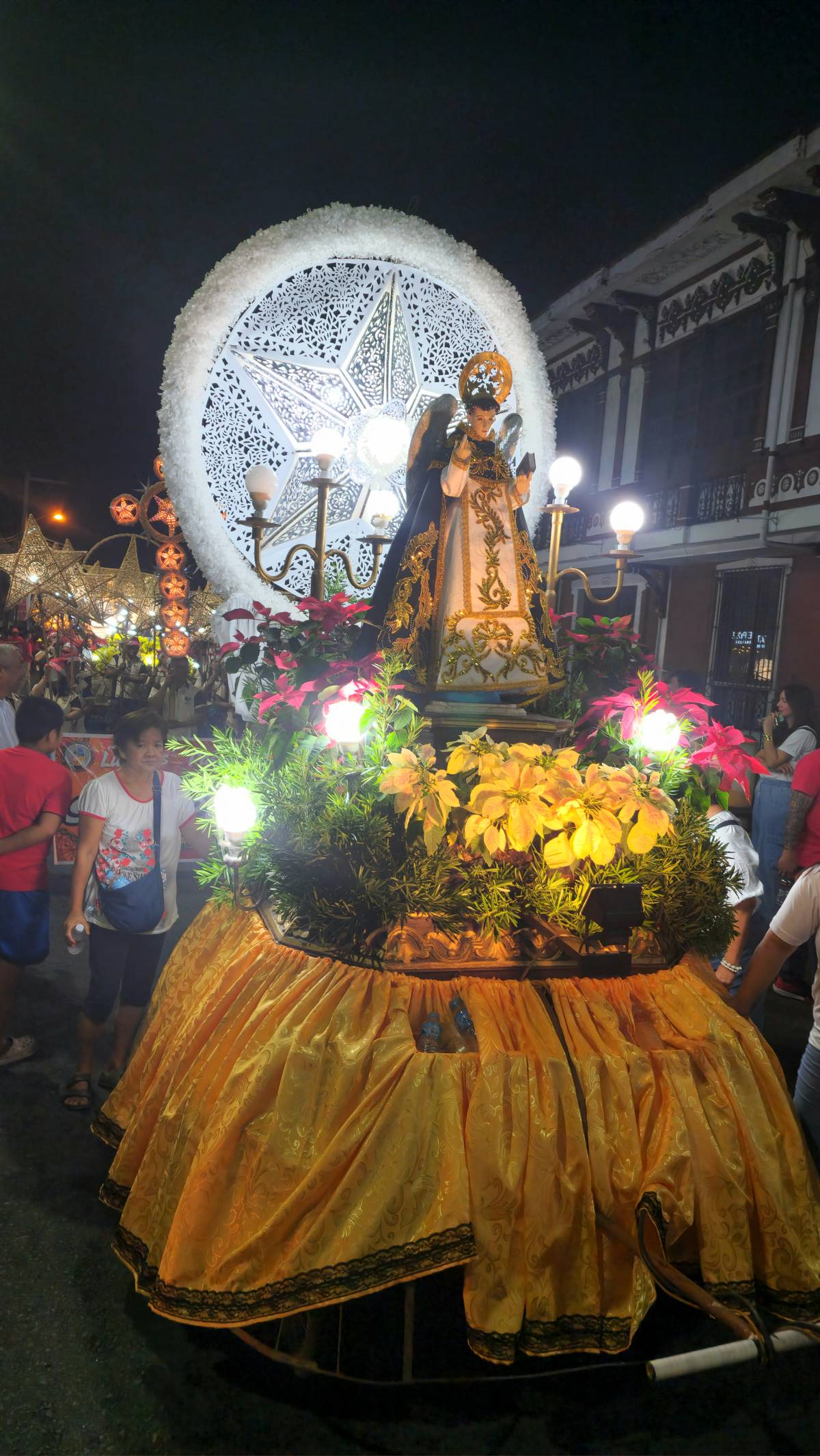
The carroza carrying the barangay’s patron saint is part of the lubenas procession.
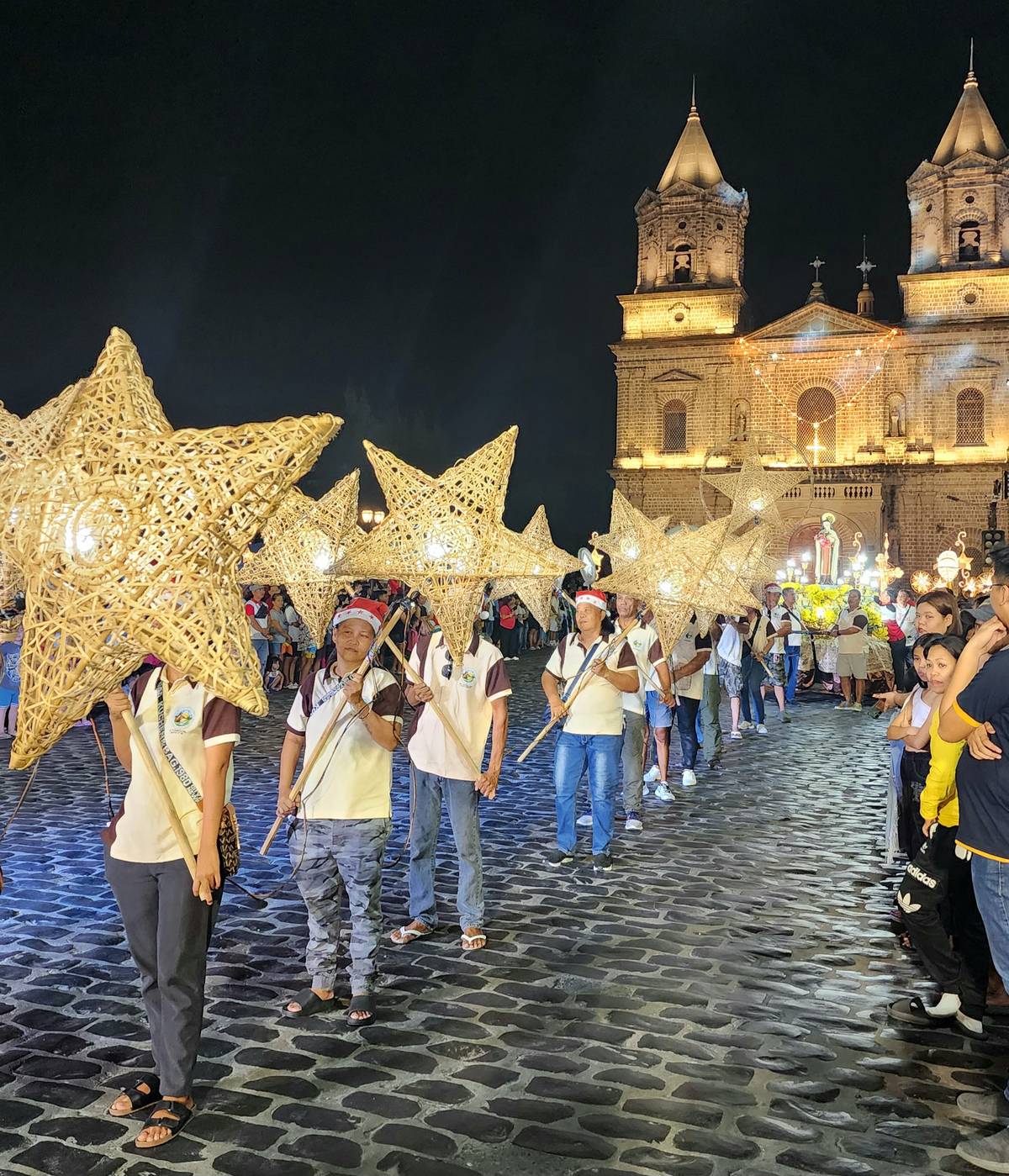
The lanterns of Santa Teresita were made of dried vines.
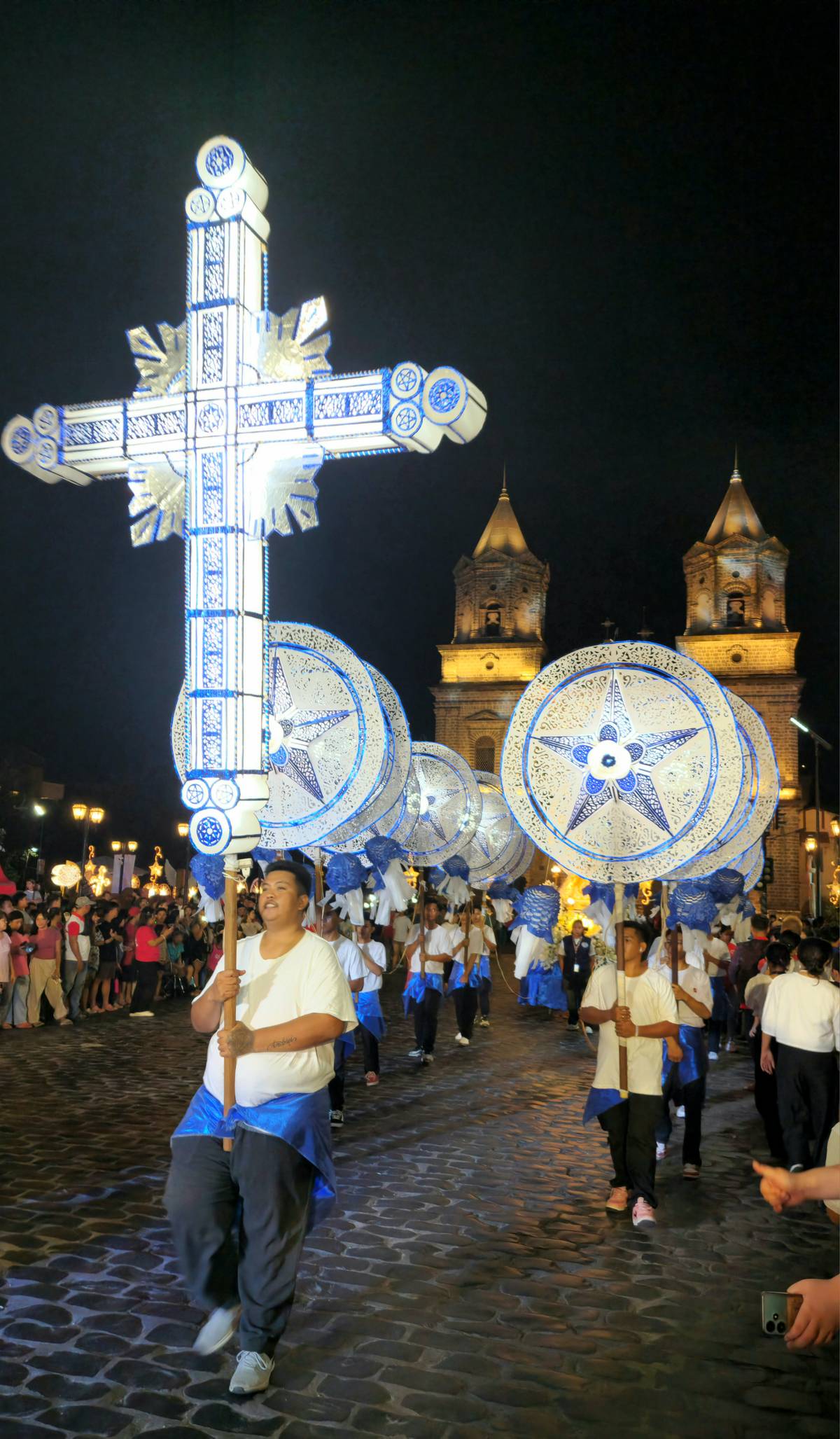
The lubenas contingent from the barangay of Santo Rosario.
The lubenas was held in several towns around the foot of Mount Arayat in Pampanga, and in some towns in the neighboring province of Tarlac, but the practice has diminished over the years. Presently, the lubenas is said to be held in Bacolor, Angeles City, San Fernando City, Mabalacat, Mexico, Magalang, Santa Ana and Santo Tomas in Pampanga; and Bamban, Capas and Concepcion in Tarlac. More research are needed to document local history and lore, the extent of present practice and the variations in some barangays.
In recent years, renewed interest on the lubenas led to recent endeavors and additions that not only aim at revival and continuity but also are geared towards making it a touristic holiday attraction. Such efforts may bring with it the danger of the tradition becoming pro forma, practiced in form but with diminished or altered meanings among participants; of people mistaking the showcase as heritage, displacing actual practice as in the cases of big festivals in the country; and the practice becoming reliant on local government and thus vulnerable to the fickleness of political landscape.
Traditions, which are products of evolution, will continue to evolve. It is hoped that stakeholders and bearers of cultural heritage may find ways to appropriately safeguard and continue traditions, mindful of its important role in culture, creativity, community and the spirit of the season.