
VIVO X90 SERIES
Vivo was bold enough to say that the configuration would even do better than the ‘public’ version of the Sony IMX989 sensor.
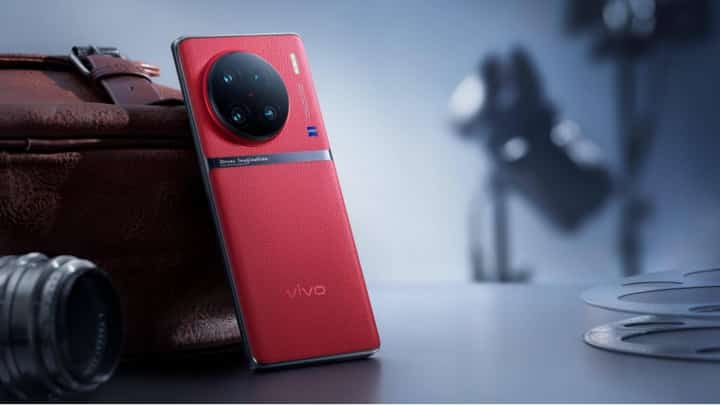
CAN the Vivo X90 be a go-to camera for professionals when dedicated cameras are kept in the bag? You be the judge of that. | PHOTOGRAPH COURTESY OF VIVO
Zeiss has been an iconic brand when it comes to camera lenses, thus it can be said that Vivo has stepped up its smartphone camera offerings when it started partnering with the company.
Not that pre-Zeiss Vivo phones were slouches in the imaging department; far from it.
With the Vivo X90 series as the result of a collaboration with Zeiss, product manager Dian Zhao had every reason to see their being used "not only as the main camera for most users," but also as a "spare camera for professional photographers."
Kind of a lofty aspiration, we'd dare say for all Vivo X90 series lenses now equipped with an upgraded version of the Zeiss T coating to eliminate flare and ghosting.
"The ultra-low distortion ultra-wide-angle camera combined with Zeiss miniaturization and bokeh enables tilt-shift photography," read Vivo's press material for the X90.

NIGHT photography is a strength of the Zeiss-equipped Vivo X90 Pro+. | PHOTOGRAPH COURTESY OF VIVO
More light
According to Vivo, it uses low-dispersion and high-transparency glass in its one-inch camera lens that, combined with a wide f/1.75 aperture, lets 24 percent more light into the lens.
Vivo was bold enough to say that the configuration would even do better than the "public" version of the Sony IMX989 sensor.
Aside from the lens, Vivo said it also reconstructed and upgraded the hardware of the Vivo V2 chip for video shooting "superpowers" capable of 4K "ultra-sensitive night vision" based on computational photography.
"A super HDR function was added to the Vivo V2 chip, which can restore what the human eye sees even in complex light sources and awesome backlight scenes," Vivo said.
"At the same time, Vivo developed 'zero delays' capture and a new generation of motion detection algorithms with shutter delays as low as 30ms."
Dolby vision
Vivo's X90 Pro+ supports 14bit SuperRaw and video log mode function which can provide professional photographers with better material quality for post-processing.
The Pro+ can also realize the complete experience of Dolby Vision video ecology, bringing the full workflow of Dolby Vision from shooting to display up to editing.
In addition to the main sensor, the Vivo X90 Pro sports not just one. but two telephoto cameras. The first one is a 50mm prime master camera that can capture the portrait with vivid color and delicate skin texture.
The 90mm medium telephoto portrait lens is good at creating spatial compression and bokeh, especially suitable for humanistic street photography.