
Smart farming technologies aid sustainable agriculture
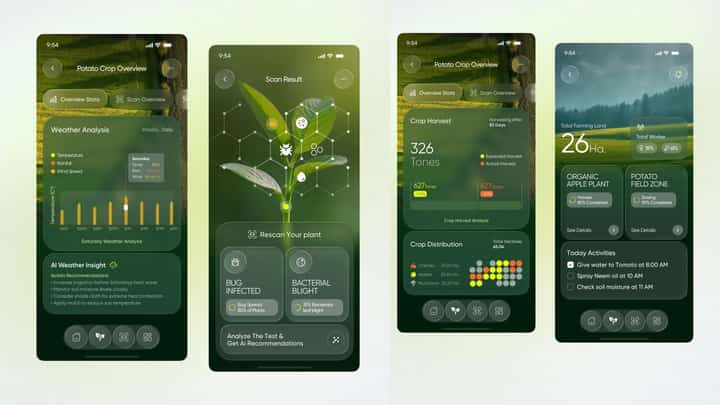
Through the application, farmers can identify potential crop diseases and nutrient deficiencies by simply pointing their devices at a plant.
One of the stakeholders lending support to local farmers in overcoming the challenges of the very strong El Niño is a smart farming technology innovator.
Tracing its roots as a research and development consultancy group in 2010, Yovel East Research & Development Inc. has since evolved into a farm management and production company and fertilizer manufacturer that support sustainable farming in Quezon, Tarlac and Davao provinces.
The company provides farmers with seeds, fertilizers and facilities such as its own rice processing center and drying facilities, alongside modern smart farming technologies. More than 15,000 farmers in Southern and Central Luzon are currently using Yovel East solutions to cultivate rice, corn and high-value crops.
The company also manages a 70-hectare lakatan banana farm in Davao City and is considered one of the biggest durian growers in the Davao Region.
During the National Multi-Stakeholder Consultation on El Niño Impact and Response organized by the University of the Philippines and Natural Resources Development Corporation (NRDC), Yovel East CEO James Amparo presented the company’s proposed role in the National El Niño Response Action Matrix. Together with the Department of Agriculture, Harbest Agribusiness Corporation, local government units, and state universities and colleges, it seeks to match producers with drought-adapted seeds, farm inputs, soil guidance, extension services and equipment.

Yovel East CEO James Amparo presents his company’s proposed role and assistance in farm production and inputs during the National Multi-Stakeholder Consultation on El Niño Impact and Response at UP Diliman, Quezon City on 21 November.
Photograph courtesy of Yovel East
Yovel East developed its own application to help farmers monitor crop production through a farm calendar that provides guidance on agricultural activities, including watering, fertilizer application, and other crop management practices.
“We know when our farmers plant, when they harvest, and we also have a farm calendar that we developed, wherein farmers will encode the crops they intend to plant, and it will automatically provide a schedule indicating when they should water their crops and apply fertilizers,” Amparo said referring to Yovel East’s proprietary Farm Plan App’s functions.
Developed five years ago, the Farm Plan App continues to receive updates to improve its features. Through the application, farmers can identify potential crop diseases and nutrient deficiencies by simply pointing their devices at a plant.
“Also included in the app is weather monitoring, so everything is integrated into the app to monitor our farmers,” Amparo said.
The company developed the application to establish a “certain system” for efficiently managing and providing updates to the thousands of farmers under its supervision, according to Amparo.
Through the application, Yovel East can directly send bulk messages to farmers, providing updates and guidance on implementing its farming technologies and adopting recommended agricultural practices.
Farmers who are not technologically savvy can still benefit from the app. Amparo told the Daily Tribune that the company teaches their children how to use it.
Yovel East requires farmers to submit weekly photos of their farms through the app to allow the company to monitor crop development and farm conditions.
Other features of the app include a farm calendar, where farmers can encode the varieties of crops they intend to plant and it will automatically generate a schedule of planting and the number of days needed for crop growth.
Amparo stressed that the company’s engineers and farm managers have technical expertise in identifying problems during farm inspections, adding that their knowledge and experience are being integrated into the application to replicate their monitoring capabilities.
Yovel East has identified areas expected to be heavily affected by the El Niño to prepare its farmers for the anticipated impacts in February and March 2027.
“We told our farmers that you need to save water,” Amparo said to Daily Tribune.
“We [also] told them that they can shift to other crops. If it is rice, we discourage them from planting rice for a certain period because the water is not enough,” he added.
“We already did it. It is only January and February knowing the forecast, it is going to be a Super El Niño,” he said.