
First Ligtas Pinoy evacuation center breaks ground
Built outside high-risk geohazard zones, the centers are engineered to withstand typhoon winds of at least 300 kilometers per hour and earthquakes up to magnitude 8.0. Each facility will feature sleeping quarters, kitchens, health and isolation stations, waste management systems, rainwater harvesting, standby power, storage spaces and livestock provisions.
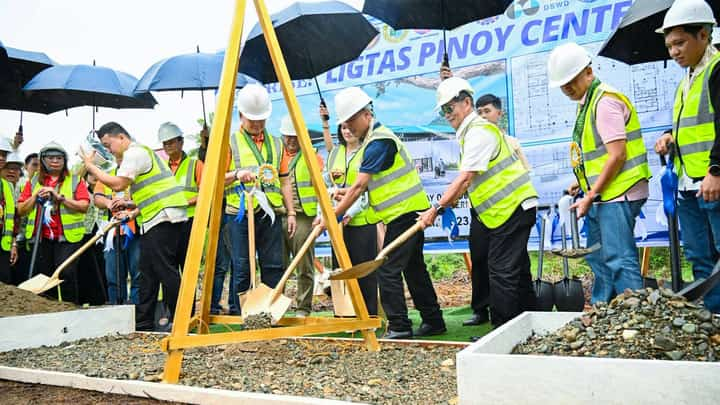
LOCAL officials from the Can-avid municipality, Office of Civil Defense and provincial government of Eastern Samar launch the groundbreaking of Can-avid’s Ligtas Pinoy Center, marking the first such evacuation facility in Eastern Visayas. Once finished, the hub will shelter residents during typhoons and emergencies.
Photograph courtesy of Local Government Unit of Can-avid/facebook
BORONGAN CITY — The coastal town of Can-avid in Eastern Samar is set to become the first municipality in Eastern Visayas to house a permanent Ligtas Pinoy Center following a groundbreaking ceremony.
Office of Civil Defense Administrator and Undersecretary Harold N. Cabreros and Eastern Samar Governor Ralph Vincent Evardone led the ceremony marking the start of construction for the disaster-resilient evacuation facility.
Evardone described the project as a critical investment in the safety, security and future of residents in Can-avid and across the province.
He also thanked President Ferdinand Marcos Jr. and the civil defense office for selecting the town as the region’s initial recipient, calling the facility a vital disaster preparedness structure.
Under Republic Act 12076, or the Ligtas Pinoy Centers Act, which Marcos signed into law on 6 December 2024, permanent disaster-resilient evacuation centers are mandated in every city and municipality nationwide to provide safe shelters for displaced families and reduce the reliance on public schools during emergencies.
Built outside high-risk geohazard zones, the centers are engineered to withstand typhoon winds of at least 300 kilometers per hour and earthquakes up to magnitude 8.0. Each facility will feature sleeping quarters, kitchens, health and isolation stations, waste management systems, rainwater harvesting, standby power, storage spaces and livestock provisions.
Due to limited national budget allocations for 2026, the Office of Civil Defense selected only one local government unit per region for the initial wave of construction.