
Diplomatic (and economic) quandary
A weak peso does not care whether the oil comes from Qatar or Texas. It cares only that the bill is in dollars, and the bill would grow larger with every additional American import.
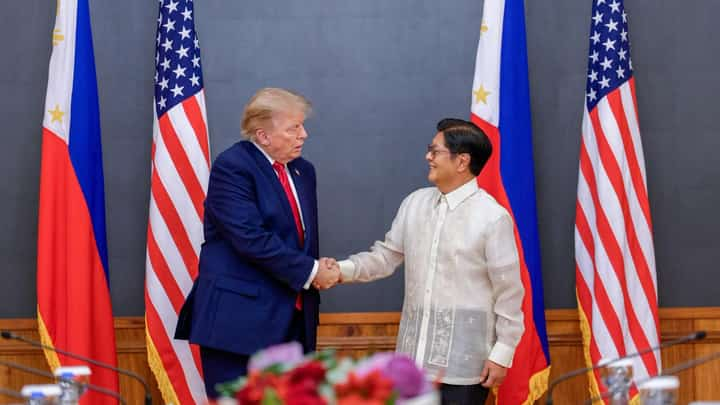
There is a particular kind of economic illiteracy that masquerades as strategic vision. It is the belief that a trade deal announced at a podium — any deal, with any partner — is inherently good for a country, simply because a president shook hands and smiled for the world.
Filipinos are being asked to accept precisely this fiction: that sourcing 100 percent of its agricultural and energy requirements from the United States, a proposition Trump announced to the world after his ASEAN visit but which Marcos has neither confirmed nor denied with any clarity, is a victory.
Fertilizers are imported, gasoline is imported, so when the peso slides, everything becomes more expensive. With inflation at 7.8 percent in October — the highest in Southeast Asia — and transport costs surging, every peso of depreciation translates into higher prices for rice, fuel and electricity. A weak peso against the US dollar is not a mere theoretical concern. It is the difficult math of daily survival.
Imagine if the Philippines commits to sourcing its food and energy exclusively from the United States. Every shipment of American soybeans, every tanker of American liquefied natural gas, every container of American wheat will be priced in dollars.
The peso’s weakness does not disappear because the supplier changes. It intensifies because the country would be deepening its dependence on dollar-denominated imports at precisely the moment its currency is least able to bear the strain.
A weak peso does not care whether the oil comes from Qatar or Texas. It cares only that the bill is in dollars, and the bill would grow larger with every additional American import.
The proposition that the Philippines should stop buying Middle Eastern energy because those countries “will not come to the aid of the Philippines in case of an attack by China” is a rhetorical flourish that collapses under the weight of simple geography and economics.
What such framing reveals is the underlying logic of the deal: energy is not being offered as a commercial proposition but as a security guarantee, and security guarantees are never free.
The implication is unmistakable. Buy American energy, buy American food, and perhaps the American shield will hold. But that protection is far removed from the daily struggles of ordinary Filipinos who worry about the price of rice, the cost of electricity and whether they can afford fuel for another day.
More importantly, once the Philippines imports more, produces less and sends more dollars abroad, the trade deficit widens. The currency weakens further. The purchasing power of every Filipino household erodes further. This is not diversification. It is the substitution of one form of dependence for another, deeper and more expensive one — but sold as liberation from Middle Eastern oil.
The most telling aspect of this entire affair is what Marcos has refused to say. He has neither denied nor confirmed the 100-percent figure. Instead, he has retreated into the language of “diversification” and “opening markets,” as though the distinction between a backup supplier and an exclusive supplier was a matter of semantics rather than a difference that could worsen our already dire, stagnant economy.
Even the Department of Foreign Affairs admitted that it was “taken aback” by the announcement, having supposedly discussed only tariffs in preparatory meetings. But what really transpired? The government has no answer because, again, it has found itself stuck between a rock and a hard place.