
No ‘pork, insertions’ in House-version of the budget — Garcia
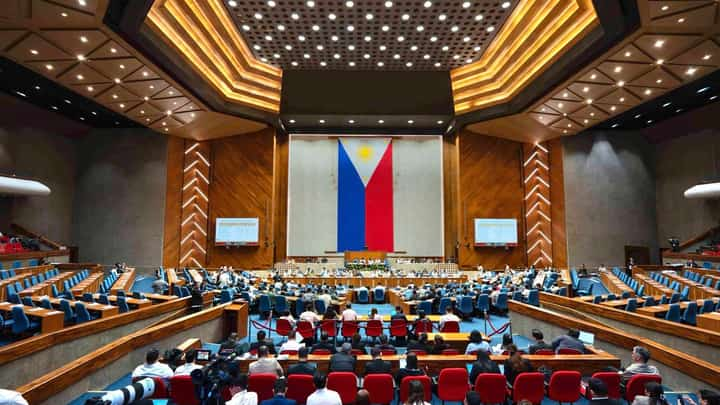
Bataan 2nd District Rep. Albert “Abet” Garcia debunked claims from critics of the approved version of the 2027 budget at the House of Representatives, stressing that there were no “pork” and “insertions” and that all amendments made to the executive’s budget underwent proper process.
“The House maintains its position that there is no ‘pork’ in the [House General Appropriations Bill], I’m not a lawyer but if we look at the definition of pork in the Supreme Court decision, it is the post enactment intervention,” Garcia explained in a press briefing on Monday.
“We’re still in the budget process, so there is no post enactment intervention, after that we have no more say as the implementation of the budget rests with the executive,” he added.
The lawmaker further stated that there were likewise no insertion in the budget, noting that all changes made to the budget were validated by concerned government agencies and had passed requirements through a “bottom-up budgeting.”
Such an approach meant that funding was allocated based on the unique needs of individuals in various communities around the country.
“Those are legitimate amendments so that our budget can be more responsive to the challenges and needs of our country and our people. So, we will maintain that position as we enter the bicam,” he said.
Garcia said that they had conducted a meeting with Senate leadership, particularly Senate President Sherwin “Win” Gatchalian and Senate Finance Committee Chairperson Senator JV Ejercito, to discuss scheduling and concerns ahead of the bicameral conference committee in December.
There, he said that it was explained that the amendments made by the lower chamber were with basis in light of previous sentiments from senators which had questioned the changes that were made between the National Expenditure Program and the HGAB.
Budget not ‘politicized’
Another issue that Garcia addressed was with respect to notions that the allocations per district of the House were politicized, particularly with reports coming out from civil society organizations that a large portion of the budget was earmarked for members of the majority.
The lawmaker, for his part, emphasized that the role of the lower chamber was to fight for the needs of their respective districts and should be treated as a form of representation rather than merely being a form of “politicking” between its members.
“Needs based, politics is not the emphasis but the needs of the barangays, municipals, provinces...I don’t think you can call that political if these are what they need,” Garcia expressed.
On Saturday, 7 November, ACT Teachers Partylist Rep. Antonio Tinio had released a list wherein it was indicated that the top five congressional districts that ranked with the highest allocations were the districts of House leaders.
Confronted with the findings, Garcia said that it was important to understand that the budget that was provided to each district was severely cut as compared to previous years in accordance with reforms that were made at the lower chamber.
He pointed out that due to the lower allocations, congressmen were only able to cater to a fraction of the needs of their constituents.
“So, we need to see the reality. First, the allocation per district was dropped a lot...second, being the leader of the House, of course, it is the expectation for them is higher not only in their locality but outside of their province because they are national figures,” Garcia said.
“Because of the reduced allocation, I would imagine they receive 1000 times more requests, and what they accommodate is only a fraction of those,” he stressed.
Garcia likewise expressed that he saw no problem in such allocations for as long as the projects did address the problems and challenges that were facing the community, such as through the establishment of road networks.
Based on a schedule recently from the House of Representatives, the bicam is set to conduct its deliberations between 10 to 12 December, with the ratification of its report expected to extend into 22 December.
The Senate, for its part, formally began its plenary deliberations into its own version of the fiscal blueprint, with the anticipated approval of the same to be made on 7 December.