
Arayat by ultralight
On a clear, cloudless morning, typical of over 300 other ideal flying days in a year in Pampanga, I took to the air from a solitary, grassy airstrip delimited by protracted stalks of palay. It necessitated the entire 600-meter length to reach lift-off velocity, and right before runway ran out, our ultralight commenced its glide skywards, lifted by air deflected under its wings. After initially skimming trees and rooftops, we settled at a cruising altitude of 100 meters.
The mechanized glider was of the open-frame variety and there was no cockpit — not even a shell with perspex windows. I was strapped to one of the two seats fixed to a wire and tube skeleton, powered by a small motor attached to the frame’s rear. This was the newest class of “weightless” aircraft, designed for flying hobbyists. The pilot beside me was no amateur, but a professional who took people into the air for a nominal charge.
Only a helmet and a pair of protective goggles shielded me from the strong wind that tugged at my cheeks and distorted my face. A headset covered my ears, providing both partial proof against the motor’s roar and a receiver and microphone for communication between the pilot and myself. Lost in the heavy static, however, his words were indiscernible. I opted to keep quiet.
We felt a wayward gust slam the craft. The ultralight fielded the impact with decidedly more aplomb than I; it recovered quickly from the buffet, but my anxiety lingered longer. The ride was bumpy and it took a bit of getting used to. Earlier, as the flyer rolled out of the hangar, the first thing I noticed, wingspan notwithstanding, was how small it was. Set against formidable, insidious, airborne forces, its fragility became more pronounced. The ground crew had offered assurances that, if the motor failed, we would merely glide into a landing. Oh, then I have nothing to worry about, I thought wryly.
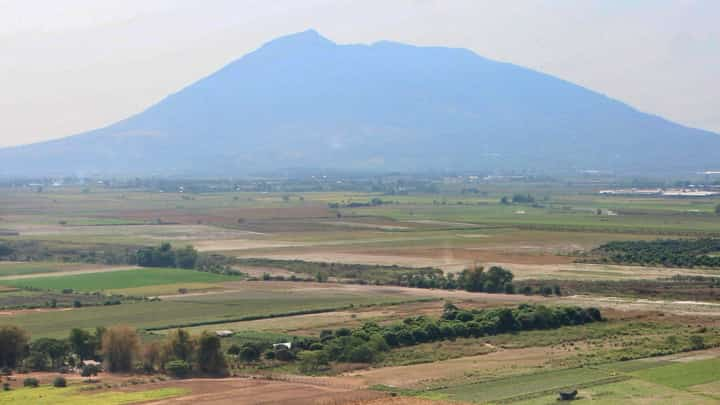
Gauges, navigational instruments and a joystick were in front of me but it was the panorama that dominated the view. The scenery, although subdued, was fascinating. There were no deep valleys, impossible gorges and jagged zeniths, only flat, endless plains running an expanse. It was only the misplaced Mt. Arayat that disrupted — and accentuated — the geography’s uniformity. The flight plan entailed encircling the solitary mountain. Momentarily heading south, we maintained a steady course that kept the 1,030-meter mountain perpetually on our left. We would be facing west upon return to the airfield and completion of the circuit.
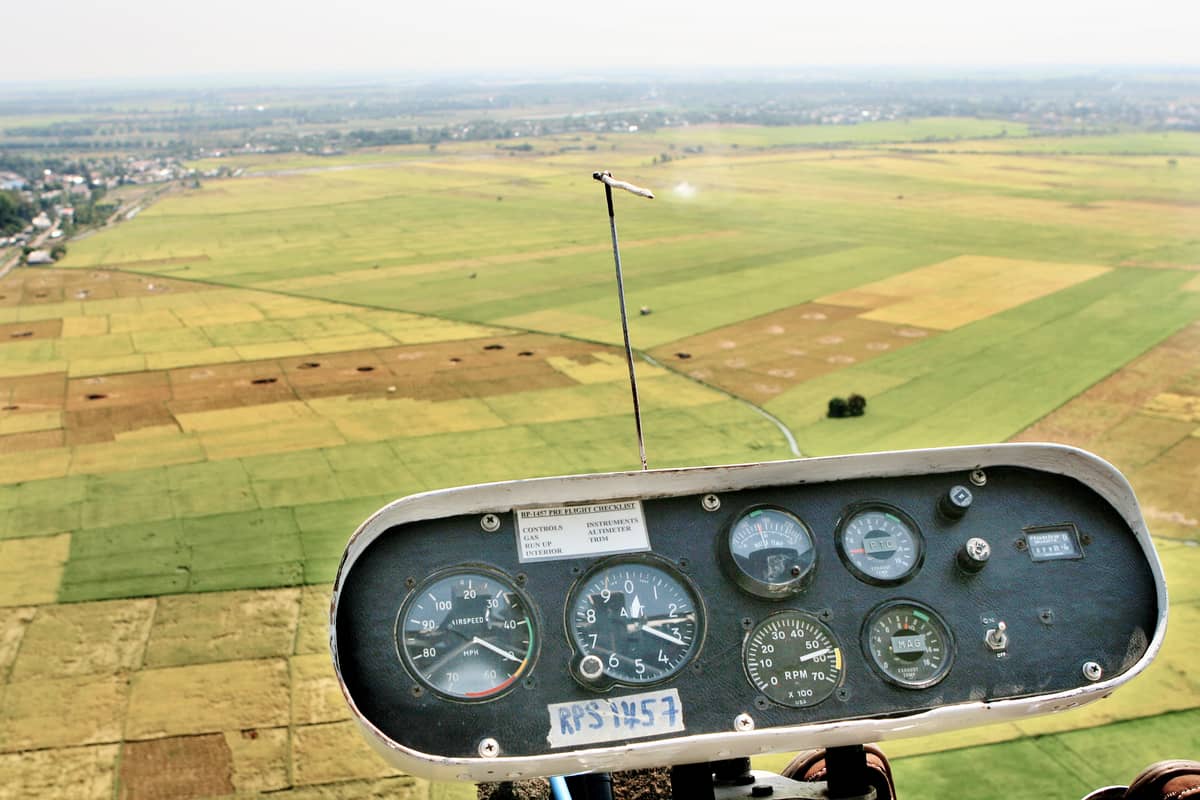
GAUGES, navigational instruments and a joystick were in front of me but it was the panorama that dominated the view.
Photographs by gabriel malvar for daily tribune
Mt. Arayat is a familiar sight, always admired from afar, mostly from the concrete span of the Northern Luzon Expressway (NLEX). Haze obscures much of the massif’s majesty, which appears as a bluish-grey mass. Now viewed up close and from the air, slopes with thick vegetation and heavy forest emerged. Formerly, when Pampanga was a hotbed of armed resistance, Hukbalahap (a WWII underground movement) and NPA (rebel communist) guerrillas hid under its dense cover. During my present reconnaissance however, I detected only a solo trekker plodding one of the numerous logging trails to the peak.
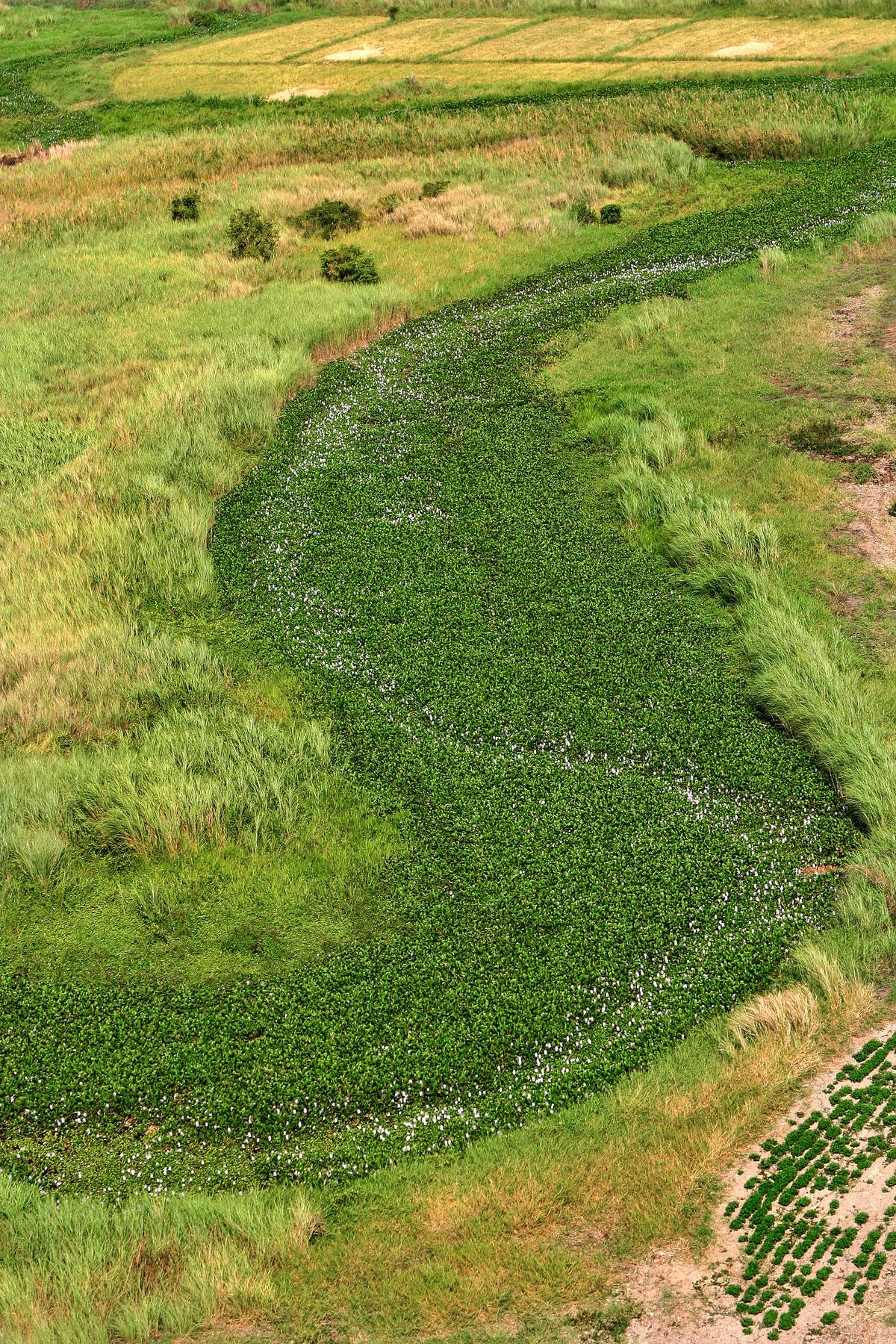
SLIPPERY slope.
Photographs by gabriel malvar for daily tribune
Peering down, I beheld waves of earthy colors, albeit of a limited spectrum; only different shades of green, yellow and brown prevailed in this natural canvas. Patterns emerged: fields in glorious, crossword-puzzle array, and enormous, coarse mats woven from strands of dry cogon. What the level terrain lacked in shape and contour, it augmented in hue, texture and arrangement.
Several themes were constant: crisscrossing roads, winding waterways and bending tributaries, lonesome huts in a sea of rice paddies and graceful patches of grass and earth where the occasional livestock grazed.
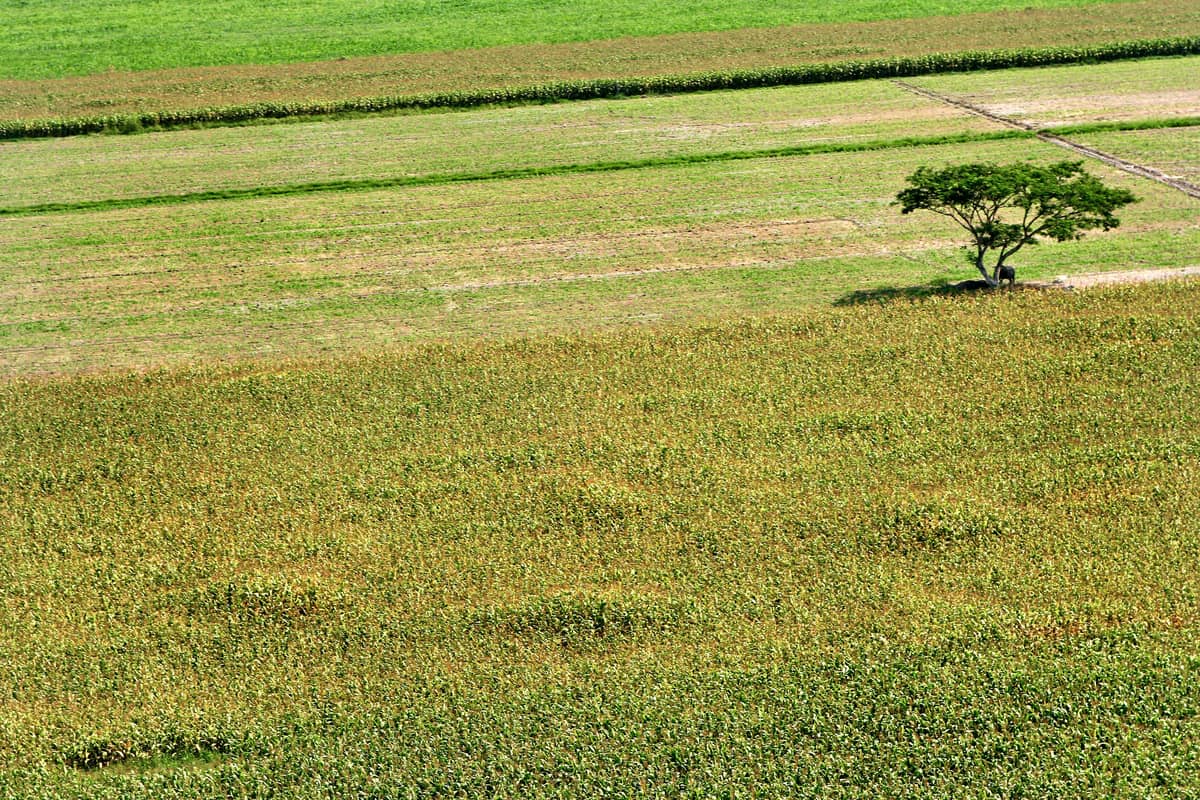
LONESOME tree in an endless field.
Photographs by gabriel malvar for daily tribune
Lahar flows slithered across the plains. Contained within riverbanks that had swelled to accommodate its surge, the lahar had become a grim memento of Mt. Pinatubo’s violent eruption over three decades ago. The mud and ash came from the volcano’s slopes in distant Zambales, washed down by powerful rains. I realized how devastating its ferocity had been, leveling everything before it, indiscriminately burying towns and lives beneath heavy pyroclastic cover. From my aerial vantage point, the slew looked crystallized and settled in the basin; more likely it still shifted underneath the surface. It was striking for its otherworldly appearance and for the rage it epitomized.
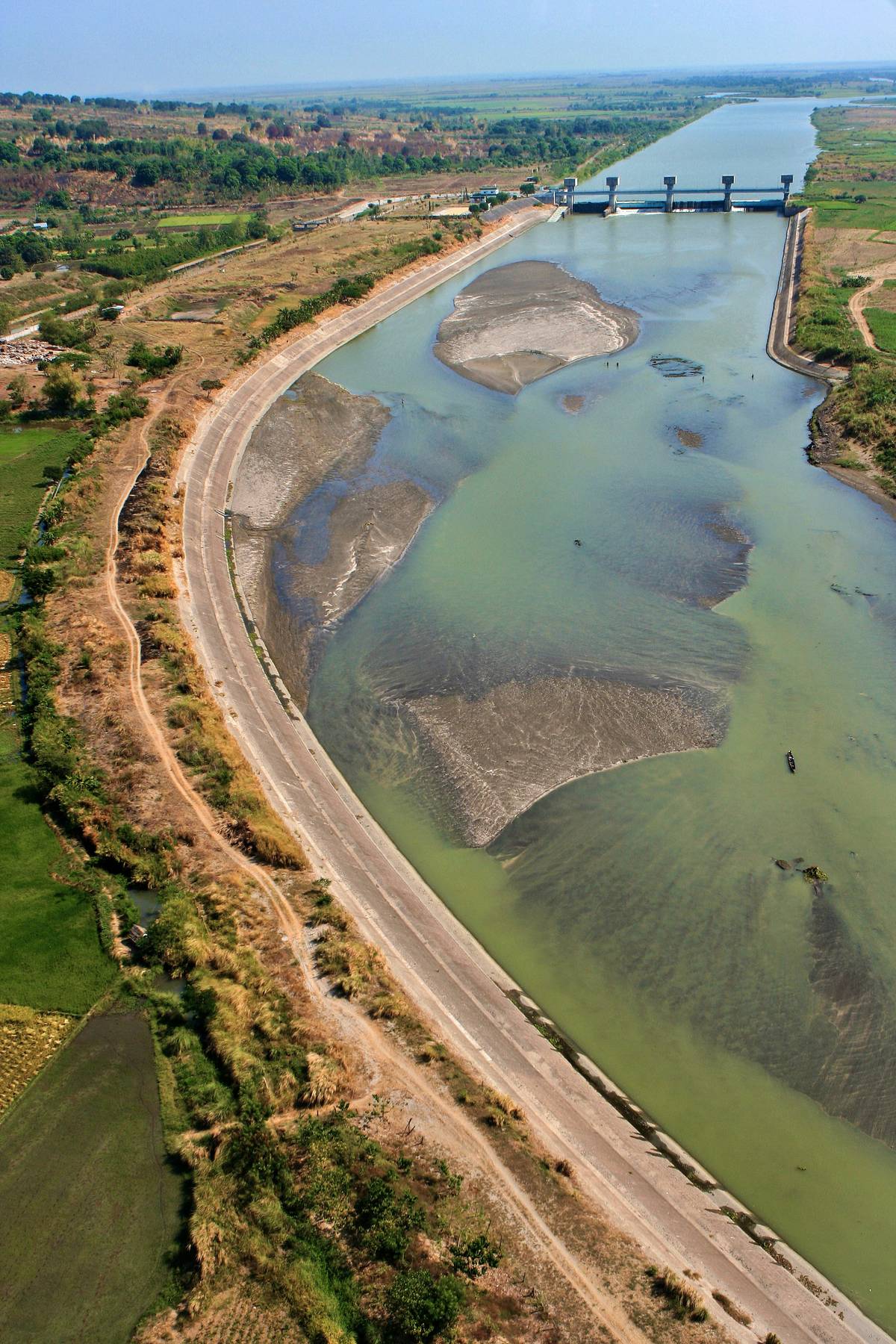
A STEADY flow.
Photographs by gabriel malvar for daily tribune
Always in tight formation, birds swooped down and breezed across these living marshes. Numbering in the thousands, a variety of migratory birds assembled in the sanctuaries of Candaba, flying all the way from China and Australia to escape the harsh chill of winter. It was a strange feeling to outsoar birds in flight for a change. I wasn’t sure, though, if rising above them qualified as ornithology.
Suddenly, an ominous shadow was cast on the ground below, too large to be a bird’s. For a moment I was spooked that it was some sort of aerial monstrosity, but glancing over my shoulder, I was relieved that it was just another ultralight above us. A much faster aircraft, it dove, then came alongside us briefly. Pulling away, it soared towards the sun, a daring Icarus fully in control. I recalled meeting a maverick that morning, who mentioned putting on a show for my camera. There are those who really let go and discard inhibitions. I envied his command of the glider, and his daring even more.
Suspended in mid-air, I recalled Gibran. “How could I have seen you save from great height or a great distance? How can one be indeed near unless he be far?” The higher perspective was uncommon, beyond proximity and detached from everything else. On the ground, one was part of the scenario; things were understood in relation to one’s involved perspective. This was God’s view perhaps — observing, distant enough to preclude obstruction or interference, but close enough to maintain a connection and some involvement.
A straight, narrow band then emerged from the terrain. The wind had receded, easing our approach to the landing strip. As we coasted down on a steady drift, the scenery accelerated past me. Moving closer to my points of reference, I at last grasped how fast we had been traveling in the air.
Perspective alters perceptions. Now that I was back on terra firma, bound by gravity and sensibility, all lofty thoughts were cast aside. Though enriched by a diverse point of view, I remain ultimately grounded.