
Brazil’s cue
The news report was straightforward. But substitute ‘barring the return of the Duterte family to power’ and Brazil’s recent elections become strikingly relevant here.
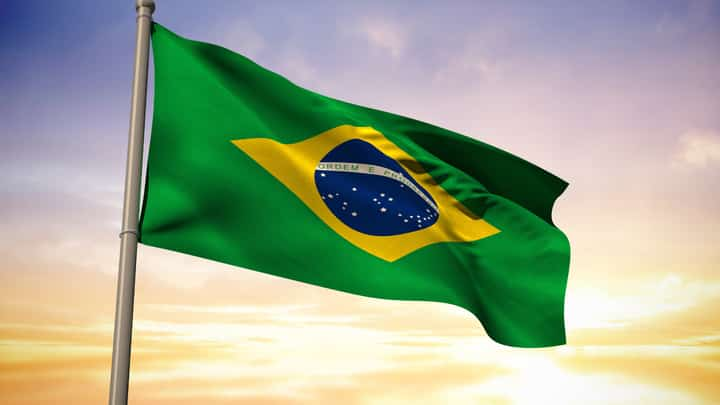
For many Filipinos, faraway Brazil’s recent elections and the strategies employed elicited little more than a puzzled ho-hum.
But the electoral tactics used to hack Brazil’s notoriously polarized social media bubbles and help aging leftist underdog Lula da Silva win an unprecedented fourth term are being scrutinized by wily election strategists and tacticians worldwide.
I also believe many shadowy Filipino electoral strategists and tacticians, all quietly gearing up for the consequential 2028 national elections, are similarly as piqued.
And it’s all because Lula’s “victory rested, to a significant degree, on social media. A tidal wave of messages, memes, and reels flooded Brazil, a chronically online nation of 214 million, and rallied millions of Brazilians with diverging views around a single task: barring the return of the Bolsonaro family to power,” said a news report.
The news report was straightforward. But substitute “barring the return of the Duterte family to power,” and Brazil’s recent elections become strikingly relevant here.
Anyway, Lula’s victory over Flavio Bolsonaro ruined Brazil’s toxic social media through a head-spinning counter-algorithmic digital strategy.
Nicknamed “cultural Janonismo,” it was a digital strategy that explicitly demanded ignoring an opponent’s social media posts and coordinating mass actions like that of Lula’s supporters wearing Brazil’s national football team’s yellow jersey so as to re-hijack a symbol that Brazilian rightists hijacked 10 years ago.
“Janonismo” is so named as it is the handiwork of Brazilian congressman and Lula ally Andre Janones, whose call to arms to Lula “fandoms” or “Lula’s Army” in the WhatsApp channel triggered unprecedented frenzy.
“Lula’s Army” grew from three million to over 10 million followers during the elections, with “General” Janones in the lead, shouting instructions while circulating viral videos and hashtags.
“Every command delivered to the soldiers of Lula’s Army — new hashtags, a post to engage, a live feed to watch — Janones would follow up in capital letters with an order: ‘EXPLODE,’” said a news report.
By all accounts, Janones’handiwork was a remarkable 21st-century electoral campaign, a push in the digital realm that spilled out into the real world, igniting mass demonstrations and an election victory.
But it was Janones’ insights in sidestepping attention-driven social media algorithms that is gathering close attention and study.
Interestingly, the first thing Janones took down was social media’s algorithms and its proclivity for propagating false narratives and provocative rhetoric, or our familiar “fake news,” churned out by hyper-partisan socmed bubbles.
Conventional wisdom and conservative political communication gurus suggest “fake news” is better bested by immediate fact-checking, public criticism and debate.
But Janones proved these common approaches often backfire.
“According to Janones, reacting to opposing content feeds the very mechanism that drives its reach: the recommendation algorithm,” said a perceptive African communications expert.
In fact, added the observer, Janones made the case that “the most effective tactic is neither public confrontation nor blocking accounts, but deliberate and total disengagement.”
It is so since “modern social media platforms treat engagement as the primary signal of value. Algorithms generally do not distinguish between positive and negative sentiment; an angry comment, a quote tweet debunking a claim, or an extended dwell time on a video are all recorded as interest, directly boosting the post’s visibility across user feeds.”
Janones’ strategic point, in short, is to starve an offensive post of valuable attention by immediately scrolling past it, never liking, sharing, quoting, replying to, or commenting on it.
This winning strategy of algorithmic deprioritization currently preoccupies election strategists.