
Finding the middle ground: DMCI Homes and the push for affordable homeownership
DMCI, partnering with Pag-IBIG Fund, will identify eligible projects and eligible units, and ready-for-occupancy properties while offering preferential pricing and other incentives to qualified Pag-IBIG members. Pag-IBIG will provide loans, loans counseling, and application assistance.
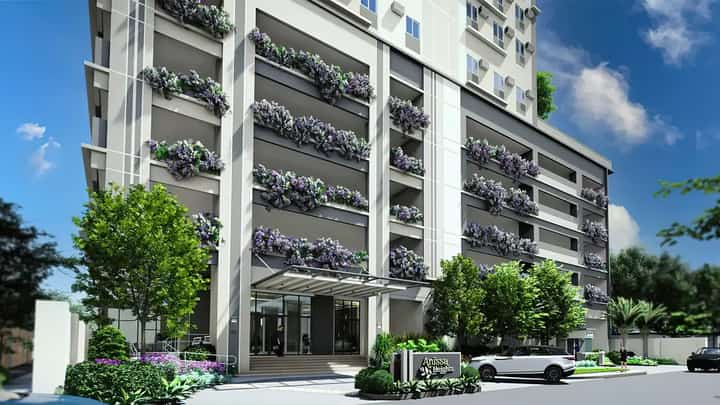
ANISSA Heights in Pasay City is the first DMCI Homes property accredited under its new partnership with Pag-IBIG Fund. Through a Memorandum of Understanding between the two parties, nearly 4,000 DMCI condominium units will be made eligible for affordable Pag-IBIG housing loan, with qualified Pag-IBIG members eligible to borrow up to P10 million subject to standard approval guidelines and income requirements.
Photograph courtesy of DMCI Homes
For many Filipino families, buying a home means balancing the desire for a property of their own against the cost of financing it. For the government, the challenge is to expand access to homeownership while working with private developers to make more housing options available.
That intersection between private development and public policy was on display during the second National Housing Expo, held on 19 and 20 October as part of National Shelter Month.
Organized by the Department of Human Settlements and Urban Development (DHSUD) and Pag-IBIG Fund, the event brought together more than 80 developers offering approximately 50,000 housing units. More than 45,700 prospective buyers preregistered for the two-day event.
DMCI Homes in government’s 4PH program
Among the participating developers was DMCI Homes, whose entry into the government's Expanded Pambansang Pabahay para sa Pilipino (4PH) Program illustrates how private residential companies can contribute to the administration's housing agenda.
Founded in 1999, DMCI Homes has positioned itself in the middle-income residential market. Its partnership with Pag-IBIG Fund, formalized on 16 October, seeks to expand financing options for qualified buyers of participating condominium developments.
Under the agreement, DMCI Homes will identify eligible projects and available units, including ready-for-occupancy properties, while offering preferential pricing and other incentives to qualified Pag-IBIG members. Pag-IBIG will provide housing loans, loan counseling and application assistance.
Nearly 4,000 condo units available for Pag-IBIG financing
The partnership is expected to make up to 3,990 condominium units available for Pag-IBIG financing, subject to the completion of project accreditations. Anissa Heights in Pasay City is the first DMCI Homes development accredited under the arrangement.
DMCI Homes president Alfredo R. Austria said the partnership reflects the company's focus on serving middle-income buyers.
"This partnership reflects our continued commitment to the vision of our founder, Engr. David M. Consunji, of making quality housing more accessible to Filipino families, particularly those in the middle-income segment," Austria said.
"By expanding access to financing, we can help more aspiring homeowners build a solid foundation for their future while contributing to the growth of stronger communities," he added.
Importance of private-sector participation
For DHSUD, private-sector participation is important to expanding the range of housing options available to Filipinos. The Expanded 4PH Program has broadened its approach to include different housing arrangements and income groups, with financing and implementation mechanisms intended to connect prospective buyers to suitable properties.
Aliling has emphasized that the program must earn the confidence of both developers and homebuyers.
"I believe we do not need an incredible housing program. What we need is a credible housing program that our stakeholders, including developers and homebuyers, can trust," he said during the National Housing Expo.
The expo offered prospective buyers an opportunity to compare properties and consult Pag-IBIG representatives about eligibility and borrowing capacity. For qualified borrowers, subsidized interest rates include 3 percent for socialized housing, 4.5 percent for eligible loans of up to P4.9 million, and 5.75% for qualifying loans above P4.9 million and up to P10 million, subject to program rules and loan terms.
Buyers must check if the development is accredited
These financing options can widen access, but affordability still depends on household income, existing financial obligations, required equity and the ability to meet monthly repayments. Not every DMCI Homes property is automatically covered by the program; buyers must check whether their chosen development has completed the necessary accreditation.
The partnership therefore represents one part of a larger effort to match private housing supply with the financial capacity of Filipino households.
For DHSUD, the task is to encourage more developers to participate while ensuring that housing initiatives translate into actual opportunities for homeownership. For DMCI Homes, the agreement opens another financing route for eligible buyers in its residential portfolio.
The next measure of progress will be whether prospective buyers can move from inquiries and property visits to approved loans, completed purchases and homes they can sustainably afford.