
The miniatures of Nani Reyes
Big on heritage despite their small size, Nani Reyes’ higantitos celebrate the culture of Angono, Rizal.

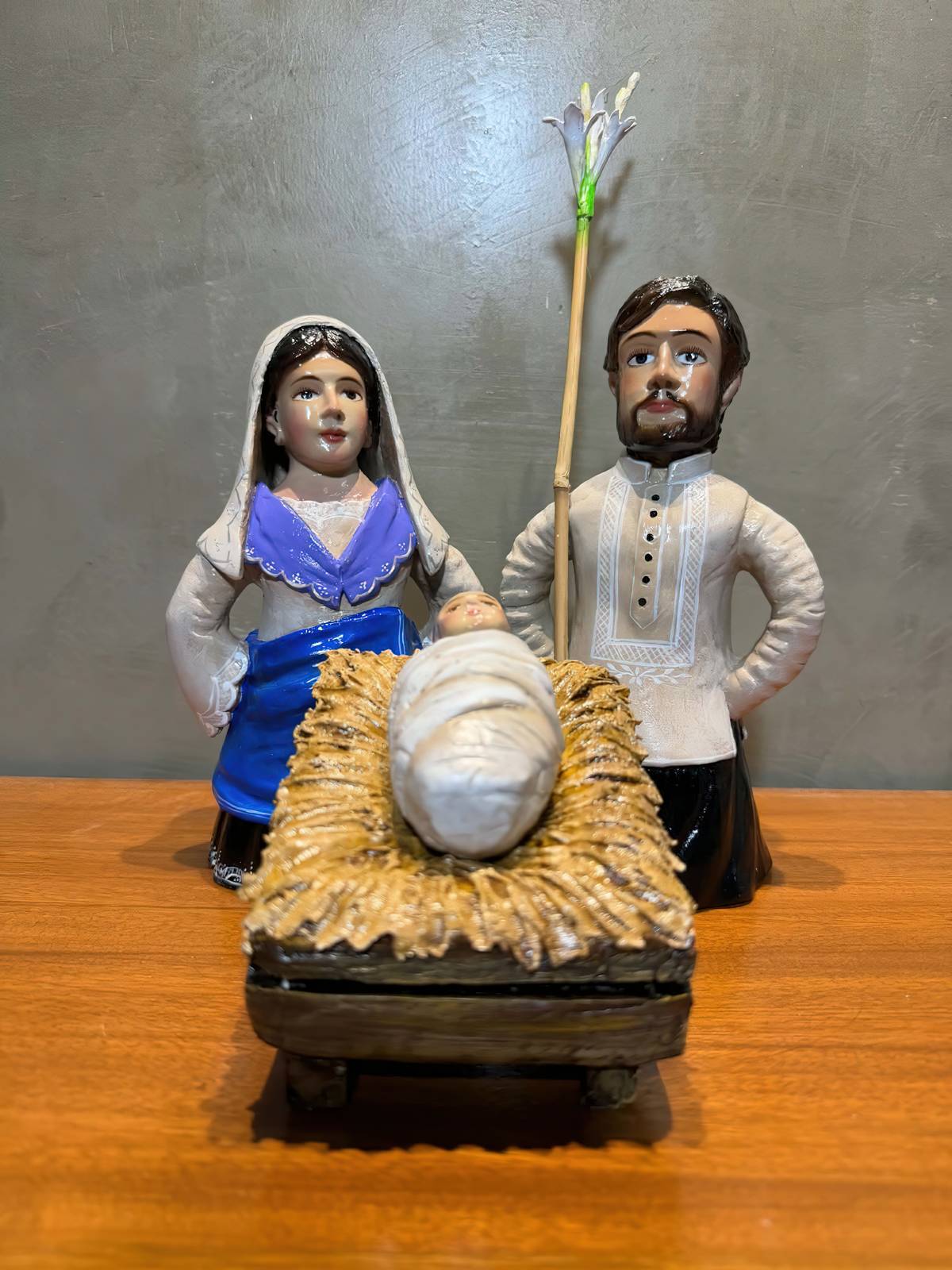
‘PINOY Belen.’
Known for his colorful cubist-inspired paintings, visual artist Nani Reyes has turned to miniature sculptures to explore the heritage, identity and culture of his hometown of Angono in the province of Rizal, east of Metro Manila.
The move came about almost by accident. Earlier this year, he began painting blank higantitos — small versions of the higantes, the giant figures made of papier-mâché and lightweight materials that have become cultural symbols of Angono.
Depicting a variety of characters, the higantes are fixtures of the town’s celebrations. Carriers concealed inside the figures bring them to life, parading barefoot through the streets. Their miniature counterparts are commonly sold as souvenirs in local shops and art galleries.
The higantes also reflect a wider history of cultural exchange. National Artist Alejandro R. Roces traced their papier-mâché art form to Mexico, saying it was brought to the Philippines by Spanish priests. Mexico’s mojigangas, giant figures carried by performers concealed inside, are fixtures in many fiestas and celebrations. Mojigangas originated in Spanish theatrical and carnival entertainments and reached New Spain in the 16th century, where large masks developed into towering reed-and-papier-mâché figures.
In Reyes’ hands, these familiar keepsakes and souvenir items sold in shops and art galleries in Angono become a medium for artistic expression, bringing a tradition associated with the streets and souvenir shops into the realm of private collections and gallery displays.
What distinguishes his higantitos is the addition of legs and feet, features absent from the real figures. For Reyes, this choice carries a meaning beyond appearance.
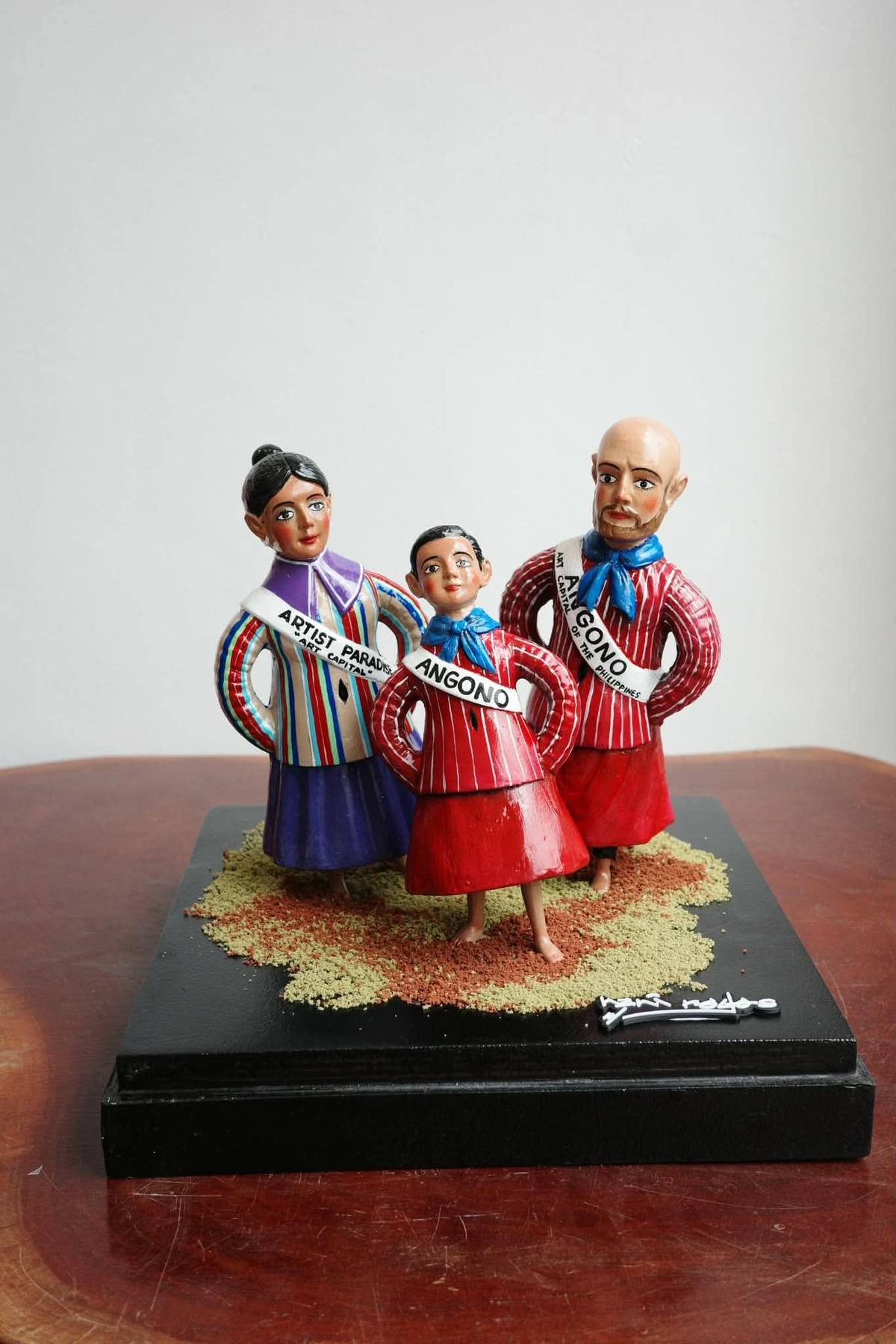
‘HIGANTITOS ni Temyong.’
“It reminds me to always be humble, to always be grounded,” he said. “Paa sa lupa, mata sa langit (Feet on the ground, eyes to the sky).”
From design to execution, he added, every element is intentional, with each part given meaning and meticulous attention. Working with resin and epoxy clay, Reyes sees the sculptures as both a tribute to his roots and an opportunity to test his abilities in another medium.
“This is not merely a product but an ode to my heritage and identity as an artist in Angono, by exploring and challenging myself to a different medium,” he explained.
He hopes to create more higantitos depicting scenes drawn from local culture, continuing to promote the artistry and heritage of Angono, known as the Philippines’ “art capital.”
Underlying this pursuit is his belief that he remains a student of art and artmaking. Through constant research, learning, and experimentation, Reyes seeks to create pieces that bear the stamp of Angono while expressing a distinctly Filipino identity.
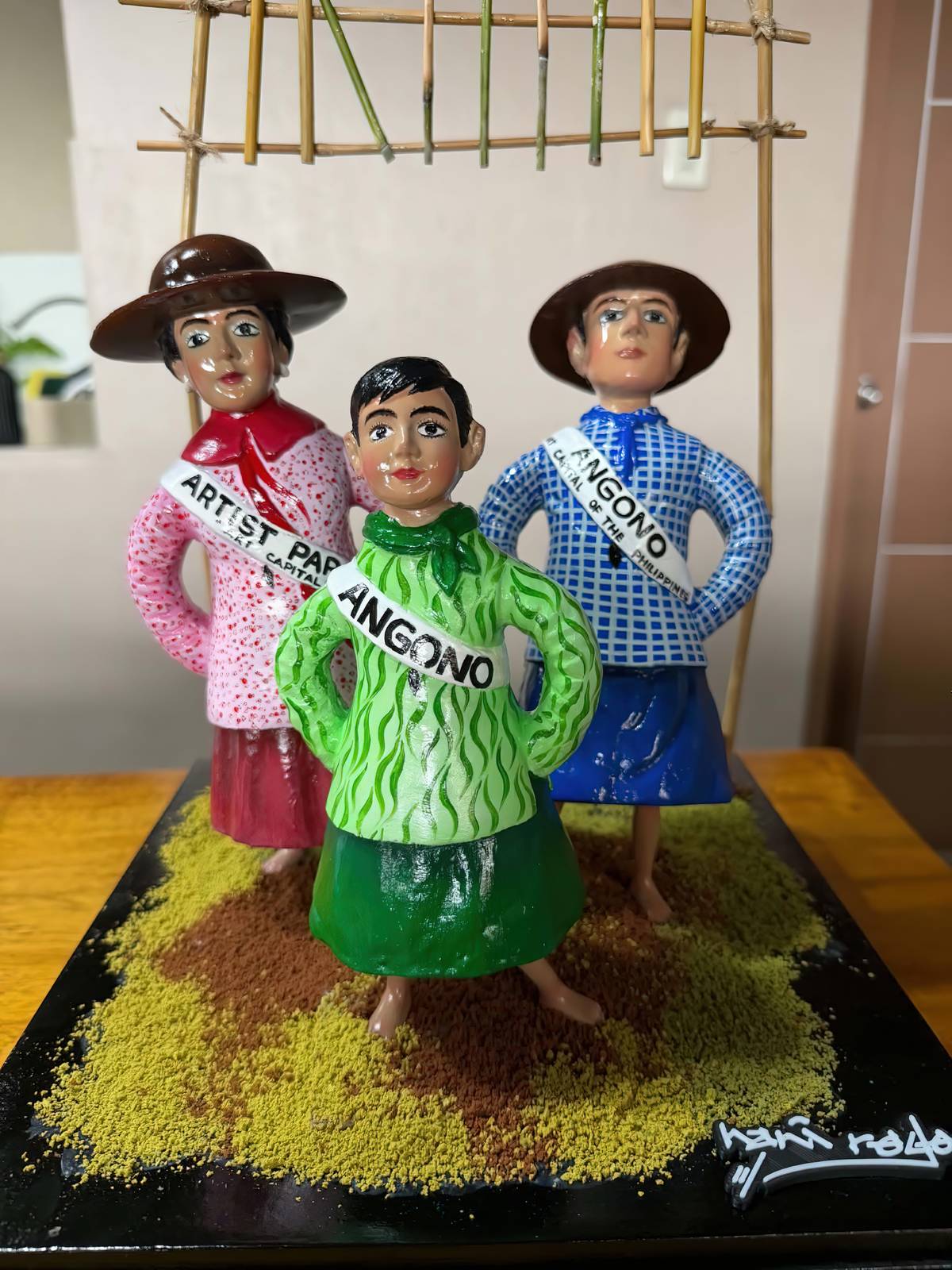
‘PAMILYA ni Tiny.’