
What makes a Peranakan ?
From embroidered kebayas to the recipes families pass down, Peranakan traditions tell a story of migration, adaptation, and belonging in Southeast Asia.
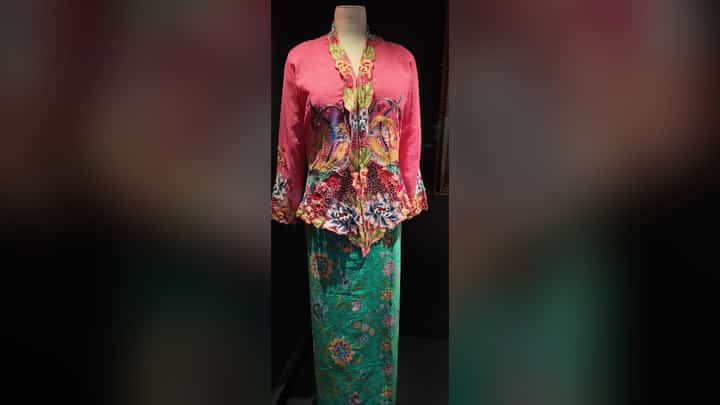
SARONG kebaya ensemble that tells a story of Peranakan elegance, with a pink embroidered blouse and green floral batik sarong.
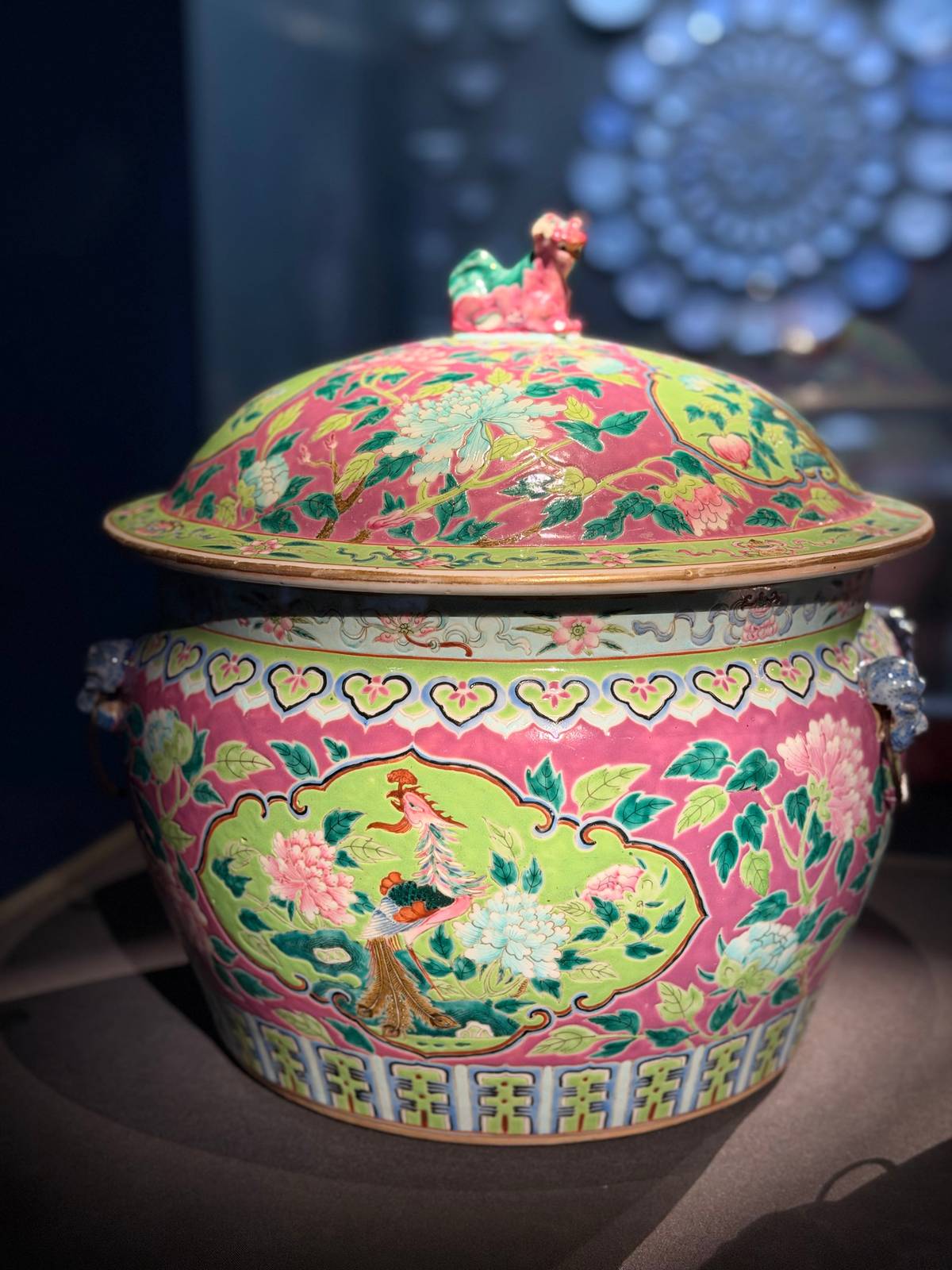
PINK kamcheng.
A taste of Peranakan culture often begins at the table. A bowl of laksa, a serving of ayam buah keluak, or a colorful plate of kueh offers a glimpse of a cuisine shaped by centuries of exchange across Southeast Asia.
For others, the first encounter might be through an embroidered kebaya, a pair of beaded slippers, or the bright porcelain displayed in a museum or heritage home.
Behind these familiar sights and flavors are generations of families who carried customs with them, took up new ones, and made them their own.
The word peranakan comes from the Malay anak, meaning “child.” Traditionally, it referred to a locally born descendant of immigrants. Over time, it came to describe communities that adapted ancestral customs to the places they called home.
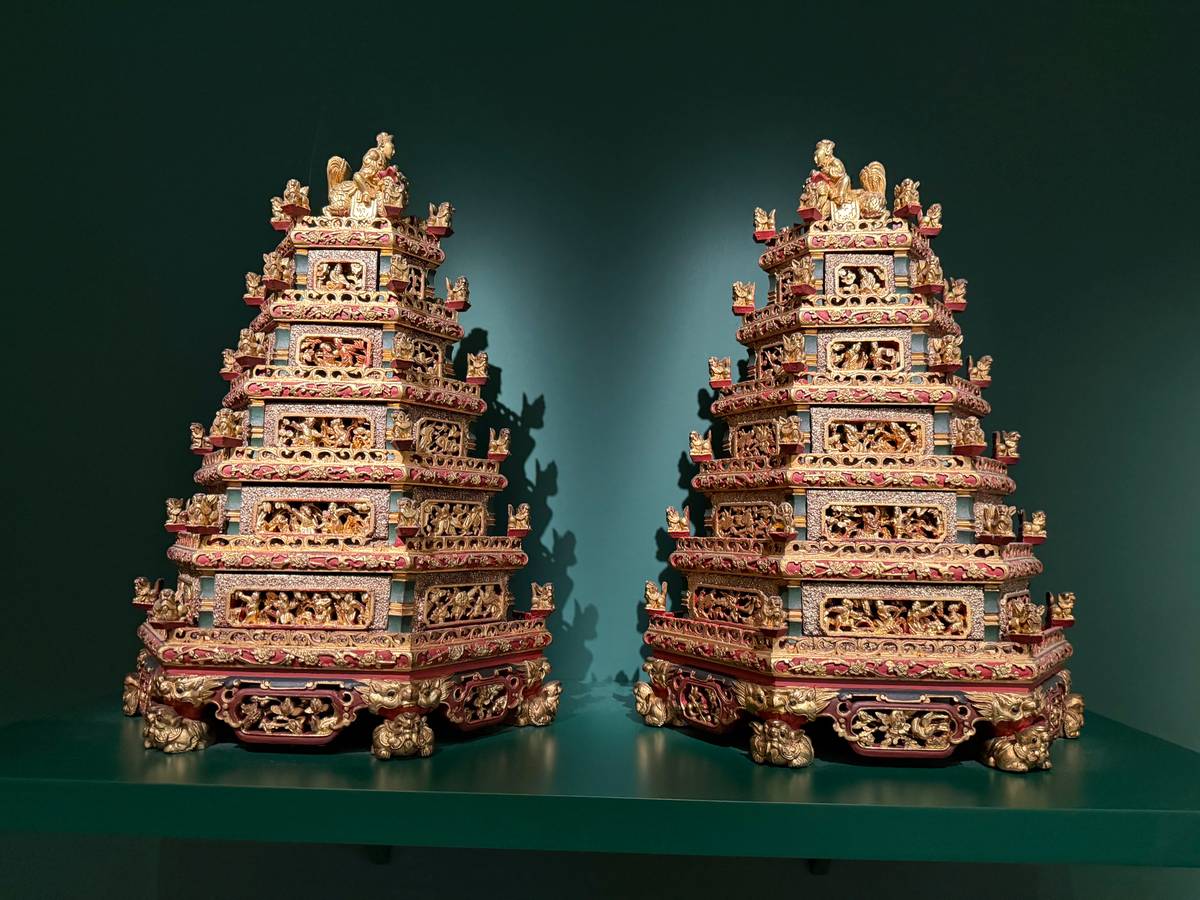
ORNATE pagoda trays traditionally used for presenting wedding gifts during Chinese Peranakan ceremonies.
That exchange was heard in everyday speech, too. Among the languages that emerged was Baba Malay, spoken in Chinese Peranakan communities.
Peranakan communities can be found across Singapore, Malaysia, Indonesia, Brunei, Thailand, Myanmar, and elsewhere in Southeast Asia. Their customs vary from place to place, shaped by the people who settled there and the communities around them.
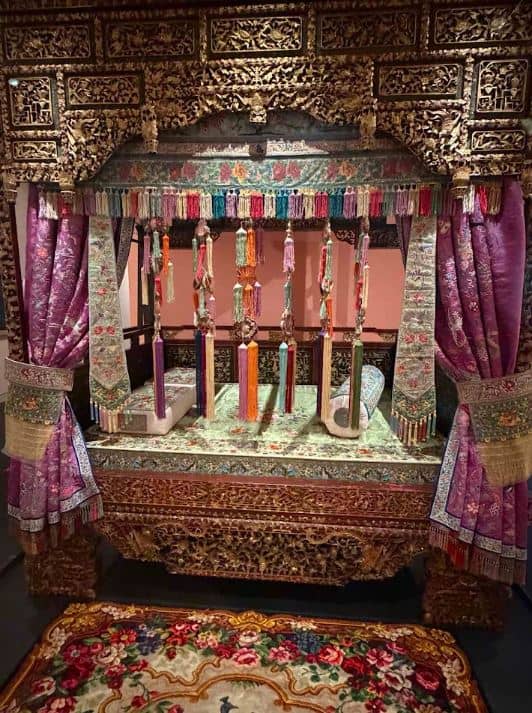
GILDED wooden wedding bed from Penang, dating to the late 19th or early 20th century.
Threads of identity
For centuries, Southeast Asia’s trading ports brought merchants, travelers, and settlers into contact. As newcomers built lives there, they exchanged languages, beliefs, recipes, and skills with their neighbors.
Some of that history can be read in the clothes people wore.
The kebaya, one of the most recognizable garments associated with Peranakan culture, brings together Malay styles, Chinese embroidery techniques, and European lace. Imported fabrics and floral patterns added to its variety.
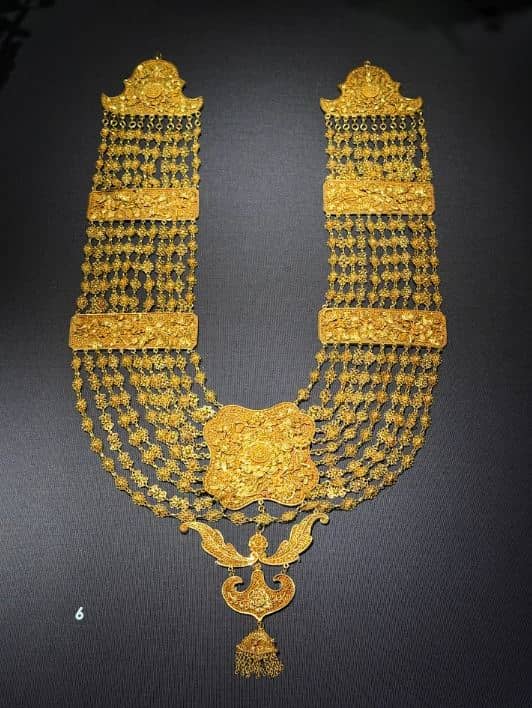
PERANAKAN (Straits Chinese) bridal necklace distinguished by multiple strands of gold or silver-gilt chains, intricately decorated with floral details and elaborate filigree panels.
Artisans stitched tiny glass beads into patterns on slippers, handbags, belts and purses. Gold and silver embroidery adorned clothing, while butterflies, birds, flowers, and fruit often expressed wishes for prosperity, happiness, fertility and long life.
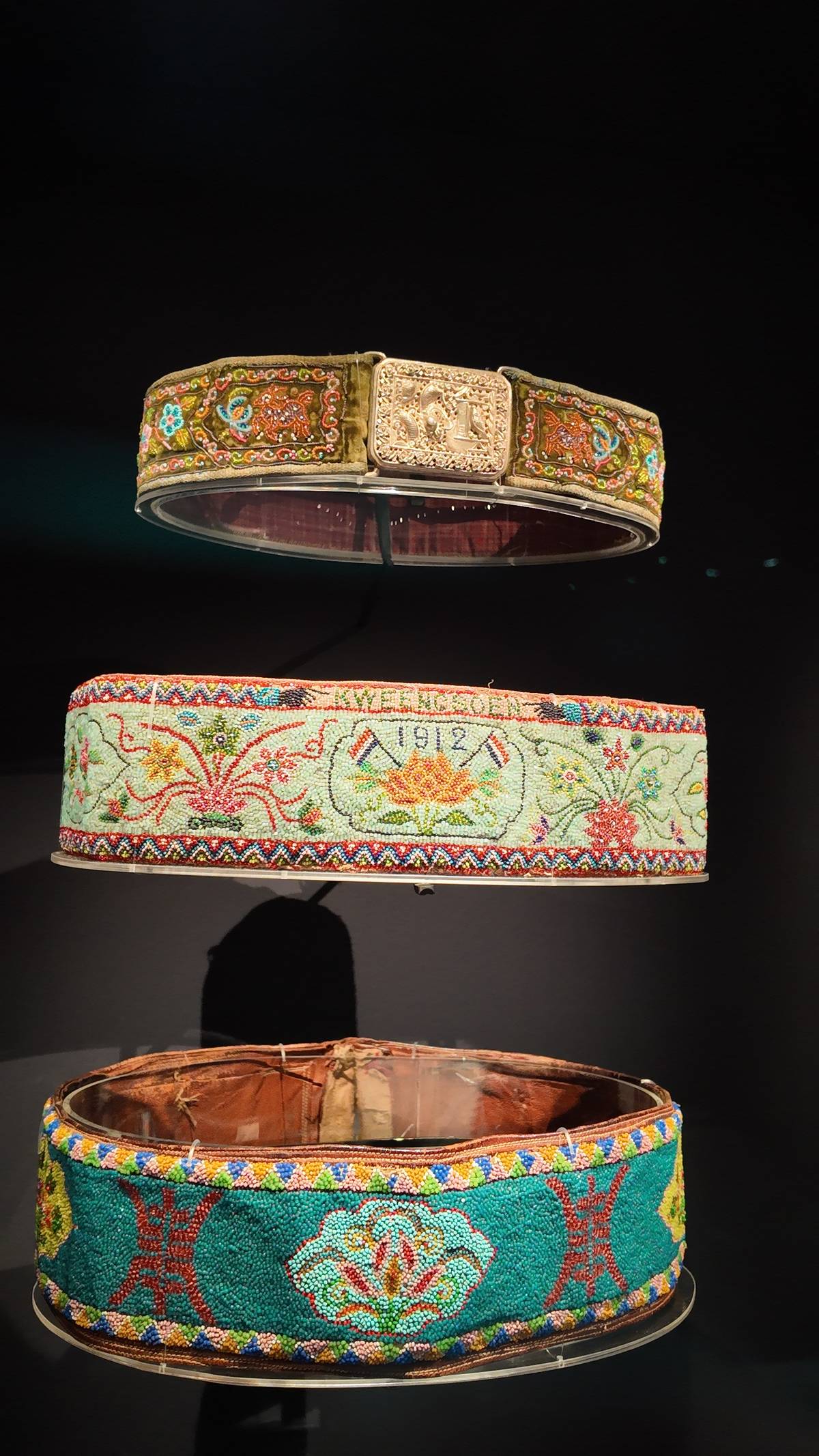
BEADED belts, including a 1912 piece from West Sumatra.
The kebaya became less common in the mid-20th century, then drew renewed interest in the 1980s. Designers have since adapted its cut and styling, drawing on the embroidery and other handwork that give the garment its character.
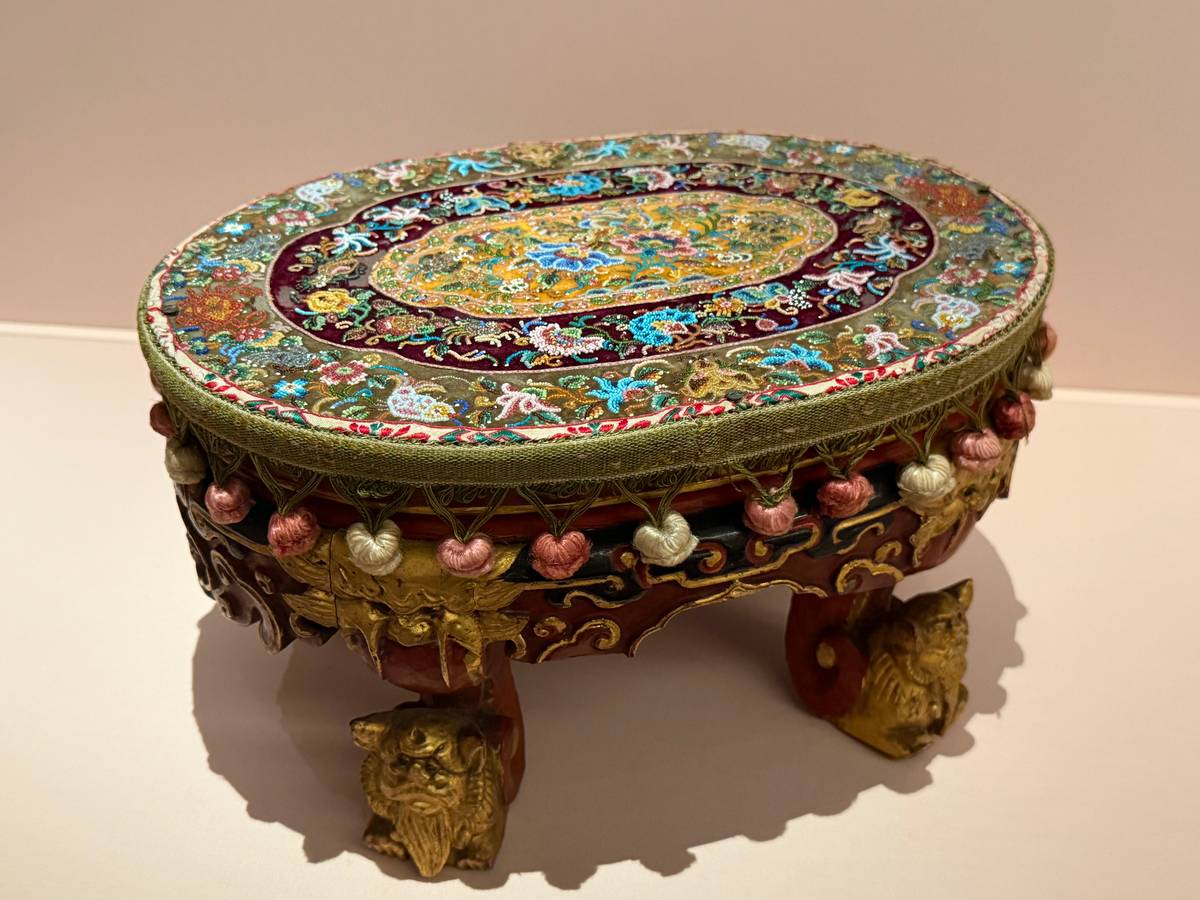
FOOTSTOOL from the early 20th century, originating from Singapore or Malacca.
Jewelry marked stages of life. Babies were often given charms believed to ward off illness and misfortune. Brides wore elaborate gold jewelry, while silver, pearls and jade were traditionally worn in mourning.
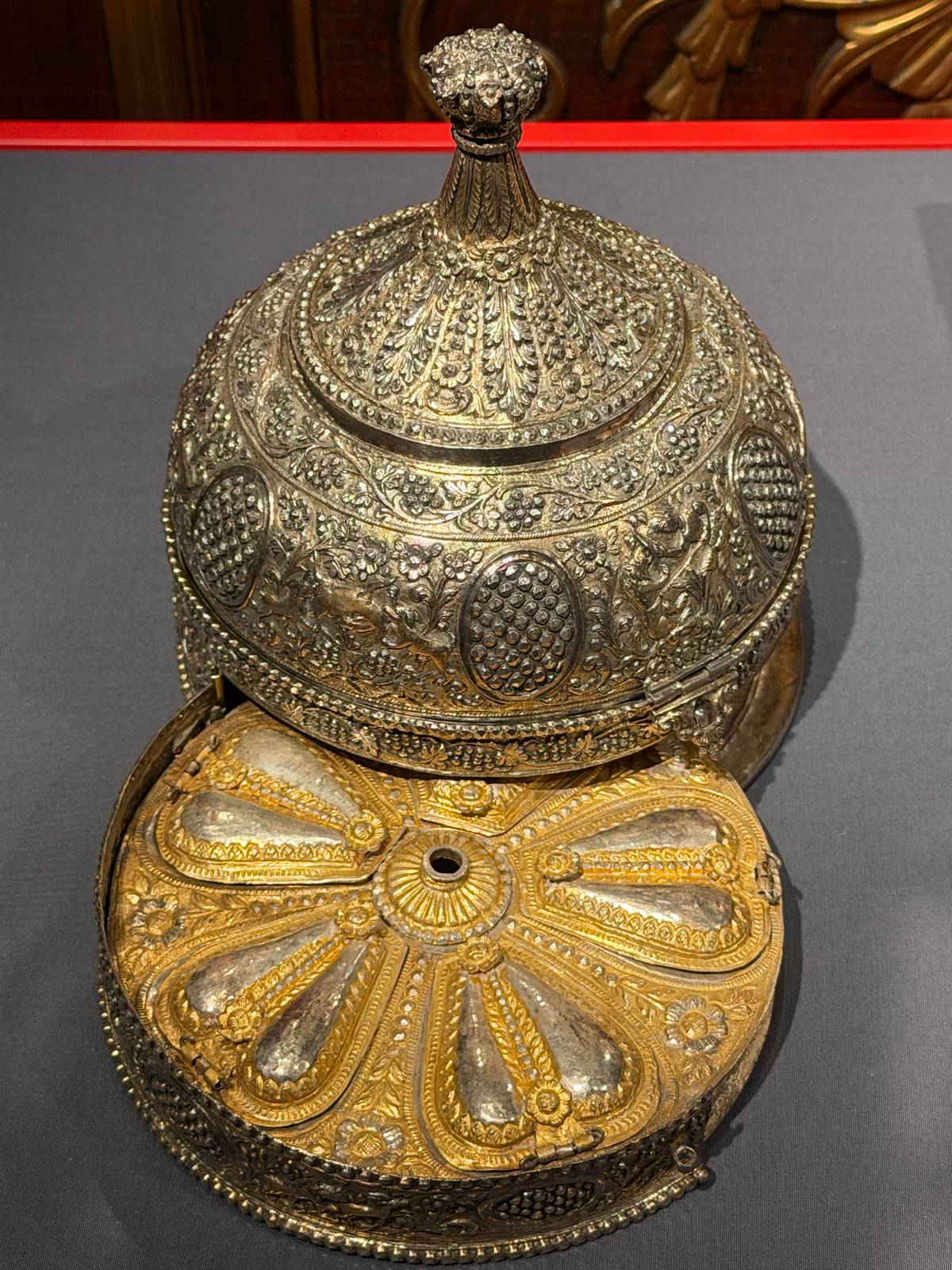
SILVER and gilt domed betel box (pandan or sireh box) featuring a slide-out compartment tray.
Traditions that endure
In many Peranakan families, ancestral altars are a place to mark births, weddings, and death anniversaries. Families set out offerings of food, tea, wine, and cakes, and adorn the altars with candles, embroidered cloths, and heirlooms. Through these observances, younger generations learn how their families remember and honor the dead.
In the kitchen, recipes passed down through families bring Chinese cooking methods together with Malay and Indonesian ingredients and techniques, as well as Indian, Middle Eastern, and European influences.
The dishes used to serve these meals have their own history. The brightly colored porcelain known as nyonyaware was made in China for Southeast Asian tastes. Japanese ceramics, European plates, and blue-and-white porcelain also found their way into Peranakan homes, reflecting the reach of the region’s trade.
Over time, embroidery patterns changed, jewelry took on new forms, and batik makers worked with new colors and motifs. Today, designers keep reinterpreting traditional dress, while younger generations are rediscovering crafts that had fallen out of everyday use.
Each generation has had a hand in deciding what to carry forward. That freedom to adapt is as much a part of Peranakan heritage as the recipes, garments, and heirlooms that families pass down.
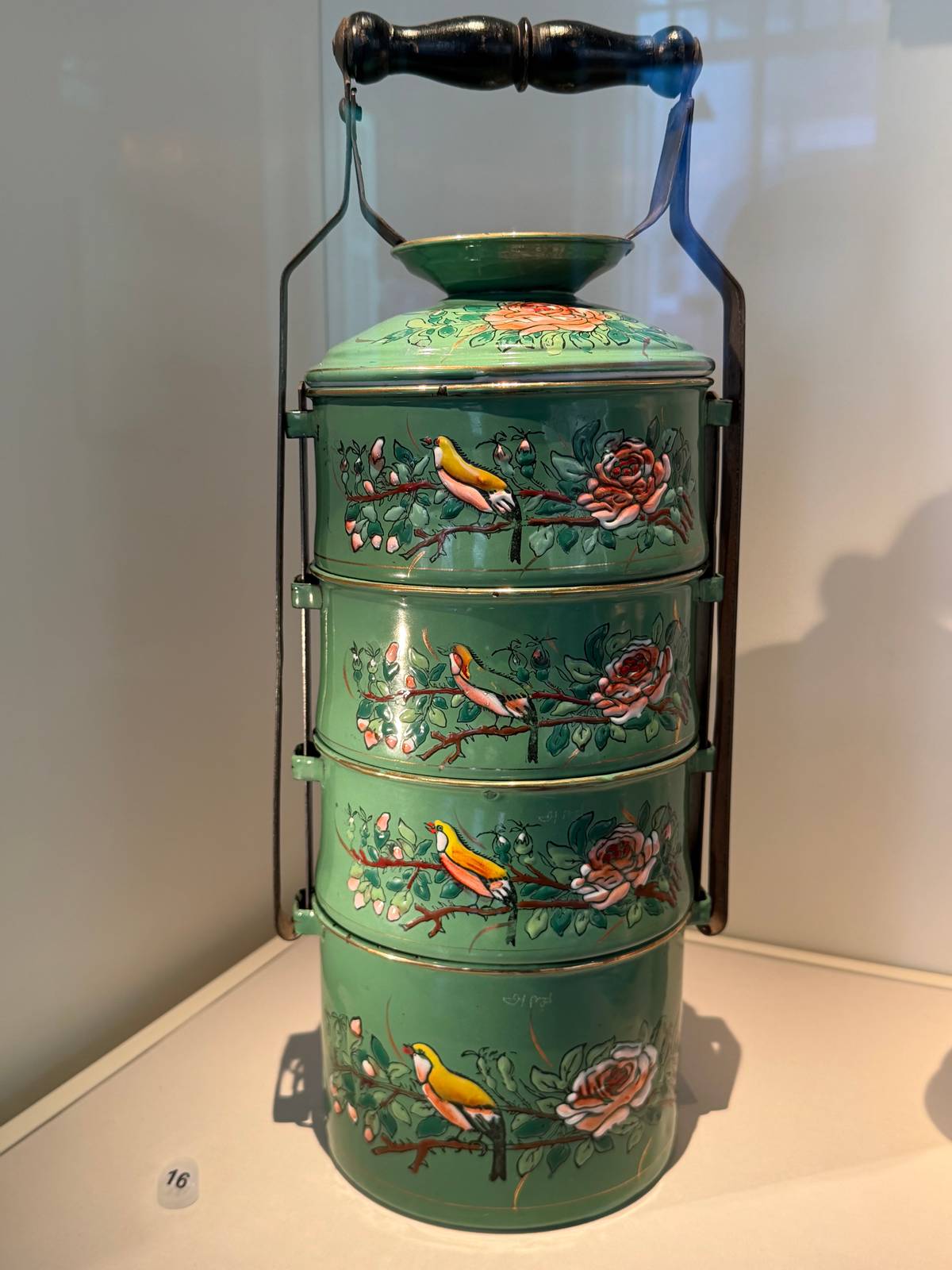
FOUR-TIERED green enameled food carrier, known as a tiffin or tingkat.
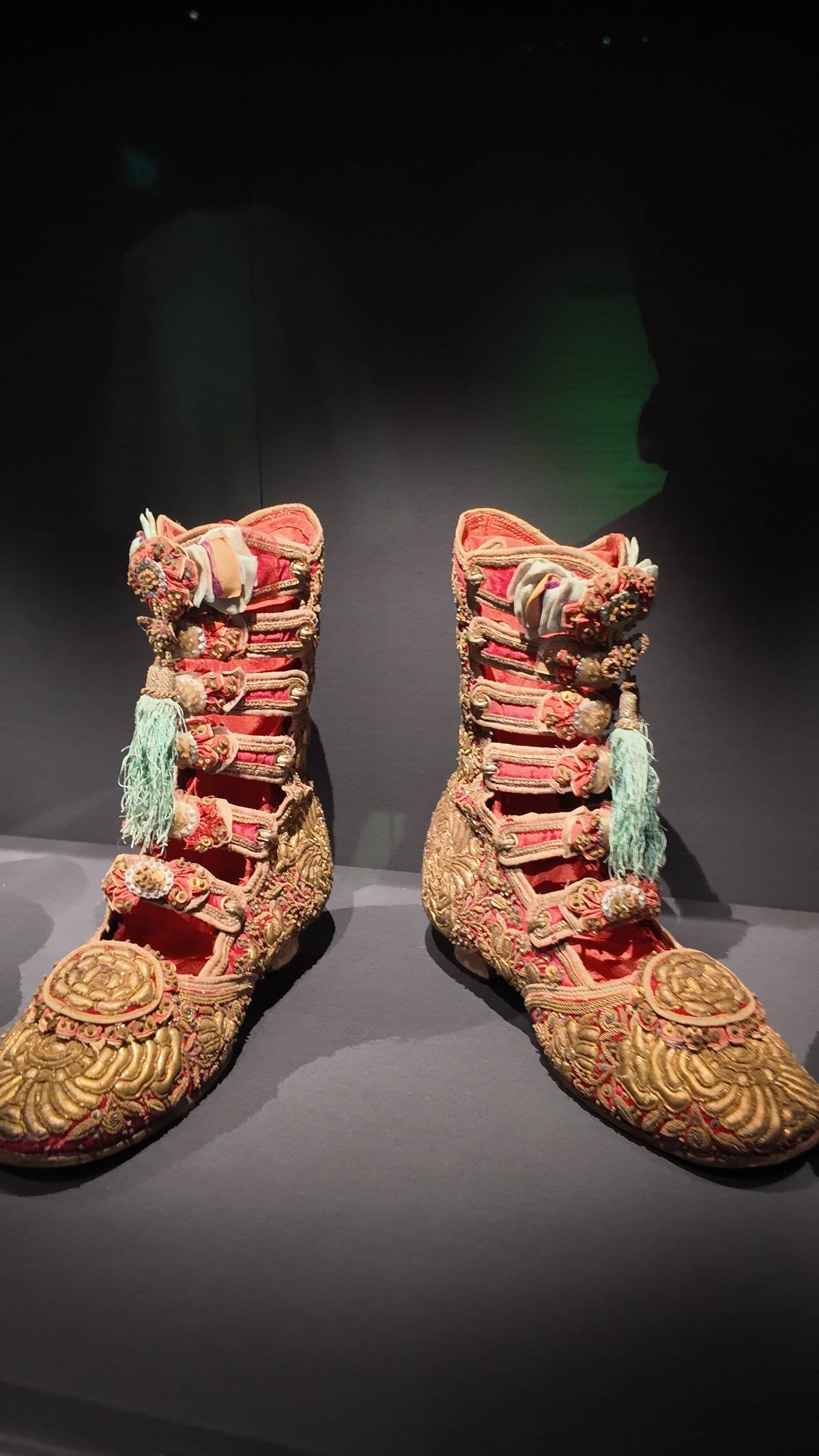
LATE-19th-century Javanese ankle boots with gold embroidery, red lining and green tassels.