
NIA deploys solar-powered irrigation pumps in Cagayan

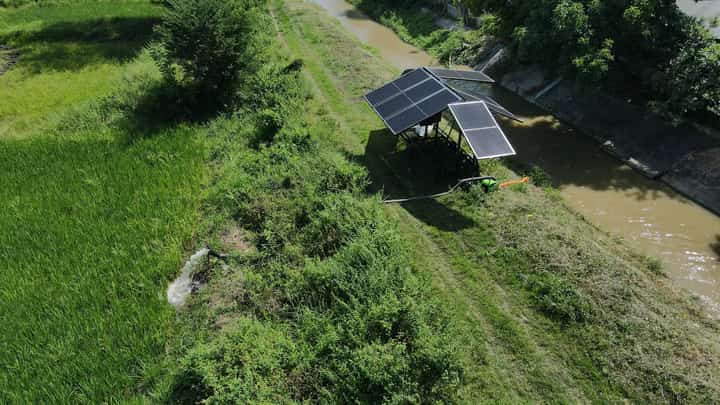
Farmers in areas with limited access to irrigation water are expected to benefit from the deployment of mobile solar-powered pumps by the National Irrigation Administration (NIA) Region II amid water shortages affecting agricultural production.
The initiative came after farmers in Muhara, Solana, struggled to irrigate their fields when water levels in the Cagayan River dropped during the El Niño phenomenon, leaving some farmers with dried-up seedlings and mounting debts.
Samuel Agustin, president of the Muhara Irrigators' Association, said farmers began planting seedlings on June 15, 2026, without anticipating the severity of the dry spell.
However, the declining river water level prevented water from reaching their irrigation canals, causing seedlings to dry up and die. Only a few farmers managed to proceed with planting, he said.
"Life is difficult now because we are in a crisis. Our farmers started farming with loans," Agustin said, describing the financial burden faced by farmers whose crops were damaged by water shortages.
In response, NIA Region II launched its first mobile solar-powered pump irrigation project in Cagayan Valley in August 2026 to provide an alternative source of irrigation for farms affected by inadequate water supply.
The initiative follows President Ferdinand Marcos Jr.'s directive to strengthen irrigation services and deploy mobile solar-powered pumps in vulnerable areas as part of efforts to support agricultural production and food security.
Each system is powered by eight solar panels rated at 580 watts each, giving it a combined capacity of 4.64 kilowatts. It is also equipped with a 50-meter hose and a surge protection device.
According to NIA Region II, each unit can irrigate an estimated two to three hectares daily, depending on sunlight availability and actual operating conditions.
Five units have so far been deployed by the agency in Cagayan province.
Aside from improving water access, the project is expected to help farmers reduce production costs by eliminating or lowering their dependence on fuel-powered water pumps.
Based on reported fuel expenses for the continuous operation of conventional pumps, farmers could save approximately P3,060 in fuel costs daily, NIA Region II said.
The potential savings could instead be used to purchase seeds, fertilizers and other agricultural inputs, helping farmers manage production expenses and reduce losses during periods of water scarcity.
The agency said the initiative aims to sustain farm productivity and provide irrigation support to communities vulnerable to fluctuating water levels and prolonged dry spells.
NIA Region II said it would continue implementing interventions intended to address farmers' irrigation needs and strengthen agricultural resilience in Cagayan Valley.