
NIA: Reliable irrigation can sustain harvests, lift yields during El Niño
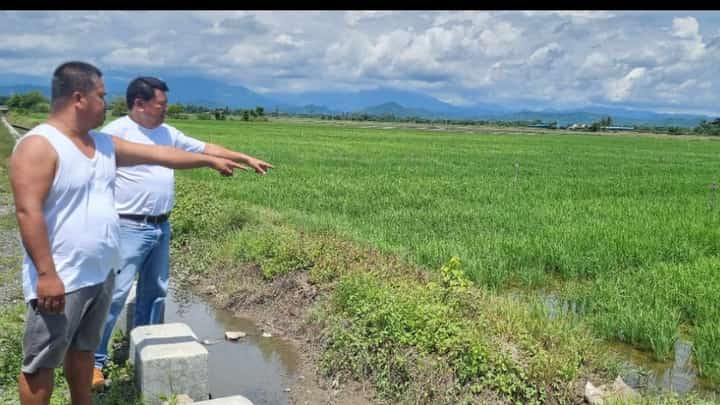
WATER WATCH. Farmers in Sablayan, Occidental Mindoro inspect a rice field amid irrigation concerns. The municipal government is adjusting its cropping plan as El Niño threatens water availability, with more than 6,000 hectares being considered for less water-intensive crops.
NIA-MIMAROPA.
Farms with dependable irrigation can remain productive during El Niño and may achieve higher yields when water is sufficient, the National Irrigation Administration (NIA) said.
NIA Administrator Eddie Guillen said abundant sunlight in the dry season can support stronger rice production when paired with adequate water, suitable seeds and sound farm management.
El Niño poses serious risks to agriculture, particularly in areas with limited water supplies. In irrigated farms, Guillen said, the priority is ensuring crops receive enough water to make use of favorable sunlight. Sunlight powers photosynthesis, through which plants produce the energy needed for growth and grain development.
Guillen cited rice yields of about four metric tons per hectare during the wet season, compared with around eight tons in the dry season under favorable conditions. High-yielding hybrid varieties can produce 10 to 12 tons per hectare with sufficient water and appropriate farming practices, he said.
Those yields are not guaranteed and depend on water availability, weather, seed variety and farm management.
Rainfed farms face greater exposure to prolonged dry conditions because they rely largely on rainfall. NIA estimates that non-irrigated areas account for about 40 percent of the country’s rice production.
Guillen encouraged farmers in these areas to consider short-duration, high-value crops suited to local conditions and available water. Some can be harvested in about two months, helping farmers maintain production while limiting exposure to extended drought.
NIA is also promoting “double dry cropping,” which aims to make the most of favorable sunlight through carefully scheduled planting cycles supported by irrigation. Where local conditions and water supplies allow, the goal is to complete production cycles before heavy rains arrive.
La Niña brings a different set of challenges, Guillen said. Flooding can damage canals, pump stations and other irrigation facilities, while waterlogged fields can disrupt planting and harvesting. Persistent cloud cover can also reduce the sunlight available to crops.
The government is expanding solar-powered pumping systems to deliver water while reducing reliance on diesel fuel.
Acting Executive Secretary Ralph Recto said NIA’s Solar-Powered Pump Irrigation Program aims to reach 10,000 sites nationwide by 2030.
NIA said it currently operates 4,036 sites across 43 provinces: 2,147 in Luzon, 1,102 in the Visayas and 787 in Mindanao. The government’s Vision 2030 plan aims to benefit about two million farmers and extend irrigation to an additional 100,000 hectares.
Lower pumping costs could leave farmers with more resources for seeds, fertilizer, equipment and other production needs. The systems’ effectiveness, however, still depends on access to reliable water sources, especially during prolonged dry spells.
NIA is also advocating multipurpose dams across the country’s 18 major river basins as part of a broader water and climate resilience strategy.
Guillen outlined an indicative investment of P180 billion over five years, based on an estimated P10 billion per project, or an average of P36 billion a year. Actual costs and project designs would depend on site-specific studies, engineering needs, and environmental and social considerations.
Properly planned and operated, multipurpose dams can support irrigation, water supply, flood mitigation and, where feasible, hydropower generation. Reservoirs can retain some water during periods of heavy rainfall, helping moderate downstream flows and providing supplies for farms and communities in the dry season.
NIA’s strategy combines water storage, dependable irrigation, solar-powered pumping and crop scheduling to help protect agricultural production from increasingly variable weather.
Guillen said sustaining harvests during El Niño depends on preparing before water becomes scarce: securing supplies, managing them efficiently and aligning planting decisions with the water available.