
UN forum pushes accessible ocean, water climate funding
Borje noted that rigid accreditation processes and complex approval requirements often prevent local institutions in developing nations from accessing vital climate capital.

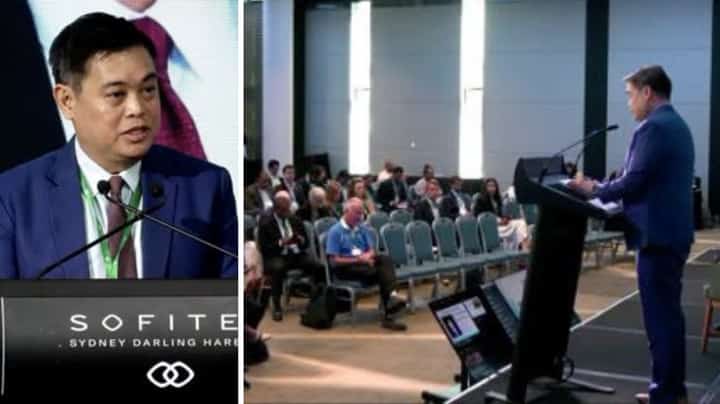
CLIMATE Change Commission vice chairperson and executive director Robert E.A. Borje addresses delegates during the 2026 United Nations Framework Convention on Climate Change Standing Committee on Finance Forum in Sydney, Australia.
Photographs courtesy of Climate Change Commission PH
Representatives from Australia, the Philippines and Pacific Island nations called for sweeping reforms to global climate finance during the 2026 United Nations Framework Convention on Climate Change Standing Committee on Finance Forum, urging international climate funds to prioritize interconnected water and ocean systems.
The forum, hosted by Australia in partnership with the Philippines and Pacific Island states, brought together international financial institutions, government leaders, and civil society delegates to address fragmented funding structures that impede climate adaptation efforts.
Robert E.A. Borje, vice chairperson and executive director of the Climate Change Commission, stressed that existing financial architectures fail to treat water, food security, and coastal ecosystems as unified risks.
Borje noted that rigid accreditation processes and complex approval requirements often prevent local institutions in developing nations from accessing vital climate capital.
Echoing these concerns, Dr. Sivendra Michael, Fiji’s Permanent Secretary for Environment and Climate Change, highlighted that Pacific small island developing states steward roughly 28 million square kilometers of ocean yet struggle to secure funding at the necessary pace and scale.
Chao Feng, Australia’s Deputy Chief Negotiator for COP31, added that over 90 percent of coastal and island nations now incorporate ocean-based action into national climate targets, underscoring the urgent need for expanded investment in coastal restoration, offshore renewable energy, and sustainable fisheries.
Delegates concluded the forum by advocating for streamlined funding mechanisms that deliver direct financial support to vulnerable coastal communities and watersheds before catastrophic climate impacts occur.