
Going the distance

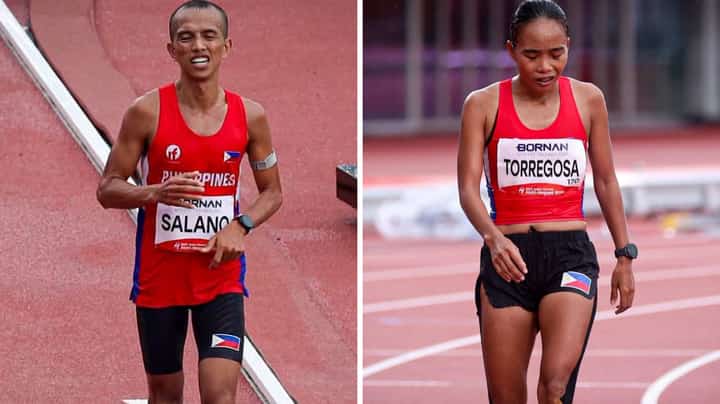
As I write this column, the marathon event of the Asian Games is just about to take place.
Two Filipinos, Richard Salaño and Artjoy Torregosa, will soon set out from Nagoya’s Mizuho Park Athletic Stadium to run 42.195 kilometers against the best in Asia.
It should have been three. Sonny Wagdos, who would have run alongside Salaño, withdrew after coming down with a high fever.
The 32-year-old Army sergeant and national record holder at 2:14:32 posted that he was pulling out, suspecting the change from hot to cold weather, and lamented the preparation gone to waste. He may still run the 5,000 meters on 30 September if doctors clear him.
Salaño, 35, from Bulacan, carries the men’s hopes alone. He ran two hours, 15 minutes, and eight seconds at the Tokyo Marathon in March, just behind Wagdos. In the 2025 Southeast Asian Games in Bangkok, he took bronze in 2:31:29, part of a Philippine haul of two silvers and a bronze in the marathon.
Torregosa, 27, is the story to watch. Originally from Agusan del Norte and now based in Cebu, she won silver in her first SEA Games marathon, crying through the final two kilometers. She had gone into that race as the backup to 2019 champion Christine Hallasgo.
Then in Tokyo she ran 2:33:48, breaking Mary Joy Tabal’s 2016 national record of 2:43:31 by almost 10 minutes, and qualified for these Games. She even finished ahead of runners from China and Japan.
The benchmark is sobering. In Hangzhou, China’s He Jie won the men’s race in 2:13:02, ahead of North Korea’s Han Il-ryong and China’s Yang Shaohui. Bahrain’s Eunice Chumba took the women’s title in 2:26:14. Bahrain’s distance runners have already struck gold here, with Winfred Yavi winning the women’s 10,000m and Birhanu Balew defending his men’s title. And host Japan brings a deep marathon culture and a home crowd.
Here is what I keep coming back to: there is no good reason the Philippines should not be excelling in this event.
The marathon does not reward height, reach, or expensive equipment. It rewards patience, consistency, and the willingness to suffer. Filipinos have all three in abundance. We are also a nation that trains in heat and humidity year-round. When races are run in punishing conditions, that should be our edge, not our excuse.
We have the base, too. The running boom has filled our streets with weekend marathoners, and every major city has its own race. Where there are thousands of runners, there is a pipeline of talent waiting to be found. We have natural high-altitude training grounds in the Cordilleras that other countries would envy.
And the gap is closing. Salaño’s best is barely two minutes off the Hangzhou winning time. Torregosa’s record, set just this year, came from a runner who was a backup a few months earlier. Imagine what she could do with sustained, world-class support.
That is what is missing. Distance running is a long game. It needs years of structured coaching, sports science, altitude camps, and exposure to fast international races, not just support in the months before the Games. It needs grassroots programs that spot talented young runners in the provinces and keep them in the sport. The countries that dominate this event did not stumble into it. They built systems.
We have done it before in athletics. Mona Sulaiman swept the sprints in 1962, Lydia de Vega was Asia’s fastest woman in the 1980s, and EJ Obiena won pole vault gold in Hangzhou. The marathon has yet to produce its hero.
Whatever the result in Nagoya, Salaño and Torregosa have already shown that the distance between us and Asia’s best is not as long as we once thought. The question is whether we will invest enough to cover the rest.