
Saudi ACWA power makes big PHL energy push
ACWA Power is deepening Saudi Arabia’s energy ties with the Philippines, pairing a major solar project in Clark with plans for a much broader power portfolio.

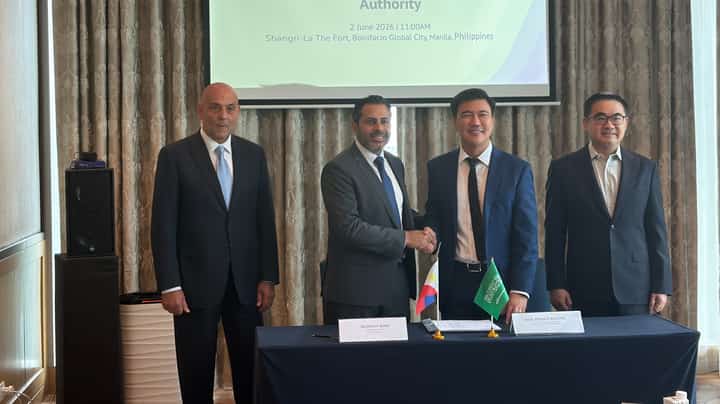
ACWA Power and BCDA seal a lease for a 500-hectare solar and battery project in New Clark City, capable of delivering up to 500 MW.
Saudi Arabia's ACWA Power is making a major move into the Philippine energy business, with plans that could eventually put its projects in different parts of the country.
The company already has something concrete on the ground.
ACWA Power Philippines has signed a lease with the Bases Conversion and Development Authority for 500 hectares in New Clark City, where it plans to develop a large solar power facility with battery storage.
Think of the batteries as a way of saving some of the electricity produced by the solar panels so it can be used when it is needed.
The New Clark City project could eventually reach 500 megawatts, although its final size will depend on its design, government approvals and future expansion.
BCDA said the initial investment would be at least $400,000 for every megawatt of capacity.
But Clark is only part of ACWA's Philippine plans.
In June, ACWA Power Philippines signed an agreement with NAC Energy Inc., the clean-energy arm of Nickel Asia Corp., to look for renewable and gas-fired power projects around the country.
Together, the companies are looking at projects with a potential combined capacity of up to 5,000 MW.
That is not 5,000 MW of power plants already being built.
The companies still have to identify projects, decide which ones make sense and secure the approvals and investments needed to develop them.
But the number shows the scale ACWA is considering.
The 5,000 MW is a starting point, not a limit.
The companies also plan to pursue opportunities under the government's Green Energy Auction Program, which helps bring more renewable electricity into the Philippine power supply.
For Filipinos, the practical issue is simple: the country needs more electricity as cities grow, factories expand and power-hungry data centers come online.
ACWA wants to be one of the companies supplying it.
Its arrival also shows how the Saudi-Philippine economic relationship is changing.
For decades, energy ties with Saudi Arabia were easy to understand: Saudi Arabia was one of the world's great oil powers.
Now a Saudi company wants to help produce electricity here, using solar panels and batteries alongside prospective renewable and gas-fired projects.