
Price-taker’s curse: Distant shocks and Filipino wallets
Like Tatooine at the Outer Rim, small economies such as the Philippines may seem far from the center of power, but they still get pulled into the consequences of conflicts between larger forces.

“A million miles away, your signal in the distance, to whom it may concern.”
That is how “Walk,” one of the Foo Fighters’ best songs, opens. The song is not about economics, but the line captures a basic truth of a price-taking economy: Prices that seem far away can still reach us.
Similarly, Star Wars opens with, “In a galaxy far, far away,” inviting the audience to believe the conflict is distant and separate from ordinary life.
Recent global events have shown the opposite. Like Tatooine at the Outer Rim, small economies such as the Philippines may seem far from the center of power, but they still get pulled into the consequences of conflicts between larger forces.
This article follows three linked ideas: first, why the Philippines is a price-taker; second, how global shocks pass through oil, interest rates and currencies; and third, what households and policymakers can still do despite limited control over world prices.
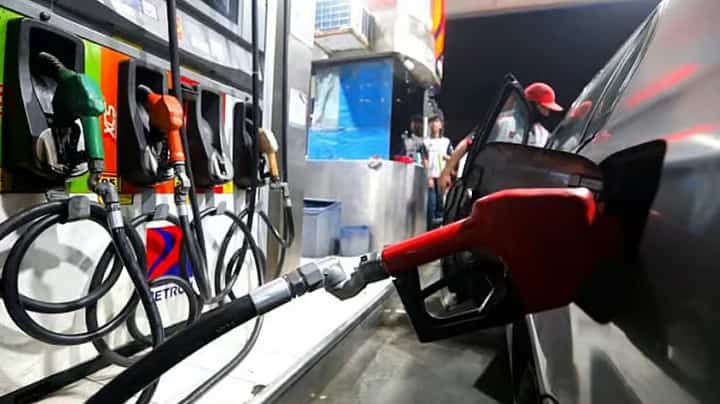
Because of its size and limited influence on global commodity and financial markets, the Philippines is largely a price-taker. It does not produce enough oil to influence crude prices the way major exporters can. Instead, it imports most of its oil and petroleum products, which means it must absorb the price the global market sets.
Over the past five years, oil prices have risen and become more volatile because of wars in Eastern Europe and the Middle East. But oil is only one channel. Interest rates have also risen because these conflicts, along with the war against Covid-19, increased fiscal spending and debt burdens for both combatants and countries already operating without fiscal surpluses.
Interest rates are the price of money. They rise for three main reasons: demand for borrowing or the supply of debt increases; borrowers become riskier in terms of creditworthiness; and central banks raise policy rates to fight inflation
Today, all three forces are visible. In a circular loop, interest rates can also rise because interest rates are rising. Governments that borrow to fund deficits must refinance at higher rates; higher rates then widen future deficits, which can force even more borrowing. If that loop persists, debt dynamics can eventually become unsustainable.
On the surface, this only becomes relevant to Filipinos if they put their money in the bank.
However, studies have shown that 35-50 percent of Filipinos are still unbanked. With their money held in piggy banks and wallets, the positive effect of rising rates is not felt. However, with credit card loans increasing as a percentage of total loans from an average of 3.1 percent in 2019 to 7.3 percent for the first seven months of 2026, more consumers’ wallets are negatively sensitive to higher interest rates.
Higher interest rates abroad also affect currencies such as the peso. This month, the Philippine peso has continued to touch new lows. Part of the pressure is linked to Japan: The yen has been weakening for several months and is now at its weakest level since 1986. When central banks manage currency depreciation, they may sell foreign currency assets. In Japan’s case, those assets are largely US Treasury debt. Selling US debt can push US interest rates higher, which returns us to the circular process described earlier.
As investors chase higher yields, there is an incentive for capital to move away from economies like the Philippines and toward markets where interest rates are rising. Stronger demand for US dollar assets then reduces demand for currencies such as the peso. The Federal Reserve’s 25-basis-point rate increase to 4.00 percent this week and higher oil prices add to that pressure.
The bottom line is that events that seem far away can still matter deeply for Filipinos. Because the Philippines is a price-taking economy, foreign shocks can be as material as local news. The peso’s current level reflects how exposed we are to global oil prices and to the cost of money, or interest rates, in other parts of the world.
That is the curse of the price-taker economy: We are not in full control of the prices that matter most to us. However, limited control of prices does not mean zero control over our outcomes.
Both at the national and individual levels, the better response is not to stand still as spectators, but to manage the risks deliberately — turning the plot away from crisis and toward a more resilient ending.