
U.S. punishes ICC; Digong gains?
Its current high — profile case involves former Philippine president Rodrigo Duterte, the first former Asian head of state to stand in the ICC dock.

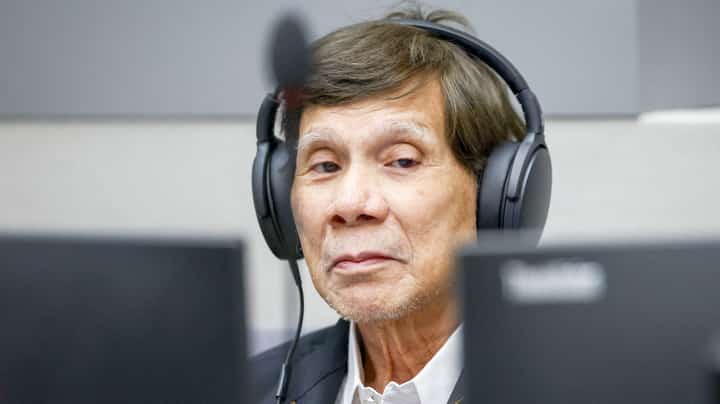
The United States announced sanctions against the International Criminal Court (ICC) on Thursday, vowing to cripple the tribunal’s operations in a move that geopolitical experts said could indirectly benefit its high-profile detainee, former Philippine president Rodrigo Duterte.
US Secretary of State Marco Rubio said Washington will prohibit transactions with what he called a “rogue court,” escalating the Trump administration’s long-running campaign against The Hague-based tribunal.
“Either the ICC will end its threats, or we will end the ICC,” Rubio said in a statement.
A series of exemptions, however, eased the immediate impact of the sanctions, effectively providing the ICC a six-month grace period.
The State Department said it was meant to give the court’s member states time to show “meaningful progress” toward addressing US concerns.
The department added that it could adjust the grace period depending on the “success or failure” of those efforts.
Based in the Dutch city of The Hague, the ICC tries individuals suspected of the world’s worst offenses — war crimes, crimes against humanity, and genocide.
It is governed by a strict policy of “complementarity,” meaning it can only take on cases a suspect’s home country is unwilling or unable to try itself.
Its current high-profile case involves ex-Philippine president Duterte, the first former Asian head of state to stand in the ICC dock.
Broader sanctions
The Trump administration had issued several rounds of sanctions against top ICC officials, but the latest announced actions go further, targeting the entire court.
ICC officials are concerned about their access to banking, credit card facilities, insurance, and especially technology, given a heavy reliance on US systems.
“We have been extremely dependent on US technology solutions, Microsoft or systems related to Microsoft,” said acting chief prosecutor Mame Mandiaye Niang in a recent interview.
“We are trying to find alternative means, maybe not as effective as the US technology, but at least to be able to maintain our independence, to be able to continue to work,” Niang said.
The prosecutor, himself the target of sanctions, said they crippled his daily life — he was unable to book transport, hotels, or conduct banking operations.
But expanding them to the entire institution raises questions about the ICC’s ability to pay staff, conduct investigations abroad, protect witnesses, and even operate its detention facilities.
“This is a test of our resilience,” admitted Niang.
Rogue body
US President Donald Trump has upped his rhetoric against what he has called a “rogue institution” and an “evil group of people,” and has vowed to dismantle the court “brick-by-brick.”
But even under less pugnacious presidents, Washington has never been a fan of the ICC and never considered joining it.
The US has a law dubbed the “Hague Invasion Act,” allowing it to take “all means necessary and appropriate” to defend US personnel or allies detained by the ICC.
In a British Broadcasting Corp. report on the US government action, it said the sanctions could ultimately see the ICC unable to try cases, meaning detainees awaiting trial or judgment would have to be released.
It quoted Professor Ryan Goodman of the New York University School of Law as saying that releases would be “enormously damaging to the global effort towards international justice [and] towards the Philippines.”
Among the carve-outs announced as part of the US sanctions are “licenses” allowing the ICC to continue “services for the operation of facilities used for the detention” of Duterte and others.
However, Goodman said that ultimately these detainees may have to be released “as a matter of law” if the financial sanctions mean the court cannot conduct fair trials or appeals.
A digital law journal, Just Security, said that if the ICC cannot try cases because the institution is being dismantled, detainees awaiting trial or judgment may have to be released. The same may apply to detainees who have been convicted but have not yet exhausted their right to appeal.
“The latter may argue for release because the legal system in which they were convicted lacks an effective appeals process,” it added.
Netanyahu happy
Israeli Prime Minister Benjamin Netanyahu, who faces an ICC arrest warrant over alleged crimes in Gaza, praised the US action.
“The ICC is not a court. It is a political body that poses a mortal threat to law-abiding democracies worldwide and to the very idea of national sovereignty,” his office posted on X.
US allies protest
Countries including Canada, France, Germany, Japan, and the United Kingdom said in a joint statement that they “strongly disagree” with the US announcement.
UN Secretary-General Antonio Guterres called the US decision “a serious blow to our collective pursuit of international criminal justice, of which the ICC is a key pillar.”
The European Union called the sanctions “deeply regrettable” and said it was “ready to take any necessary measures to enable the court to carry out its work.”
The European Commission, the EU’s executive arm, said it hoped the six-month delay meant “there is room for dialogue.”
Rights group Amnesty International urged countries to “resist” the move, saying the sanctions are “designed to isolate and ultimately destroy” the court.
The move came on the same day the Norwegian Nobel Committee awarded the Peace Prize to South Africa’s Navi Pillay, an 85-year-old jurist who headed the Rwanda genocide tribunal, served on the ICC, and later led a UN commission that accused Israel of genocide in Gaza.
“President Trump will never allow the International Criminal Court to prosecute Americans,” Rubio said, adding that the measures would cut off the court’s resources and cripple “its ability to operate.”
Trump last month called on all ICC member states to quit the body, denouncing it as “out of control” and a “rogue institution.”