
ASEAN pushes grid deals to unlock $400-B energy investments
In a joint statement issued during the 44th ASEAN Ministers on Energy Meeting, the ministers called for faster project preparation and clearer regulations to attract investors and move regional power interconnections closer to implementation.

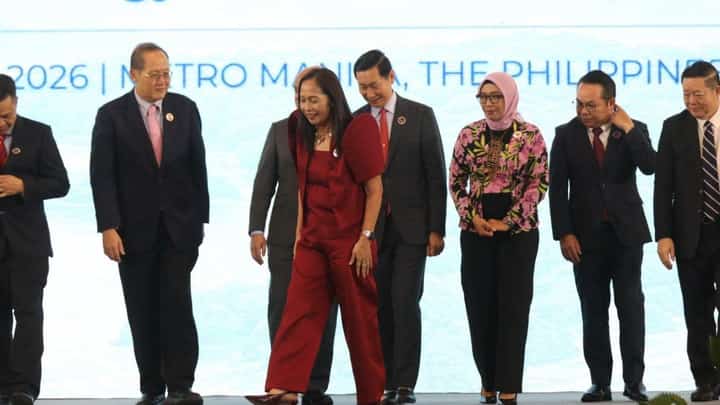
DEPARTMENT of Energy Secretary Sharon Garin (third from left), along with ASEAN Secretary-General Dr. Kao Kim Hourn and other ASEAN energy ministers, at the 44th ASEAN Ministers on Energy Meeting in Manila last week. The ministers reached consensus on a memorandum of understanding for the ASEAN Power Grid to operationalize multilateral cross-border power trading and endorsed the Capacity Building Roadmap on Energy Investment and Financing focused on unlocking and strategically developing public development and capital.
Philippine News Agency
Southeast Asian energy ministers have agreed to fast-track financing and regulatory reforms for cross-border power projects to attract investments as the region faces an estimated $400 billion in annual energy funding requirements.
The agreement, reached during the 44th ASEAN Ministers on Energy Meeting (AMEM) in Manila last week, seeks to make regional power projects commercially viable and accelerate electricity trading among member states to strengthen energy security.
In a joint statement, the ministers called for faster project preparation and clearer regulations to attract investors and move regional power interconnections closer to implementation.
“The Meeting emphasised the importance of improving bankability of APG projects, including enhancing regulatory clarity, and encouraged strengthening and accelerating project preparation towards early financial close and implementation,” the statement said.
The ministers also welcomed progress in the ASEAN Power Grid Financing Initiative and the Partnership for ASEAN Connectivity on Energy, which support financing and development of regional electricity infrastructure.
Energy demand projected to quadruple by 2060
ASEAN’s energy demand is projected to quadruple by 2060 as economic expansion, industrialization and growing electricity consumption from data centers put greater pressure on power infrastructure.
According to the ninth ASEAN Energy Outlook, the region’s coordinated energy transition pathway would require approximately $400 billion in annual investments to meet rising demand and accelerate the shift to cleaner energy.
As part of the meeting’s outcomes, ministers reported substantial completion of work plans for the ASEAN Power Grid Consultative Committee Task Force, advancing efforts to coordinate electricity interconnections across the region.
They also agreed to accelerate discussions on the ASEAN Submarine Power Cable Development Framework in 2027 after reporting substantial progress in regulatory guidelines for underwater power connections.
For the Philippines, regional grid integration could eventually create opportunities to import and export electricity, with the joint statement citing ongoing discussions on a potential power interconnection with Indonesia.
The ministers also welcomed progress in electricity trading through the Lao PDR-Thailand-Malaysia-Singapore Power Integration Project and interconnection studies under the Brunei Darussalam-Indonesia-Malaysia-Philippines Power Integration Project.
The push for stronger regional power connections also supports ASEAN’s renewable energy targets, as interconnected grids could facilitate greater electricity trading and renewable energy integration.
ASEAN hopes to raise renewable energy’s share to 30 percent of total primary energy supply and 45 percent of installed power capacity by 2030.
As of 2024, renewable energy accounted for only 14.1 percent of primary energy supply and 33.7 percent of installed power capacity, highlighting the need for faster investment.
To advance the agreements, the ministers tasked ASEAN energy bodies and the ASEAN Secretariat with implementing regional interconnection initiatives, operationalizing the power grid financing mechanism and mobilizing investment partnerships.