
Two OFWs recovering from strokes in UAE set for post-acute care
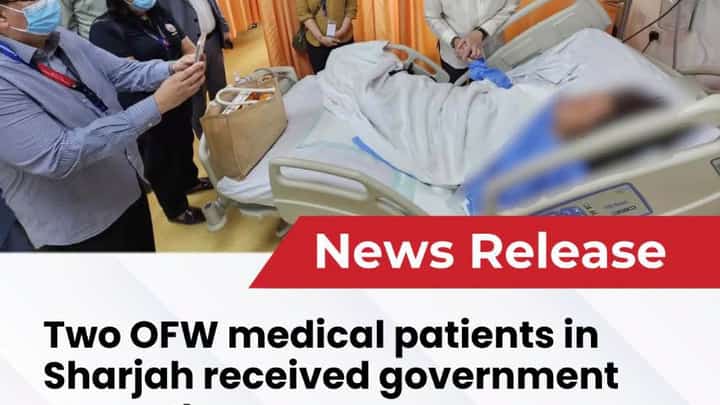
Two overseas Filipino workers recovering from strokes in the United Arab Emirates are set to receive post-acute care from the Department of Migrant Workers and the Overseas Workers Welfare Administration after being cleared for discharge.
Migrant Workers Secretary Hans Leo Cacdac visited the two OFWs at Al Qassimi Hospital in Sharjah on 10 September as the government arranged the assistance they will need after leaving the hospital.
“At Sharjah’s Al Qassimi Hospital, we visited two OFW stroke patients who are fit for release, with post-acute care provided by DMW-OWWA. One of them is from Lubao, Pampanga, so we’ll need Gov Nanay Pineda and our OFW Hospital for further treatment. Lahat po ng ito ay tagubilin ni Pangulong Bongbong Marcos,” Cacdac said.
Cacdac also thanked the hospital’s management and personnel, including Filipino nurses and other healthcare workers, for their service to patients.
Meanwhile, Cacdac called on shipowners to strengthen safety measures for Filipino seafarers aboard vessels transiting high-risk and warlike areas.
The call followed the 31 August projectile attack on crude oil tanker M/V SIDR, which killed two Filipino seafarers and led to the repatriation of 14 surviving Filipino crew members.
Cacdac said shipowners must respect seafarers’ internationally recognized right to refuse to sail through unsafe areas and strengthen protections for those who proceed.
He also urged shipowners to keep crew members away from vulnerable areas, particularly engine rooms, while vessels are in high-risk zones, citing previous attacks in which seafarers stationed in engine rooms were killed.
“More than anything, it is the increased safety measures. We need to further tighten safety measures on board as the ship intends to traverse a high-risk area,” Cacdac said.
The 14 surviving Filipino crew members of M/V SIDR were safely repatriated to the Philippines with assistance from the governments of the UAE and Oman.
“We are thankful to both the UAE and Omani authorities for helping our 14 seafarers return home,” Cacdac said.