
iPhone 18 Pro introduces a tool to help verify photo edits

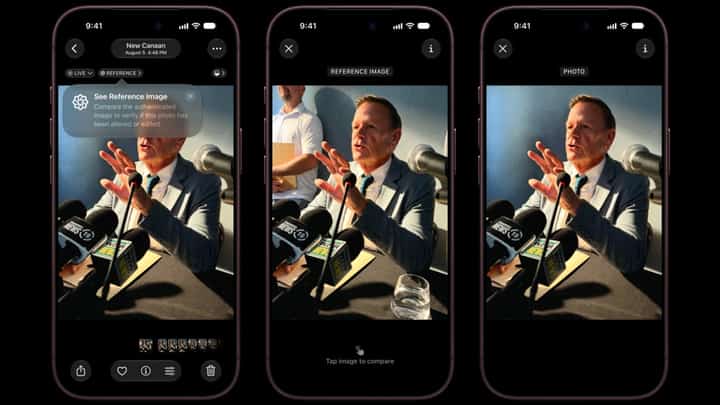
Apple is giving photojournalists a new way to check whether an image has been altered with the introduction of Apple Reference Image, a feature coming to the iPhone 18 Pro and iPhone 18 Pro Max.
The feature is designed to preserve an unalterable reference version of a photograph at the point of capture, allowing users to compare it with the regular image and determine whether edits were made.
Apple Reference Image uses a new sensor in the iPhone 18 Pro's 48-megapixel Fusion Main camera to capture signed sensor data for every pixel recorded by the camera.
The data is then processed through Apple's Private Cloud Compute to create what Apple describes as an unalterable reference image.
The reference image can be viewed alongside the original photograph in the Photos app, functioning similarly to a digital negative. Journalists and photographers can use the comparison to check whether the visible image has been modified after it was captured.
For newsrooms, the feature could provide an additional layer of verification when handling photographs submitted from the field, particularly in situations where images may be subject to questions about editing or manipulation.
Apple says Apple Reference Image is designed to work alongside other image-authenticity tools. Image metadata can provide additional information about a photograph, while support for SynthID is expected in a future software update to help identify images that have been generated or edited using AI.
However, the feature does not by itself establish that everything depicted in a photograph is true or accurately represents the circumstances surrounding the shot. Rather, its primary function is to provide a reference for determining whether the image itself has been altered.
This distinction could be particularly important in journalism, where verifying an image involves more than checking whether pixels have been changed. Location, time, subject identification, context and the circumstances in which a photograph was taken would still require separate verification.
Apple is also making APIs available in iOS 27, iPadOS 27 and macOS 27, allowing third-party applications to support viewing Apple Reference Images. This could eventually allow verification tools and newsroom workflows to incorporate the reference images beyond Apple's own Photos app.
The feature is opt-in, and Apple says availability will vary by region. In China, Apple Reference Image will not be available at launch because of regulatory requirements.
In the European Union, capture of Reference Images will not be available at launch on iPhone 18 Pro models, although users with iOS 27, iPadOS 27 and macOS 27 will be able to develop and view reference images.
With misinformation and AI-generated imagery becoming an increasing challenge for news organizations, Apple Reference Image represents an attempt to build image verification closer to the point where a photograph is created — giving journalists another technical tool to examine the authenticity of digital images.
For journalists, the key takeaway is simple: Apple Reference Image does not replace traditional photo verification, but it could provide a stronger technical record of what an iPhone 18 Pro camera actually captured.