
Hyundai details 100-vehicle roadmap to 2030


HYUNDAI presents the IONIQ 3 as an early model in its program of more than 100 vehicle launches and updates through 2030.
Photographs courtesy of Hyundai
Hyundai Motor Company plans to launch or refresh more than 100 vehicles worldwide by 2030 as it works toward annual sales of 5.55 million units and a 6 percent share of the global market.
The automaker presented its growth program during the 2026 CEO Investor Day. It expects electrified vehicles to account for 60 percent of total sales by the end of the decade, compared with 23 percent in 2025.
More than 18 planned vehicles will enter categories or markets where Hyundai currently has a limited presence. The company identified body-on-frame vehicles, a midsize pickup and light commercial models among its areas for expansion.
Several vehicles will arrive within the next eight months. The early releases include the all-new Elantra, IONIQ 3, Tucson and Tucson Hybrid. New compact electric SUVs are also planned for India and Europe.
Hyundai will introduce its first extended-range electric vehicle during the first half of 2027. The Santa Fe EREV is expected to cover more than 600 miles with a full battery and fuel supply.
The model will use less than half the battery capacity of a comparable battery electric vehicle while retaining electric driving characteristics, according to Hyundai. Production will take place at Hyundai Motor Manufacturing Alabama in the United States.
North America will receive more than 10 Hyundai hybrid models by 2030. The company expects hybrids to account for half of its sales in the region. Local parts sourcing is also scheduled to rise above 80 percent.
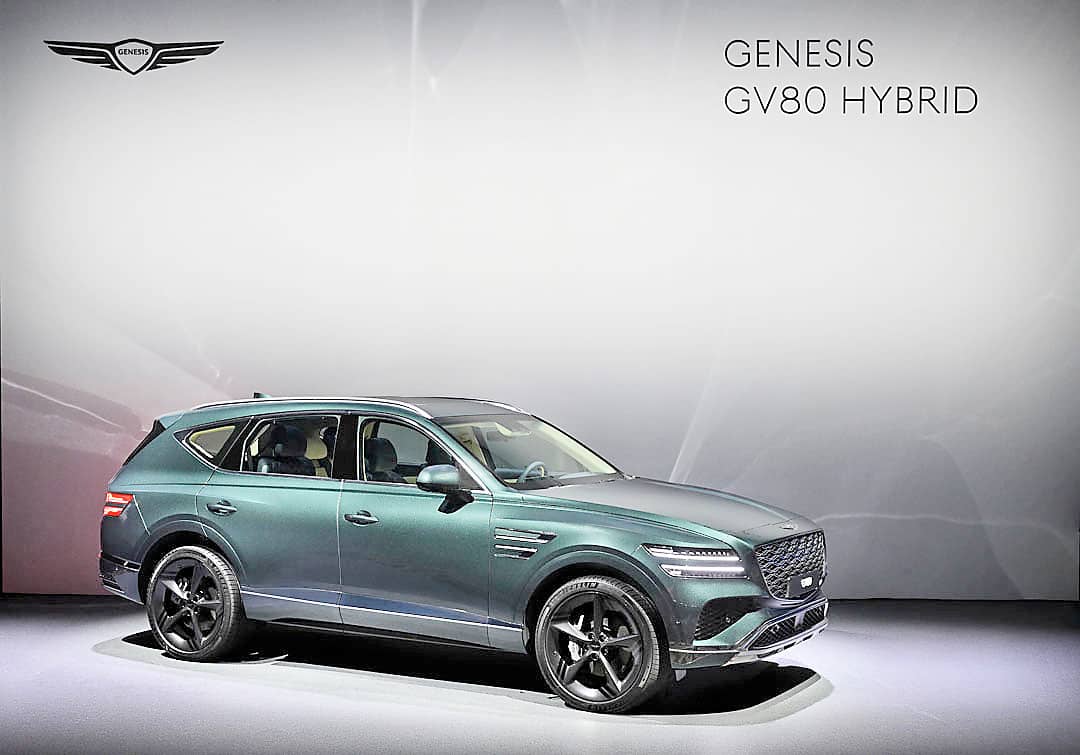
GENESIS adds the GV80 Hybrid as its first hybrid model, with its market launch scheduled for the fourth quarter.
The automaker plans to add 1.27 million units to its worldwide annual production capacity. North America will account for 500,000 units, followed by India with 320,000. Its completely knocked-down operations will add 250,000 units, while Korea will contribute another 200,000.
Hyundai also plans to offer an electrified range that covers 85 percent of the European market. It expects regional EV sales to rise from 116,000 units in 2025 to more than 420,000 by 2030. The new IONIQ 3 enters the market with a claimed range of 497 kilometers.
The plans also cover the company’s performance and luxury divisions. Hyundai N is aiming for annual sales of 100,000 units by 2030.
Genesis expects to reach 350,000 sales across more than 40 markets. Its next products include the GV90 flagship SUV, the brand’s first hybrid and an extended-range electric SUV with an estimated range of more than 640 miles.
Hyundai is also preparing to deliver its first IONIQ 5 robotaxis to Waymo in the fourth quarter of 2026. Level 2+ assisted driving technology will enter a mass-produced Hyundai software-defined vehicle in 2028 through a collaboration with NVIDIA.
Battery development will support the electric vehicle program. Hyundai said its new cells can produce more than twice the output of its previous high-nickel cells and cut charging time by 40 percent.
A new Thermal Runaway Protection system will make its debut on the Genesis GV90. The system is designed to stop heat from spreading between battery cells if a fire occurs.
Hyundai sold two million vehicles wholesale during the first half of 2026. Revenue reached 95.2 trillion won, while its operating profit margin stood at 5.6 percent. The company has raised its 2030 operating margin target to above 9 percent.