
Survival mode
What kind of world are they preparing to survive — and why are they spending billions of dollars to build an escape hatch instead of addressing the threats that they see?

Imagine having enough money to buy your way out of an apocalypse.
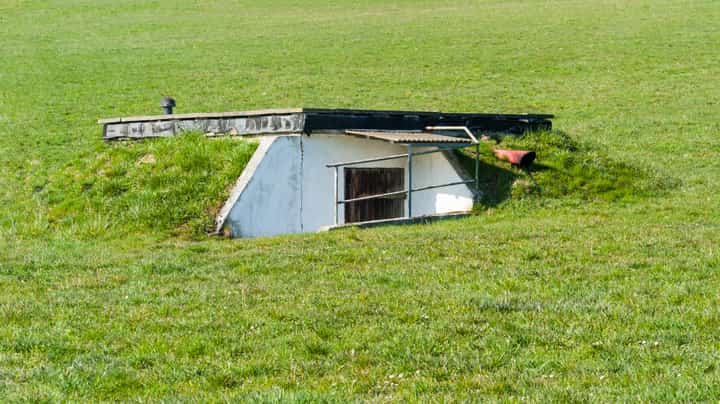
Mark Zuckerberg’s Koolau Ranch in Hawaii is a massive, 1,400-acre estate on the island of Kauai. Public planning permits confirm that the construction of its 5,000-square-foot underground bunker, interconnected tunnels and independent energy grids is well underway.
The CEO of Meta has bought not a beach house but a private island. And he is, if reports are to be believed, turning it into a bunker.
Zuckerberg is not alone in this endeavor. Deep underground, behind reinforced concrete and blast doors, the wealthy can apparently now buy something that sounds almost absurdly reassuring: a place to survive the end of the world.
Some of these facilities come with medical facilities, food stores and recreation areas. Others go considerably further, offering the luxuries of a five-star hotel beneath the earth.
Yet beneath all that concrete is a question money cannot quite answer: What kind of world are they preparing to survive — and why are they spending billions of dollars to build an escape “hatch” instead of addressing the threats that they see?
Various sources ranging from investigative journalists, architectural disclosures, and real estate reports reveal that the phenomenon of “luxury doomsday bunkers” began during the Cold War when the US government built deeply fortified underground structures, such as Atlas-F missile silos, designed with nine-foot-thick concrete walls to survive nuclear strikes.
When these military installations became obsolete in the 1960s, they were eventually sold off as cheap government surplus to DIY hobbyists who undertook the massive task of draining and restoring the rusted caverns.
Over the last two decades, visionary real estate developers stepped in to purchase these assets, investing tens of millions of dollars to transform raw military infrastructure into self-sustaining, multimillion-dollar subterranean resorts.
To counteract the psychological strain and claustrophobia of living underground for years at a time, engineers outfitted these facilities with high-end amenities like simulated pet parks, indoor hydroponic gardens, saltwater resort pools, and digital LED “windows” that mimic live outdoor scenery.
Today, these underground complexes cater to an elite clientele of ultra-high-net-worth families, consisting predominantly of Silicon Valley tech executives, hedge fund managers, venture capitalists, and top-tier celebrities.
High-profile billionaires like Peter Thiel (who recently gave CNN a tour of his massive survival condo in Texas) have spent hundreds of millions of dollars constructing private, independent sanctuaries in isolated regions in places like Hawaii and the South Island of New Zealand to serve as the ultimate “apocalypse insurance.”
Meanwhile, reports say, other wealthy families have purchased individual units costing up to $5 million each in shared, communal mega-bunkers like the Survival Condo in Glasco, Kansas, and Vivos xPoint in Edgemont, South Dakota.
Tucked deep within the geographically stable American heartland, these self-contained fortresses feature advanced volcanic ash scrubbers, private security configurations and stockpiled fuel systems engineered to protect the global elite from severe geopolitical, technological and systemic economic collapses.
As one contemplates the state of the planet these days, it makes one think there is reason to prepare for an uncertain, harsh future.
For us, in the Philippines, the scope of preparations can only go as far as ensuring there will be shelter, sufficient water and food supplies, and energy sources not dependent on international factors. These would require billions to finance, billions that these few global gazillionaires have but would rather spend on the bunker business, which is essentially an industry built around uncertainty and fear.
The mindset guiding the filthy rich to protect themselves from future catastrophe neglects the world around them. They can build increasingly sophisticated escape pods, but they certainly cannot bunker their way out of climate change, institutional failure, war, and social breakdown.
Survival is not a privilege of the wealthy alone. And the real luxury isn’t having somewhere to hide. It is living in a world you don’t feel you need to hide from.