Customers have requested boats capable of carrying from three or four people to as many as eight or 10. Some customers in Tarlac have asked for vessels 18 feet long and five feet wide.
An 18-foot fiberglass boat can be finished in about a week and costs from P80,000 to P100,000, depending on the specifications, Allan said.
His customers are not only from Tarlac. He receives orders from across the country, with many coming from Pangasinan and Pampanga. The recent orders differ from his usual business, which includes fishing boats and other fiberglass products.
“Dito kasi ang in-order sa akin ngayon sa panahon na ito, mga pambaha lang po talaga,” he said. (What they’re ordering at this time are only for the floods.)
The increased demand is not necessarily a windfall created by disaster. It reflects households adjusting to conditions that have made ordinary transportation increasingly difficult.
In Barangay San Miguel, Calumpit, Bulacan, Bimbette Reloj has spent the past month away from home as the floodwaters repeatedly rose and fell.
Her house does not have a second floor, forcing her family to evacuate when the water rose above a person’s head. Some household appliances were damaged, and their displacement has changed how the family eats.
Food that would normally be prepared at home now has to be purchased. Damaged appliances will eventually have to be replaced, while transportation and going to work have become more difficult.
“Maraming gamit ang nalubog at lumutang. Dagdag gastos namin ang pagkain na binibili ng luto na at madalas ay sa fast food na rin,” she said. (Many of our things got wet and floated. We now spend more on buying cooked food and fast food.)
Reloj said her community has dealt with recurrent flooding for almost a decade, but the latest episode has been unusually severe and widespread. Her family has tried to return whenever the water drops, but the high tide, river flow, and incessant rain have caused the water to rise again.
At one point, the floodwaters outside her house rose neck to chest deep. Strong currents have since made it dangerous for residents to return to check on their homes.
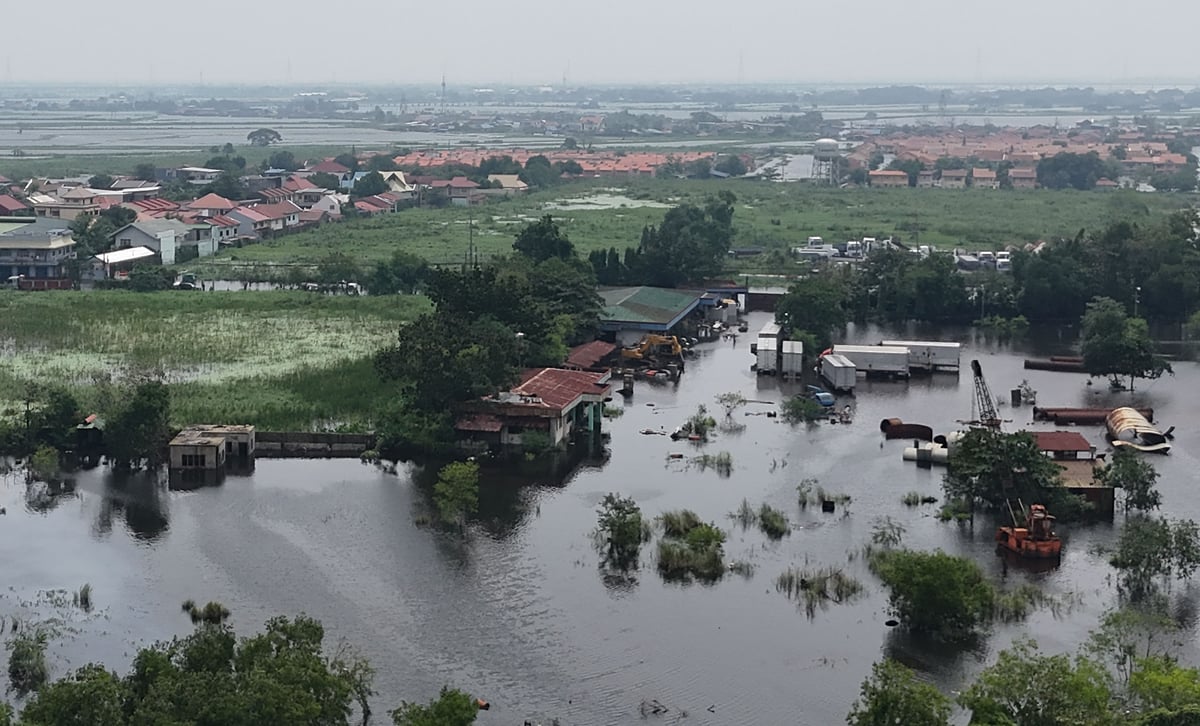
As of 29 August, more than 1,300 families remained displaced in Calumpit, with residents relying on boats and other improvised means of transportation to navigate flooded areas.
Bulacan declared a province-wide state of calamity on 20 August after flooding disrupted families, farmers, fisherfolk, businesses and public infrastructure.
Household budgets under pressure
The flooding is adding to household expenses at a time when families are beginning to plan for Christmas.
September traditionally marks the start of the “ber” months, when households begin setting aside money for gatherings, gifts, travel, and holiday food. Reloj’s 60th birthday is in October, but she said she may still be at an evacuation center then. Her family’s Christmas plans also remain uncertain.
Household budgets were already under pressure before the latest floods. National headline inflation eased to 6.2 percent in July from 6.4 percent in June, according to the Philippine Statistics Authority.
Inflation among the country’s bottom 30 percent of income households was higher at 8.2 percent, while food inflation for that group reached 8.5 percent. Rice prices for the group rose 19.3 percent year-on-year in July.
For flood-affected families, these costs are now competing with spending on food, transportation, repairs and other flood-adaptation measures.
Accountability concerns
The household costs are unfolding amid a wider debate over whether flood control projects have sufficiently protected communities.
A 2025 government inspection in Calumpit identified problems in several flood control projects, including a river protection structure that remained incomplete despite being listed as finished. The inspection also found deterioration in another flood mitigation structure.
The findings have become part of a broader investigation into alleged ghost, substandard, and ineffective flood control projects.
On Monday, anti-corruption alliance Kilos Bulacan held a rally calling for accountability over the flooding and alleged irregularities in flood control projects. Organizers also called for a Senate inquiry into contractors and projects they said may have contributed to the worsening floods.
According to Kilusang Magbubukid ng Pilipinas chairperson Danilo Ramos, “Farmers and residents of Bulacan have long endured the repeated flooding caused by these useless, anomalous flood control projects. While corrupt officials and big corporations plunder the public funds and our environment, ordinary people suffer.”
The allegations remain subject to investigation. For local residents, however, the financial consequences are immediate.
Bulacan’s flooding has been severe enough to displace families from their homes for weeks at a time. In early August, floodwaters in parts of the province rose to as high as six feet, displacing about 11,000 people.
Pampanga has been under a state of calamity after flooding affected more than 860,000 people. Tarlac also declared a state of calamity on 30 August after floods damaged bridges, roads, crops, and property, disrupting economic activity.
Paying to adapt
The flooding has created a cycle in which families spend money to protect themselves from the next flood while absorbing the costs of the current one.
For Allan, that means more inquiries and more work. For his customers, it means finding up to P100,000 for a boat. For Reloj’s family, it means paying for food they would ordinarily prepare themselves and eventually replacing belongings damaged by water.
Reloj said the length of her family’s displacement would ultimately depend on the weather.
“Depende sa ulan-ulan ang ikatatagal o ikapakadali ng paghupa ng tubig,” she said. (The length of time of the flooding will depend on the rains.)
Allan continues to build boats for customers who need a way to navigate the waters. One household is adapting by buying a boat; another is buying prepared food and waiting for the water to recede.
For both, the longer the floods persist, the more of the household budget is devoted not to what they planned to spend it on, but on what they need to get through another flood.