
Las Piñas-Parañaque Wetland Park serves as Metro Manila’s natural shield

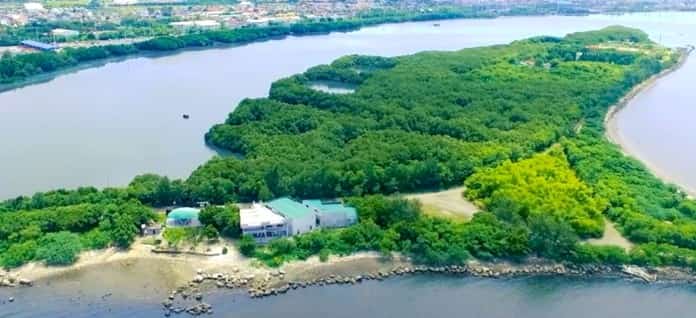
Spanning 181.63 hectares along the coast of Las Piñas and Parañaque, the Las Piñas-Parañaque Wetland Park (LPPWP) is a protected coastal wetland that provides an important habitat for wildlife and a natural buffer for communities facing flooding and storm surges.
The park includes a 40-hectare mangrove forest spread across Freedom Island and Long Island, where saltwater from Manila Bay meets freshwater from nearby rivers, creating an ecosystem that supports both people and wildlife.
The wetland has been designated a Wetland of International Importance under the Ramsar Convention and serves as a stopover along the East Asian-Australasian Flyway, providing habitat for migratory birds.
Former Sen. Cynthia Villar championed the park’s long-term protection through Republic Act 11038, or the Expanded National Integrated Protected Areas System (E-NIPAS) Act, which strengthened its status and provided a framework for its conservation and management.
Villar’s environmental advocacy has also included programs through the Villar Foundation involving river rehabilitation, urban agriculture, composting, plastic recycling and environmental education.
One of its flagship initiatives is the Las Piñas-Zapote River Rehabilitation Program, or Sagip Ilog, which began in 2002. The program focuses on cleaning and rehabilitating waterways, removing waste, maintaining river channels and encouraging communities to participate in environmental protection.
Conservation and learning
The LPPWP includes facilities designed to support conservation, research, environmental education and community engagement.
The Visitor Area, also known as The Wave, serves as a primary hub for visitors, while the Wetland Center houses the first Wetland Museum, featuring exhibits on the history, biodiversity and ecological importance of wetlands and the LPPWP.
The center also has an auditorium and audio-visual facility for lectures, seminars, workshops and other educational activities. It provides space for partner government agencies, including the Department of Environment and Natural Resources and the Bureau of Fisheries and Aquatic Resources.
Other facilities include a Bambusetum featuring bamboo species, an elevated boardwalk through the mangrove forest, bird-watching areas, and a Mangrovetum and Watch Tower.
In December 2025, Villar led the groundbreaking for the Fisheries Learning Hub cum Mangrovetum and Watchtower. The facility is intended to support fisheries education, mangrove conservation, environmental awareness and research.
Natural protection
Beyond its role as a wildlife sanctuary, the wetland provides important environmental services to communities around Manila Bay.
Its mangroves help reduce coastal erosion, buffer storm surges, lessen flooding, improve water quality and store carbon. Wetlands also help regulate water and provide breeding and feeding grounds for aquatic species.
The park is home to 23 species of true and associate mangroves and more than 159 bird species. Around 5,000 resident and migratory birds are found in the area each year, including species identified in the source material as the Philippine Duck, Chinese Egret and Black-winged Stilt.
Continuing threats
Despite its ecological importance, the LPPWP faces threats from illegal dumping, plastic pollution, water contamination, illegal fishing, habitat disturbance and invasive species.
The wetland also faces pressure from proposed reclamation and coastal development projects in surrounding areas. Environmental concerns include their potential effects on tidal flows, water quality, sediment movement and wildlife habitats.
“Our environment is not just a resource—it is our life support system. When we protect our wetlands, we protect our future,” Villar said.
The LPPWP has also been linked to bird-strike concerns at nearby Ninoy Aquino International Airport. However, during a 2 July 2026 Senate hearing, the Department of Environment and Natural Resources said its study found that bird-strike incidents were mainly associated with racing pigeons. Airport authorities have likewise identified racing pigeons crossing flight paths as a potential bird-strike risk.
For conservation advocates, the challenges underscore the need for science-based planning, strict enforcement of environmental laws and sustained rehabilitation to preserve the wetland’s natural functions while ensuring that development and other human activities are carried out responsibly.