
Green space becomes more than a luxury in Philippine real estate

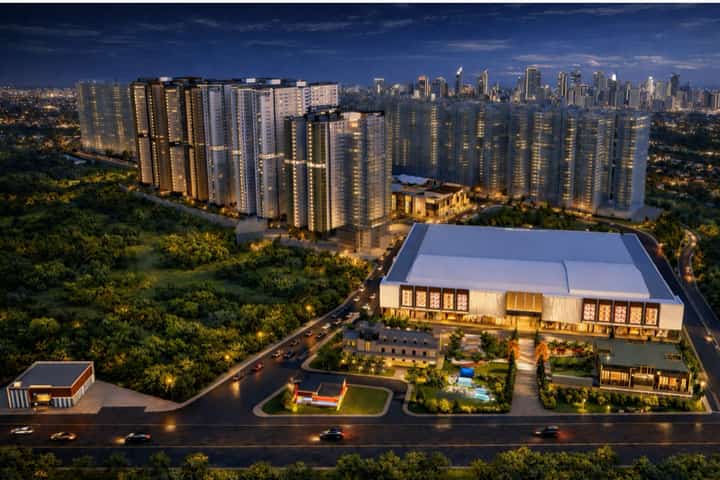
Artist’s rendering of Empire East Highland City, envisioned to be a 22-hectare sustainable township at the convergence of Pasig City, Metro Manila and Cainta, Rizal.
For years, green space in real estate was often treated as an amenity: a landscaped garden, pocket park or row of trees that made a development more attractive.
But as Philippine cities grow denser and concerns over climate, energy use and quality of life become harder to ignore, the role of green space is changing.
It is becoming less about simply making a development look greener and more about how a community can support a sustainable way of living.
From landscaping to a way of living
The idea of a “green” development increasingly extends beyond the amount of landscaped space it provides.
Residents are becoming more conscious of how they move, how communities use energy and how much nature remains part of their everyday environment.
This can influence seemingly simple decisions in community planning: Are sidewalks comfortable enough to encourage walking? Are there safe routes for bicycles? Are trees incorporated into streetscapes? Can residents access parks and open spaces without leaving the community?
These considerations can affect not only a development’s environmental footprint but also the quality of everyday life.
For property developers, this raises a different question.
Instead of asking only how much green space can be provided, the question becomes how sustainability can be integrated into the way an entire community is planned and operated.
A community designed with sustainability in mind
At Empire East Highland City, a 22-hectare township in the Pasig-Cainta area, sustainability is being incorporated into different aspects of the development.
Highland Forest, a planned 1.36-hectare man-made forest, is one component. It is being developed with Philippine native trees and designed to play a functional role in the township’s approach to stormwater management.
But the green vision extends beyond the forest.
Street lighting in the township is solar-powered, reducing reliance on conventional electricity for lighting along its roads.
Existing facilities, including The Courtyard and construction site offices, have also shifted to renewable energy as part of Empire East’s efforts to reduce its carbon footprint and pursue what the company describes as a more “decarbonized and regenerative future.”
Empire East plans to carry the approach into future developments.
Designing for people, not just vehicles
Sustainability can also be experienced at street level.
Empire East Highland City is being developed with wide four-lane and six-lane roads complemented by spacious, tree-lined sidewalks and dedicated bike lanes.
The combination reflects a broader approach to mobility.
A sustainable community is not simply one where cars can move efficiently. It is also one where people have the option to walk or cycle comfortably for shorter trips.
Tree-lined pedestrian areas can provide shade and create a more pleasant streetscape, while bicycle infrastructure offers residents another way to move around the community.
Individually, these may appear to be small details. Together, they can shape how residents experience a community and make everyday movement more comfortable, whether on foot, by bicycle or by car.
Beyond the ‘green’ label
There is a distinction between developments that incorporate individual green features and those that attempt to make sustainability part of their underlying planning philosophy.
A few landscaped areas can make a development look green. A more comprehensive approach considers energy, mobility, open space, water, vegetation and how a community will function over the long term.
Sustainability also does not necessarily mean creating a perfect development overnight.
It can mean making better decisions at every stage, from how a community is planned and powered to how people move through it and interact with its open spaces.
For Empire East, the direction at Highland City reflects this longer-term approach.
The objective is not simply to add green features to a township but to incorporate sustainability into the planning of the community itself and eventually apply those lessons to future developments.
Green becomes part of the value proposition
For homebuyers, the appeal of sustainable communities may ultimately extend beyond environmental responsibility.
Trees provide shade. Walkable streets offer opportunities to move without a car. Bike lanes provide another mobility option. Renewable energy can reduce reliance on conventional power sources. Open spaces offer places to exercise, relax and spend time outdoors.
Communities designed around these elements from the beginning can potentially offer a different quality of urban life.
This suggests that the next generation of Philippine real estate may have to redefine what makes a development desirable.
It may no longer be enough to ask how large a home is, how many amenities a property offers or how close it is to a business district.
Increasingly, buyers may also ask: How sustainable is the life I can build here?
Green space, renewable energy and people-friendly streets may once have been considered extras.
In the communities of the future, they may simply become part of what good development looks like.