
Jurlinovi Dvori: A secluded Croatian sanctuary
This ingenious arrangement likewise offered an insight into the resourcefulness of Croatian mountain-based families, who developed their fortified abodes for protection under tempestuous conditions.
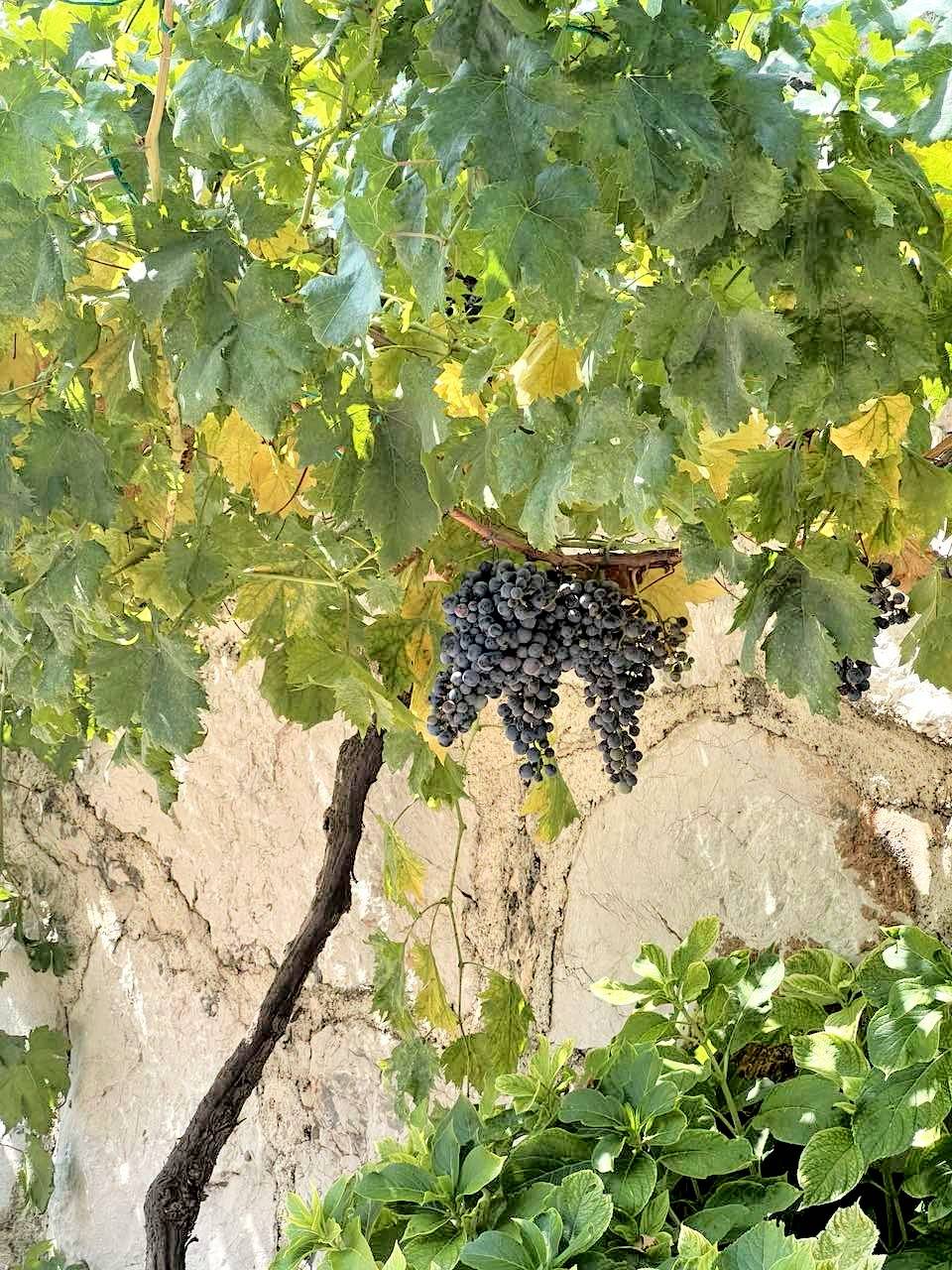
Grapes from vines all over the area.
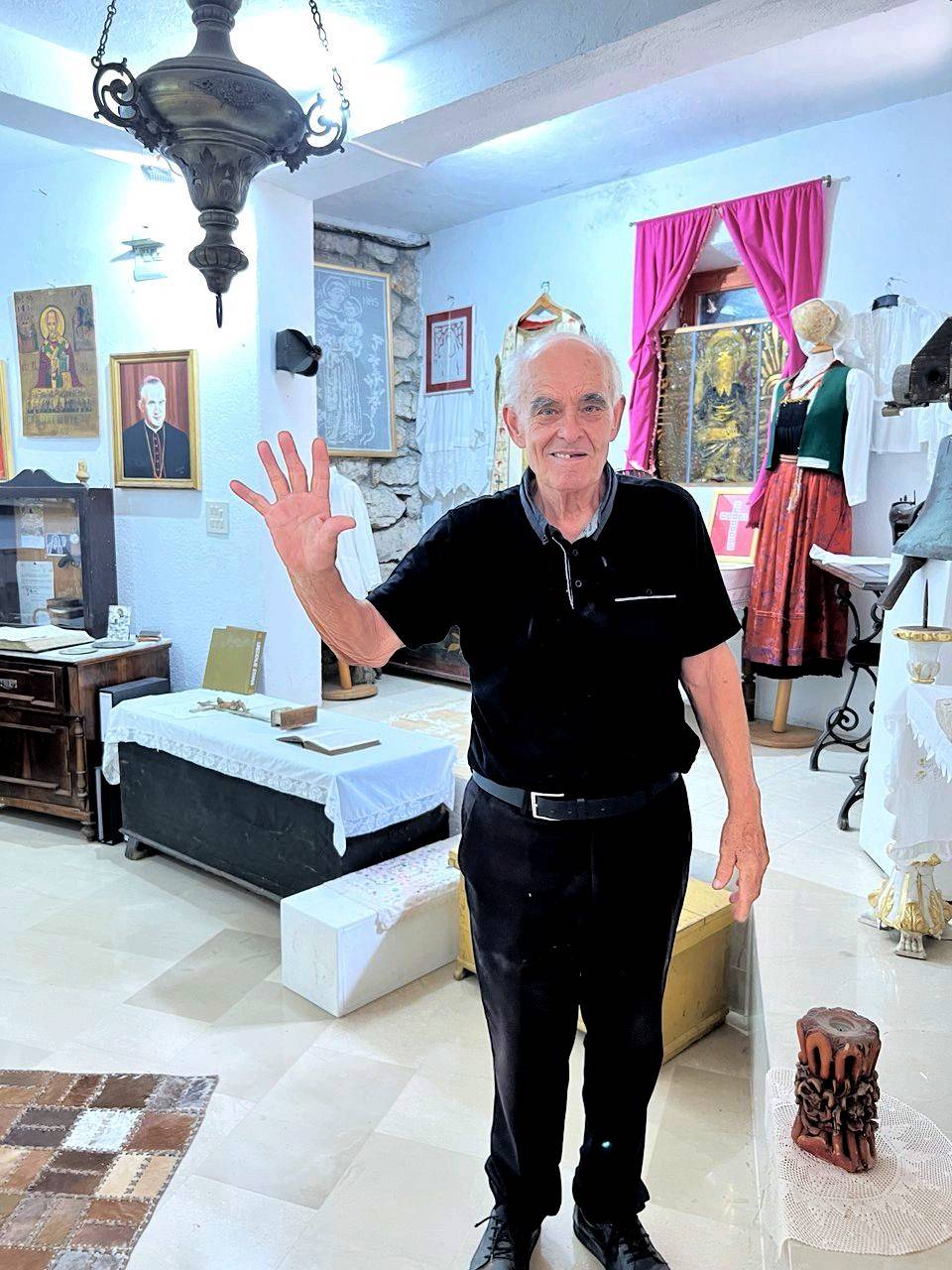
Father Stipe welcomes guests to the museum.
As we gingerly climbed up the steep slope to our destination for the day, we could clearly admire the beauty of the vast bay and point to the outline of our cruise ship. However, as our van carried on along the winding road, with bends after bends, our floating hotel became so tiny — it reminded me of the proverbial rubber duck on a huge bathtub. Only then, we realized we were on top of a high mountain, and how far we have ascended from the port!
The entire journey was only approximately 15 kilometers. But we took precious time. We simply had to. The path was steep and narrow, with deep ravines on one side, similar to the old Kennon Road of my youth. Vehicles came and went as quick as they appeared and vanished
on what seemed to be a one-way road. As a moving car approached, we immediately slowed down
and searched for a patch to give way. Then it was our turn to pass through. And so on… and on… in almost perfect cadence.
At such a low speed — a misnomer by then — there was no hurry. Drivers made ample room for incoming vehicles and continued the climb — it was an admirable group effort to not clog up the lane.
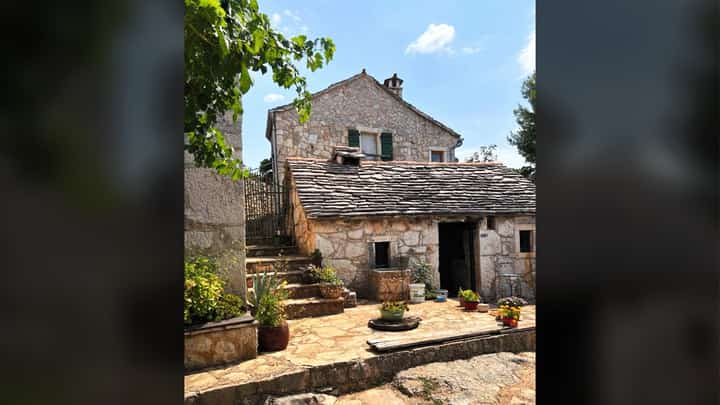
We were on our way to Jurlinovi Dvori, a rural stone homestead and an open-air ethnographic museum in the remote village of Draga in Primošten Burnji.
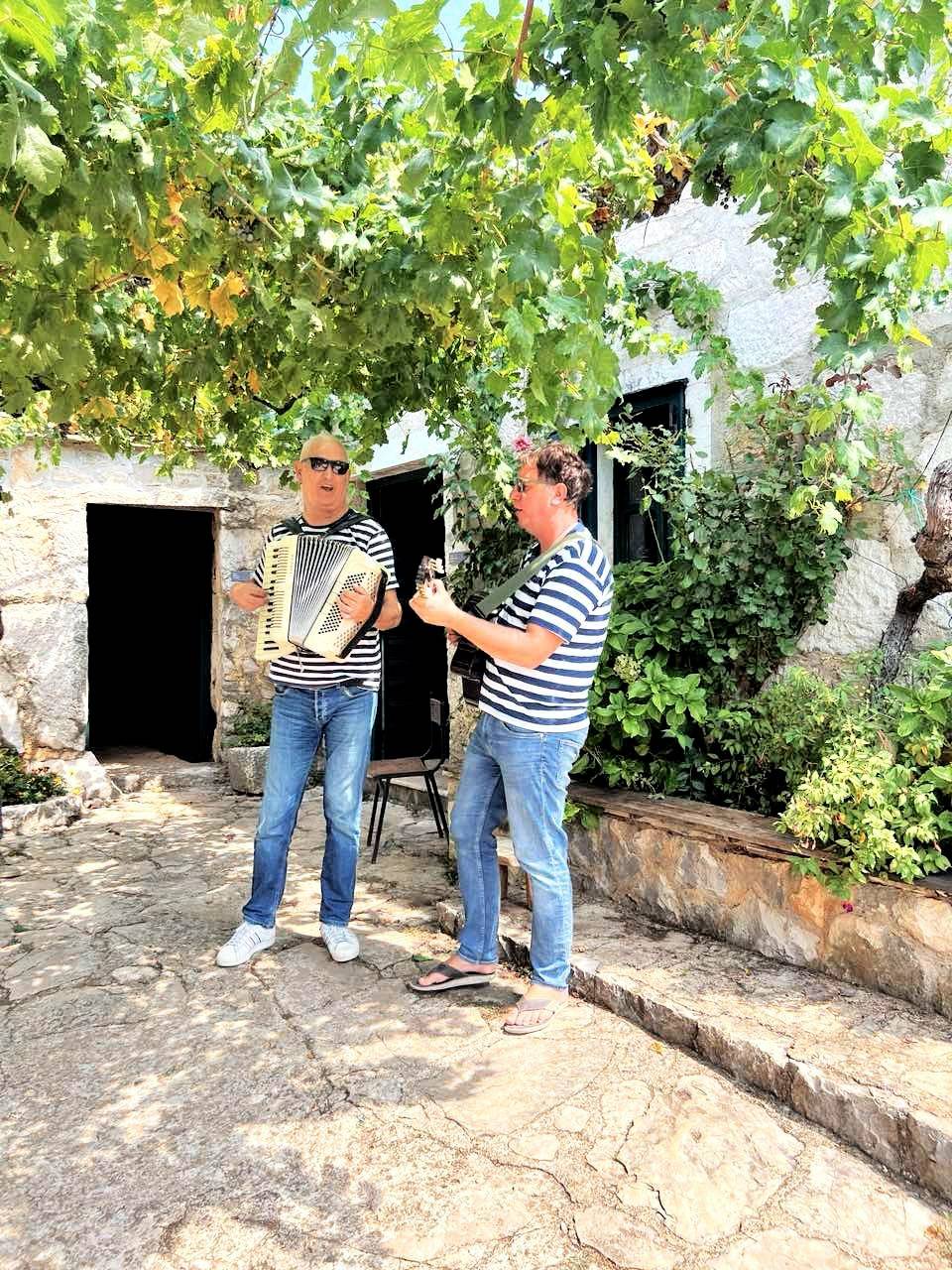
An accordion-and-strings-wielding duo.
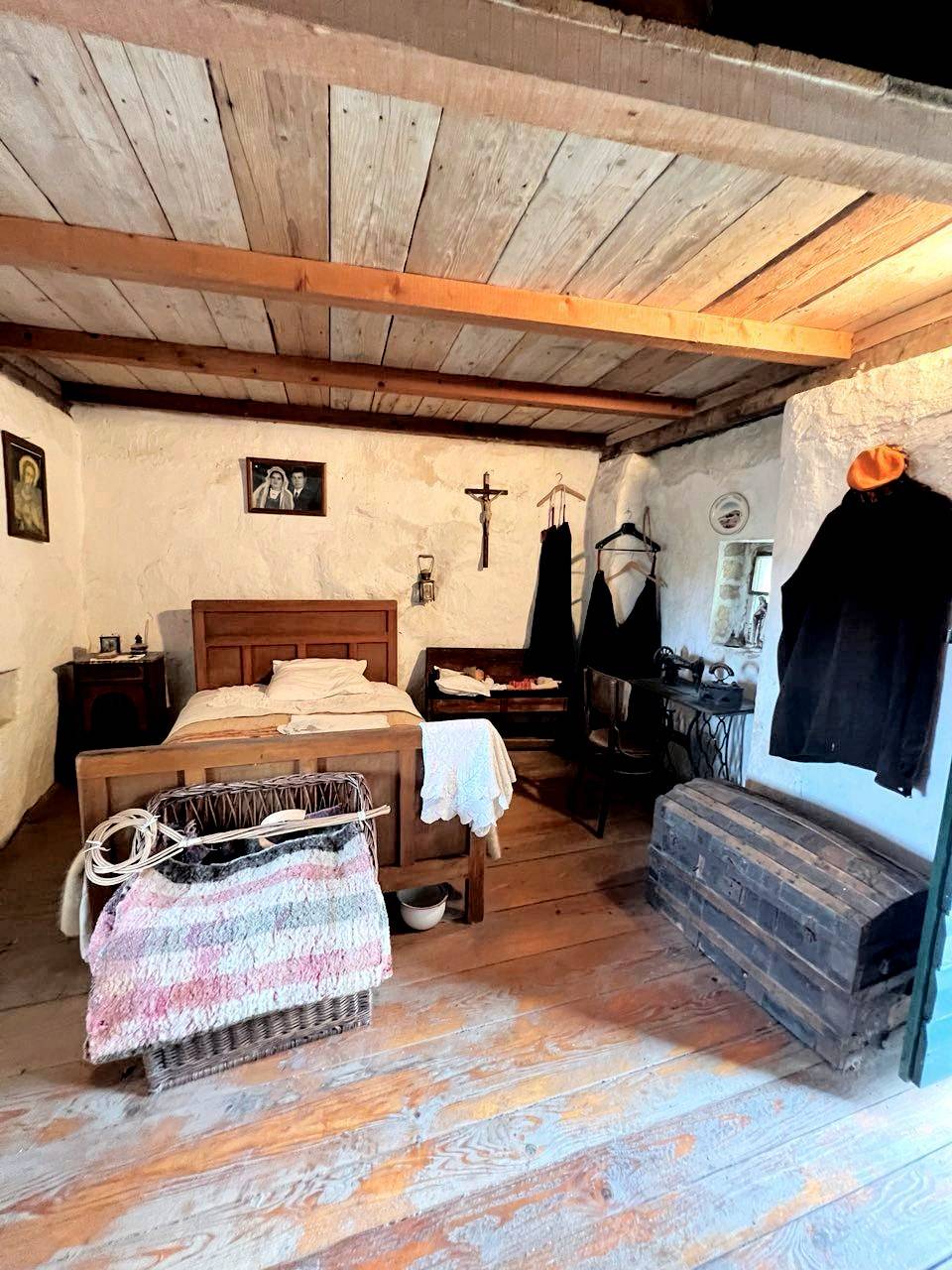
Man of God’s quarters.
A lady in eye-catching traditional attire welcomed us with rare fruits from the vines and trees surrounding the property. The setting was completely opposite from the coastal Croatia we had left behind. Here, the focus was on the farmstead and its bounties, and the manner of which the inhabitants once lived and continue to do so.
The eight terraced masonry cottages had been built in a circular cluster. Arranged around a protected central court, the rock dwellings were designed to shield from the rough, cold, turbulent winds. This ingenious arrangement likewise offered an insight into the resourcefulness of Croatian mountain-based families, who developed their fortified abodes for protection under tempestuous conditions.
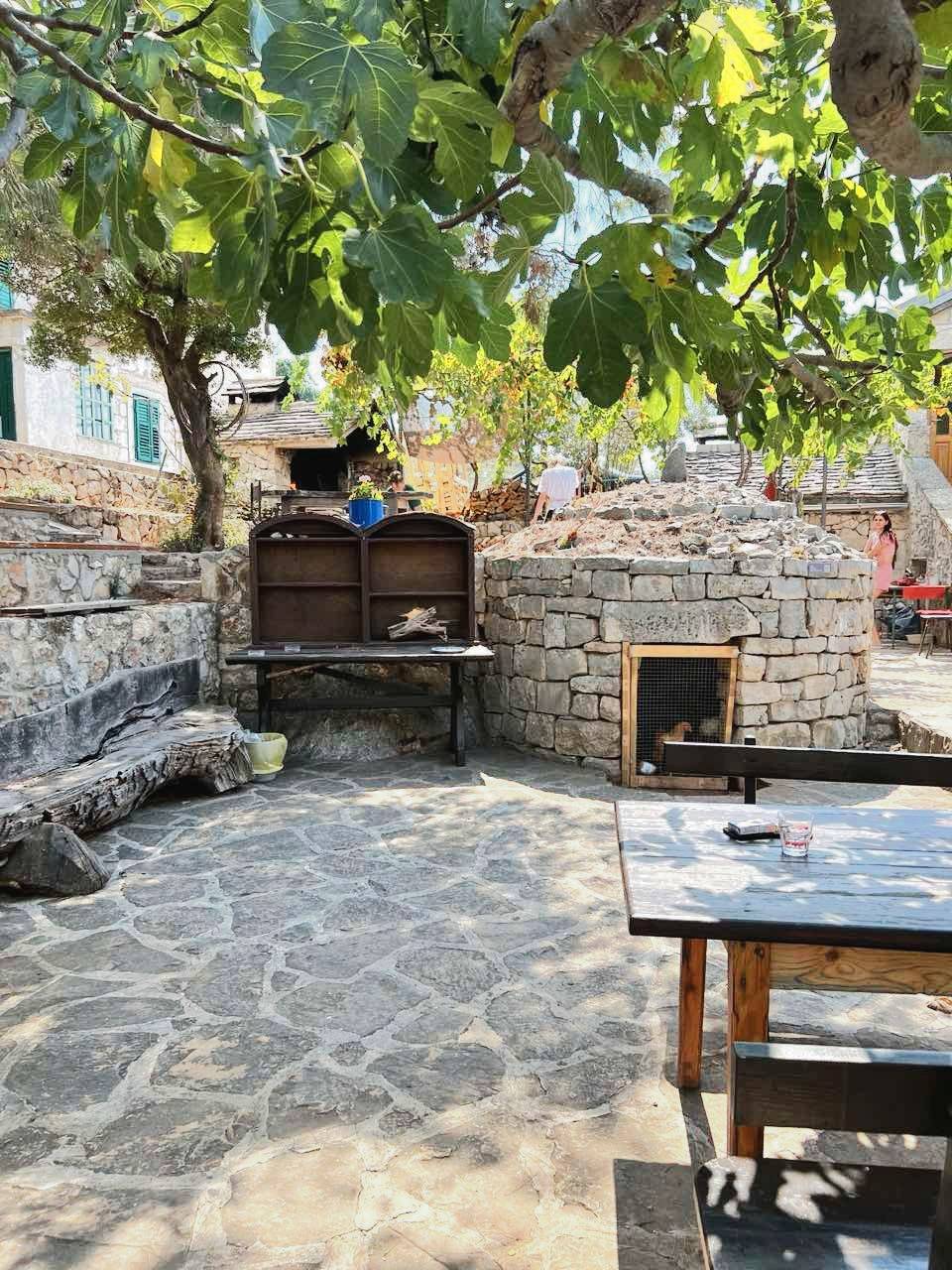
More shaded areas around the hamlet.
There was music, too. A duo of musicians with the seldom-seen accordion and a set of strings entertained us with lively hymns and a jolly vibe, making the visit feel less like a rigid constricted tour and more like a warm, friendly gathering.
Then we crossed paths with Father Stipe, sole owner of the estate, and sadly the last of his line. The grandson of the original founder, he immediately offered us a shot of locally produced spirits — we presumed it was vodka — followed by never-heard stories from World War II to regional battles and local skirmishes.
We were accompanied through some austere dwellings with old furnishings, to include the well-equipped rustic stuffed kitchen and a memorial museum. There were rooms for repairs full of tools, which clued us in on the rural restoration efforts
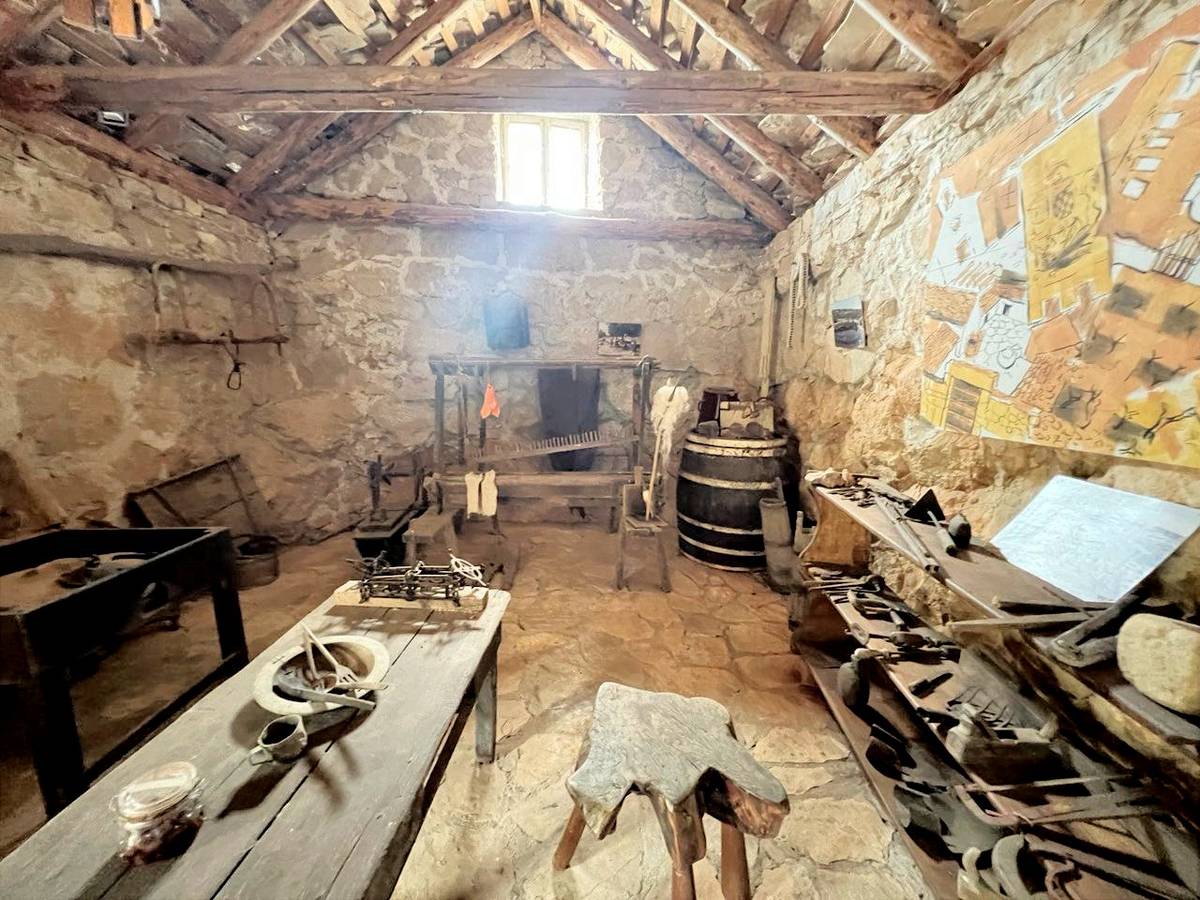
A well-equipped rustic kitchen with aged tools of long ago.
.
There was even a chapel with
mosaic windows, old lamps, icons and images, and altar and pews. The priest-patriarch prayed over the group. It may have been a simple gesture, but it certainly elevated the trip.
We eventually made our way to a long, refectory-style hall, where we were served with trays of degustation pizza, prosciutto, home-baked bread with self-made quality olive oil, and carafes of finely-aged wines.
Leaving was unexpectedly emotional. Was it the genuine hospitality or the gut-wrenching narratives? Or is it simply knowing such places depend on its inhabitants willing to preserve them. As we headed back to our ship, thoughts regarding the future of the last priest and Jurlinovi Dvori stayed with us. Prayers to all its residents.
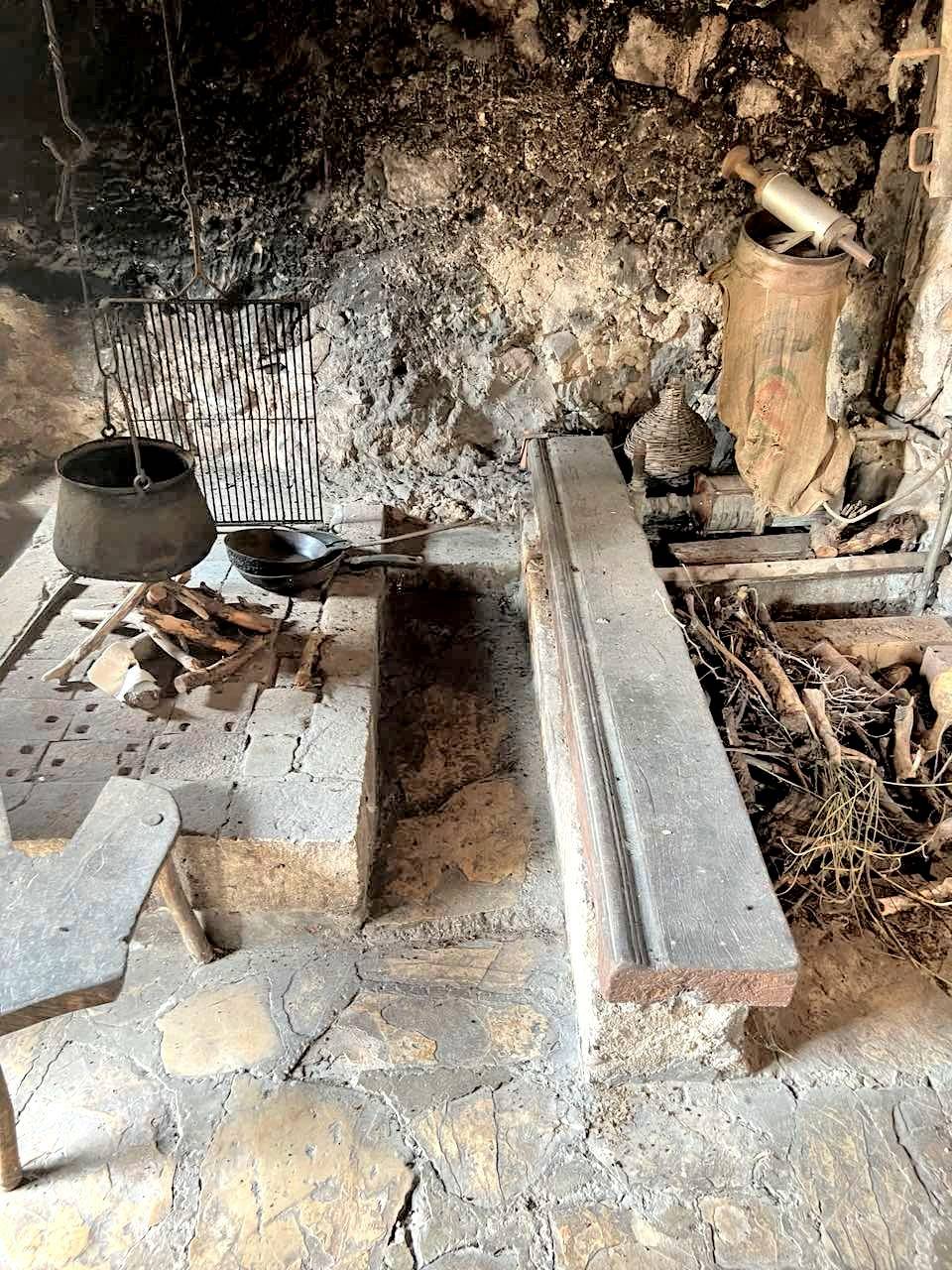
A mini cauldron and fireplace.