
Cost of second-guessing Pax Silica rising
Every month spent second-guessing whether to proceed is a month Vietnam, Malaysia and Indonesia spend closing the distance.

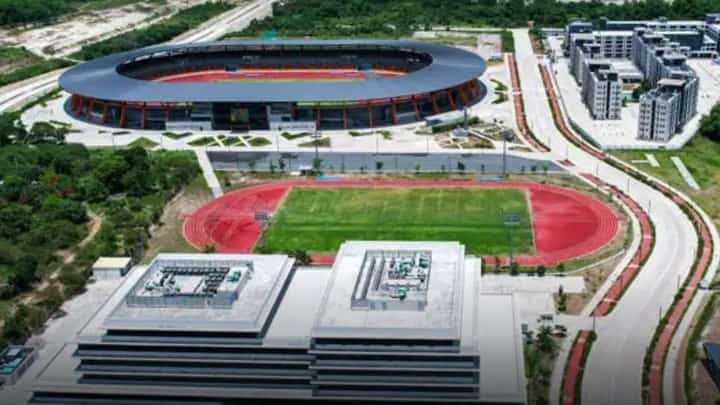
THE US-led Pax Silica initiative is said to be designed to build alternative tech manufacturing ecosystems independent of Chinese-controlled rare earths and supply lines. President Ferdinand R. Marcos Jr. denied that the Philippines, by joining Pax Silica, is distancing itself from China, which, he told FOCAP members on Friday, is still one of the biggest investors in the country.’
PHOTOGRAPH courtesy of Destination PH
Four months after the Philippines joined Pax Silica as its thirteenth signatory, the numbers have arrived, and they settle the argument.
The potential investment in the New Clark City hub now stands at $40 billion to $70 billion, with more than 130,000 high-quality jobs once fully developed, a figure the private sector puts even higher at 150,000. The long-term ambition will push Philippine exports toward $200 billion over the next 30 years. This is the clearest case yet for finishing what the Philippines started in April.
The New Clark City site spans roughly 1,620 hectares, with first-phase development covering about 500 hectares. The sequence: contract negotiations this year, planning in 2027, construction in early 2028. The framework agreement remains on track for signing before year-end.
Foxconn is poised to become the hub’s first locator, the most concrete corporate commitment secured to date. Participating firms stand to access CREATE MORE Act incentives, and this year’s Strategic Investment Promotions Program already classifies semiconductors, electronics, energy, and sustainability industries as Tier 1, the highest incentive tier the country offers.
Pax Silica is not yet a binding treaty. The Philippines joined through a declaration and the framework agreement will still need Senate ratification before it carries the force of law. The Senate committees on environment and finance spent five hours on the initiative on 14 August, and criticism has grown loud enough that the country’s ambassador to Washington publicly warned that the Philippines risks losing the opportunity if it drops the ball.
Legislative scrutiny and clear answers on water and community impact are not obstacles to participation. They are what make participation defensible once the deal is signed.
The gap between the government’s 130,000 figure and the private sector’s 150,000 likely reflect direct employment versus the wider multiplier across suppliers and services, and either way both describe a labor shift the country has not seen since the BPO boom two decades ago.
The Tier 1 classification places semiconductors and AI infrastructure in the same fiscal priority bracket as industries that already anchor Philippine exports, a genuine reallocation of state incentive capacity, not a symbolic gesture.
Foxconn’s expected role as first locator matters beyond one balance sheet: anchor investors of that scale signal credibility to the suppliers still deciding whether to commit.
This is also where the Securities and Exchange Commission’s own recent push matters. A supply chain this size will draw in hundreds of new suppliers, subcontractors, and joint ventures, all needing to register and start operating quickly if the Philippines wants to actually capture the investment rather than watch it stall in paperwork. SEC Zero has already cut company registration from a multi-day process to a same-day, paperless one. That speed is not a side benefit. It is a precondition for absorbing an investment wave this size without the backlog that slowed past industrial pushes
Every month spent second-guessing whether to proceed is a month Vietnam, Malaysia and Indonesia spend closing the distance. They are not pausing their own pitch to wait for the Philippine hearings to conclude.
A $40- to $70-billion case, a first locator already lined up, and the country’s highest incentive tier already in place leave no honest argument for slowing down the framework agreement this year.
The choice was never between careful oversight and moving fast. It was always both, on the same clock.