
Beyond survival: DOST promotes economic resilience through smart tech in MIMAROPA

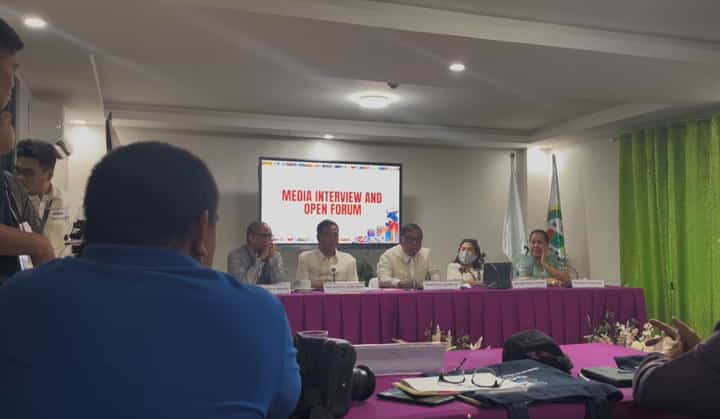
ODIONGAN, Romblon—The Department of Science and Technology (DOST)-MIMAROPA addressed the region's pressing needs by highlighting food security, sustainable energy, and national resilience during the opening day of the Regional Science, Technology, and Innovation Week (RSTW) on 17 August in Odiongan, Romblon.
DOST Secretary Renato U. Solidum Jr. returned to his home province to personally advocate for scientific advancements tailored to overcome the limitations of MIMAROPA's unique island geography. These challenges include logistical hurdles in accessing basic services, often requiring travel by plane, boat, and van, compounded by uneven connectivity and communication issues.
In his address, Solidum outlined the four strategic pillars guiding DOST's initiatives, which were also featured in the event's interactive exhibits:
Promoting human well-being to achieve a higher quality of life; fostering wealth creation by enhancing family income sources; strengthening wealth protection to safeguard livelihoods against natural hazards; and ensuring sustainability through strategies that endure across administrations and generations.
"Resilience is not merely surviving but economically thriving," Solidum stressed, clarifying that true resilience begins long before a disaster occurs rather than after.
He advocated for the role of science in building community resilience, citing climate adaptation initiatives, disaster preparedness, and science-based decision-making. Among these is Project SARAY, which introduces smart agricultural practices using weather forecasts, drought monitoring, and site-specific advisories to help local farmers build climate-resilient livelihoods.
Recognizing that technology requires a broader long-term framework to yield meaningful results, DOST partnered with local government units (LGUs) through the Smart and Sustainable Communities Program. The agency has allocated 71 million pesos in assistance for renewable energy, clean water systems, healthcare, and infrastructure—generating five community roadmaps and building the long-term planning capacity of 18 LGUs.
To enhance operational efficiency across industries, DOST also aims to empower 10,000 technology-enabled Micro, Small, and Medium Enterprises (MSMEs) through digital tools, artificial intelligence, analytics, robotics, and ready-to-deploy technologies.
Solidum shared that the scale of assistance DOST provides remains heavily dependent on available funding. Reflecting on his upbringing in the province, he noted that pockets of innovation are already transforming local livelihoods.
He cited a smart agriculture initiative in Barangay Bangon using hydroponic lettuce production, which now supplies restaurants in both Odiongan and Boracay. Other highlighted innovations included cost-effective, easy-to-operate potable water systems like SAFEWTRS, as well as REINN-LokalFI, an initiative designed to address local connectivity challenges.
When asked about digital accessibility, particularly for non-tech-savvy residents using app- or web-based technologies in areas with poor internet access, Solidum acknowledged the gap.
"The science is there, but a lot of people still need to be assisted," he said, emphasizing the importance of DOST's partnership with the Department of Information and Communications Technology (DICT) alongside on-the-ground user training programs.
Solidum pointed out that the key to community development through science starts with curiosity. From transparency about the realistic challenges to wild imagination of what future progress can provide to people, he stressed, "Be curious, don't stop asking questions."