
The other room where it happens
As a hospital leader, I have seen how quickly a dependable person becomes a substitute for a dependable process.


I was scrolling for something to watch while wondering what to write about next when I landed, almost by accident, on Hamilton.
One of its songs, “The Room Where It Happens,” is about the hunger to be where consequential decisions are made. Doctors know that pull, although our rooms are usually less glamorous. A patient is waiting in the clinic. A result has changed on the ward. Someone is deteriorating in the ICU. A decision is waiting in the boardroom. I have spent much of my adult life moving between the bedside and the boardroom, sometimes within the same morning. Each room tells me plainly what is being asked of me. The other room is quieter. Nothing there may appear urgent, nobody may be calling my name, and life is happening anyway.
A doctor’s absence from home rarely begins with a choice between trivial work and important people. More often, it grows out of reasonable decisions near the end of an ordinary day: one more result to review, one more family to update, one more discharge that can proceed if an order is given, one more call better returned tonight than tomorrow. For a transplant doctor, even a small rise in creatinine — a waste product whose level in the blood helps us track kidney function — may reflect normal variation or be the first sign that a transplanted kidney is in trouble. There is a person behind the number, and delay can matter. If a patient is unstable, the choice is usually clear. The harder days are those when no life depends on the next hour but the work remains useful. Another review may clarify the plan; another conversation may prevent tomorrow’s problem. The extra hour would not be wasted. That is precisely why it is so easy to give away. We rarely give medicine our time in one dramatic act. We give it in small, reasonable installments.
Medicine makes unfinished responsibility unusually visible. An unread result remains on the screen. An open chart waits for a signature. An unanswered call returns. We are trained to close these loops because care is safer when we do. But what must be done now and what simply remains to be done are not always the same. I have not always distinguished them easily. Over the years, my work widened — from my own patients to trainees and committees, and eventually to hospital decisions that may affect hundreds. At the bedside, one patient may be waiting. In the boardroom, an entire service may be waiting. The work is different, but neither claim is imaginary. In either place, another hour can usually be defended.
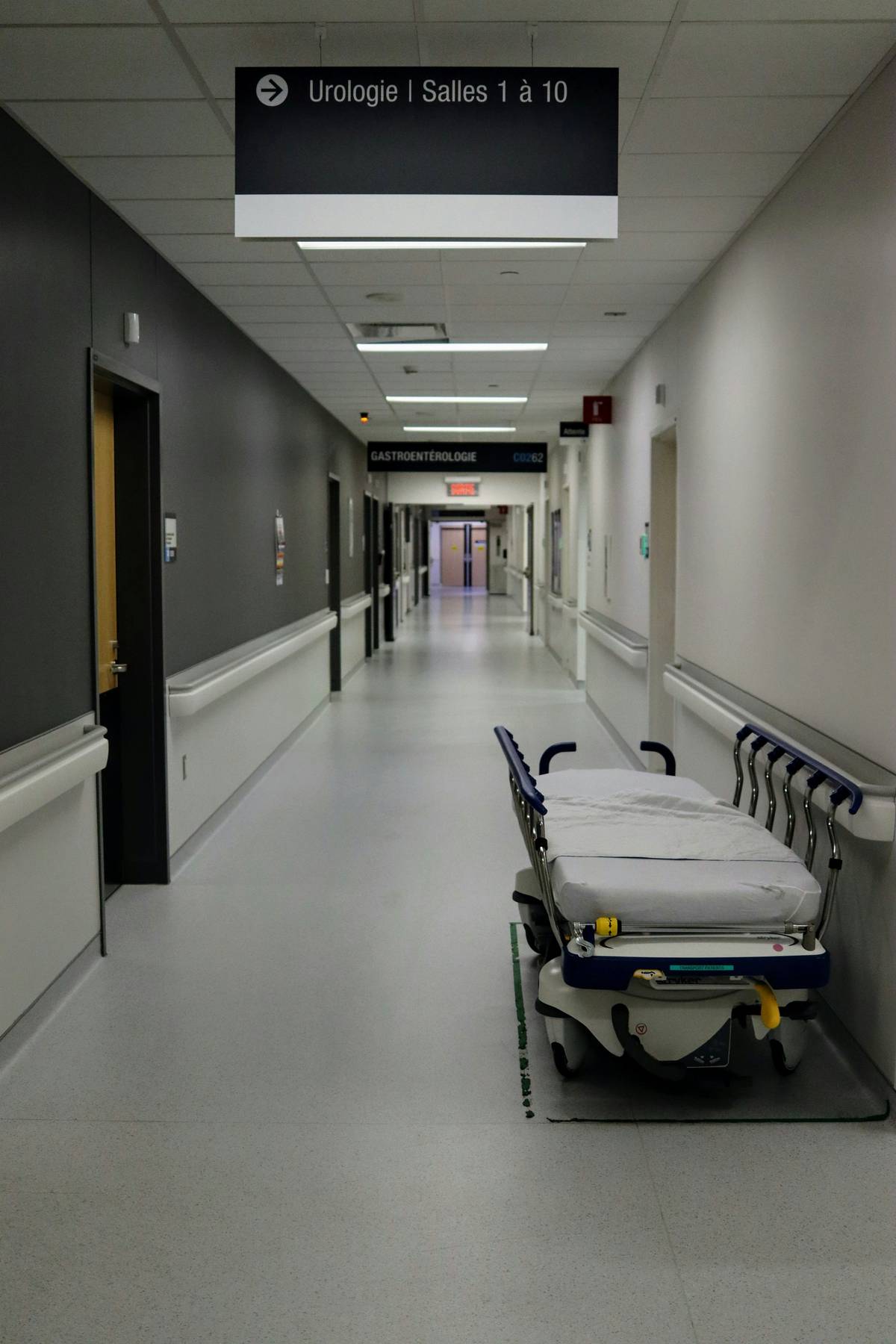
The work of Medicine extends beyond the hospital, shaping the lives of doctors and their families.
PHOTOGRAPH COURTESY OF miguel-ausejo/UNSPLASH
As a hospital leader, I have seen how quickly a dependable person becomes a substitute for a dependable process. A delayed discharge, an unanswered referral, or a backlog appears on a report; the evening used to clear it does not. When someone steps in, the problem disappears from the dashboard, and relief can be mistaken for repair. I have seen this from both sides: as the doctor who finds one more reason to stay, and as the leader grateful when someone else does. That is what makes the lesson uncomfortable. In a health system like ours, where gaps are often bridged by whoever is willing, repeated rescue can conceal the weakness that made it necessary. A hospital may look efficient only because someone’s private time is absorbing what the system could not.
But it would be too easy to blame only the institution. Alexander Hamilton was also preoccupied with legacy: the human hunger to leave evidence that our years mattered. Medicine gives us many ways to count a life: patients cared for, doctors trained, decisions made, programs built. These are not empty achievements. They can represent lives improved and work worth doing. But medicine also provides visible proof that we were useful. Being needed is not only burdensome; it can be reassuring. A chart can be completed, a policy signed, a program built. Ordinary life offers no comparable moment when one can say the work is done. I do not always know whether I answer because the work requires me, or partly because I have grown used to being required.
My children grew up knowing that medicine can rearrange an evening without warning. They rarely needed the reasons explained, and I may have accepted that understanding too easily. At the hospital, need announces itself: monitors alarm, laboratory results change, and someone calls. At home, what matters often makes no such announcement. Meals begin, plans change, and “I’ll try” is heard as an honest answer rather than a promise. What is missed is rarely a birthday or graduation; those are visible enough to protect. More often, it is dinner, a conversation, or a quiet hour that seems interchangeable until the children are older. Nothing has to be wrong for something valuable to be lost. We keep meticulous records of what patients receive from doctors and almost none of the hours their families give medicine.
At fifty, “later” no longer sounds unlimited. This does not give me a clean rule for when to stay and when to leave. There will be nights when staying is the only honest choice, and the people at home often understand that better than anyone. Most of my medical career, however, has been lived in the wide middle, where the remaining work genuinely matters but may be handed over, deferred, or done tomorrow without anyone being abandoned. The difficult question is not whether the work is worthwhile. It usually is. It is whether it requires me, and whether it requires me now.
Most days, I can explain exactly why I stayed, and usually the explanation is a good one. My family has always understood when medicine had to come first. I am less sure that I always knew when it did not.