New PAO lawyers warned against corruption
Text size
 Daily Tribune
The 282 newly-appointed public attorneys was urged to be responsible by serving poor clients who cannot afford private legal counsel.
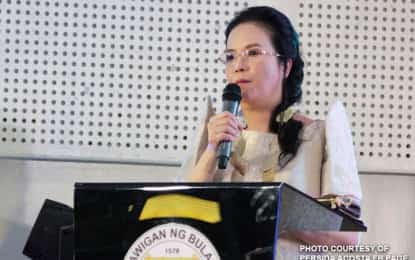
This was the warning issued by Public Attorney’s Office (PAO) Chief Persida Rueda-Acosta saying they should fight corruption and urged them to uphold integrity, professionalism and quality legal service to marginalized Filipinos.
Speaking during the PAO orientation and oath-taking ceremony for newly appointed lawyers and staff, Acosta warned them against accepting money, food or other gifts from clients with pending cases.
The message stated that “even seemingly small favors could expose public attorneys to complaints and possible dismissal from government service.”
She mentioned the dismissal of 11 PAO lawyers from service during her tenure following investigations into misconduct, including cases involving alleged solicitation of payments from clients.
With this, the newly minted public lawyers was told to remain professional and efficient in handling their cases, she said they should make good use of their time and promptly communicate developments to their clients.
It is important that public attorneys should inform clients about postponements, hearings, promulgations and other developments in their cases, noting that clients could otherwise waste time and money traveling to court without knowing that a hearing had been moved.
Communication allowances would be provided to help them maintain contact with clients through calls, text messages and messaging applications.
The new lawyers, who would join as the country’s “top defenders of the poor,” was reminded that success in public defense does not always mean an acquittal.
Acosta said a favorable result could include a reduced sentence, probation, good conduct time allowance or release through appropriate legal remedies. She also defended plea bargaining as a legal option when prosecution evidence is strong, while stressing that PAO lawyers must fight cases when clients maintain their innocence.
She recalled her own experience as a public attorney in Manila beginning in 1990, when lawyers handled several courts and worked with limited resources and much lower salaries.
The PAO personnel at that time despite being called “second-class lawyers,” continued working because of their commitment to providing legal assistance to the poor.
New lawyers was urged to stand firm in court despite pressure or criticism from opposing parties, saying they should not be ashamed of being public attorneys.
They were also encouraged to develop their skills in both writing and oral advocacy, particularly through assignments involving appeals.
Experience in appellate work could help lawyers become better advocates and prepare them for other positions in the justice system, she said.
Acosta described public service at PAO as a responsibility to protect the poor and marginalized that have limited means to defend their rights.
The newly appointed PAO personnel are set to begin their assignments in September following their continuing orientation and training, according to PAO-Metro Manila director Revelyn Ramos-Dacpano, who also serves as Executive Support Staff head.
Batangas 1st District Rep. Leandro Leviste has been ordered arrested by the Makati City Regional Trial Court (RTC) for…
The Commission on Audit (CoA) has “affirmed with finality” its P73.28-million disallowance of confidential funds spent…
Car company Tesla has rolled out its autonomous taxi in Austin, Texas, USA.