
Bad weather causes P2.6-B infra, P689-M agri damage


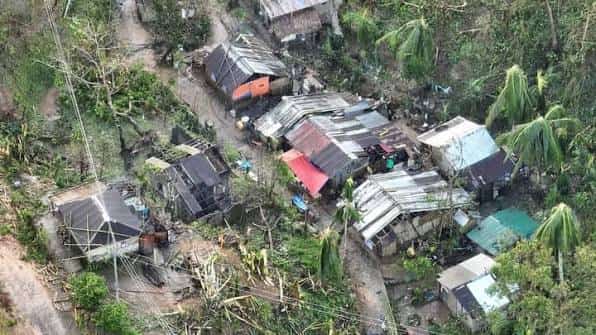
OVER 9,000 individuals have been displaced while 80,632 people have been affected across the country by the combined effects of tropical cyclones ‘Maymay’ and ‘Luis’ and the southwest monsoon, according to the National Disaster Risk Reduction and Management Council.
PHOTO courtesy of Philippine News Agency
The damage to infrastructure from tropical cyclones “Luis” and “Maymay” and the enhanced southwest monsoon, or habagat, has surpassed P2.6 billion, while agricultural losses reached P689.66 million as the weather disturbances affected some 3.7-million Filipinos, disaster and agriculture officials reported Thursday.
The Office of Civil Defense (OCD) and the National Disaster Risk Reduction and Management Council (NDRRMC) said the affected population was spread across the Ilocos Region, Cagayan Valley, Central Luzon, Bicol, Western Visayas, Zamboanga Peninsula, Calabarzon, Cordillera Administrative Region, National Capital Region and Mimaropa.
OCD public information officer Diego Mariano said the affected population represented nearly 1.09-million families in 3,637 barangays.
Three people were missing while 15,017 families, or 53,570 people, were in 533 evacuation centers, the NDRRMC reported. It said 1,439 houses were damaged.
The NDRRMC estimated infrastructure damage at P2.647 billion. It said P458.02 million in government assistance had been provided to affected areas.
The Department of Agriculture, meanwhile, placed agricultural damage at P689.66 million, affecting more than 21,000 farmers across six regions. The DA said 19,634 hectares of agricultural land were affected, with production losses reaching 17,527 metric tons.
Rice, corn, cassava, high-value crops, livestock and poultry were affected, along with farm infrastructure, machinery, and equipment. The damage was recorded in the Ilocos Region, Cagayan Valley, Central Luzon, Calabarzon, Mimaropa and Western Visayas.
Conflicting tolls
In the Cordillera, preliminary DA data showed agricultural losses of 433.63 metric tons, while local disaster offices recorded 1,092 affected farmers and fisherfolk.
Meanwhile, 21 people had died from the weather disturbances as of 6 a.m. Thursday, according to the OCD and NDRRMC. Benguet recorded the highest number of fatalities, with 15 people killed in landslides.
The Philippine National Police reported a higher death toll of 25, after revising its previous tally of 26. One of the reported deaths was later determined to have been caused by another factor and was removed from the weather-related count.
The DA has made available P125.23-million worth of rice, corn and vegetable seeds for affected farmers. The National Food Authority was preparing 1,007 bags of milled rice for affected residents, particularly in the Ilocos Region and Cagayan Valley.
Farmers may avail themselves of up to P25,000 in zero-interest loans under the Agricultural Credit Policy Council’s Survival and Recovery Loan Program, payable over three years. Insured farmers may receive indemnification through the Philippine Crop Insurance Corp.
The PNP said it was monitoring reports of overpricing, hoarding, and profiteering amid disruptions to agricultural production and supply.