
UPLB hunts for next ube export superstar

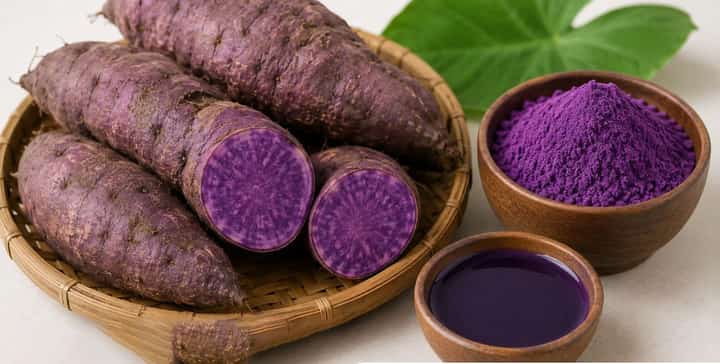
THE growing acceptance of ube in Europe is more than just a food trend — it is a reflection of cultural exchange, innovation and sustainability. For the Philippines, this means enhanced export potential, increased agricultural investments, and the chance to promote Filipino identity on a broader stage.
PHOTOGRAPH courtesy of da/ig
The Philippines’ global ube boom could depend on what scientists find beneath the soil, as researchers at the University of the Philippines Los Baños (UPLB) identify promising yam varieties that could make the country’s purple crop more productive, consistent and competitive in export markets.
Researchers studied 188 greater yam (Dioscorea alata) accessions collected from farms and gene banks nationwide, narrowing them down to 10 standout varieties with potential for commercial production and breeding.
The findings come as ube continues to gain popularity overseas, appearing in desserts and beverages in major markets. But researchers say sustaining that demand will require more than the crop’s growing popularity.
The selected varieties differ in traits important to both farmers and consumers. Some deliver higher yields, while others stand out for their color, flavor, aroma or anthocyanin content, the natural pigment responsible for ube’s distinctive purple color.
Villasis 2 emerged as the highest-yielding variety, producing more than 60 tons per hectare, while Kinampay continued to stand out for its flavor.
Researchers also used thousands of genetic markers to create DNA profiles of the Philippine yam accessions. The genetic information can help distinguish varieties and support future systems for varietal identification and certification.
Such tools could become increasingly important as the Philippines expands its ube exports. Consistent identification of planting materials can help farmers maintain authentic varieties while giving processors and overseas buyers greater confidence in the quality and identity of Philippine ube.
The study also provides breeders with a pool of traits that can be combined to develop improved varieties suited to commercial production.
With demand for ube rising globally, UPLB’s research suggests that the next step for the Philippine industry is not simply producing more of the crop, but developing varieties that can consistently meet the needs of farmers, processors and international consumers.
The goal is to turn the country’s growing ube popularity into a more reliable and competitive agricultural industry.