
Leapfrog or decline
Now we have another opportunity. But this time, we have to build the foundations. Good governance is often discussed as a matter of morality. It is also economics.

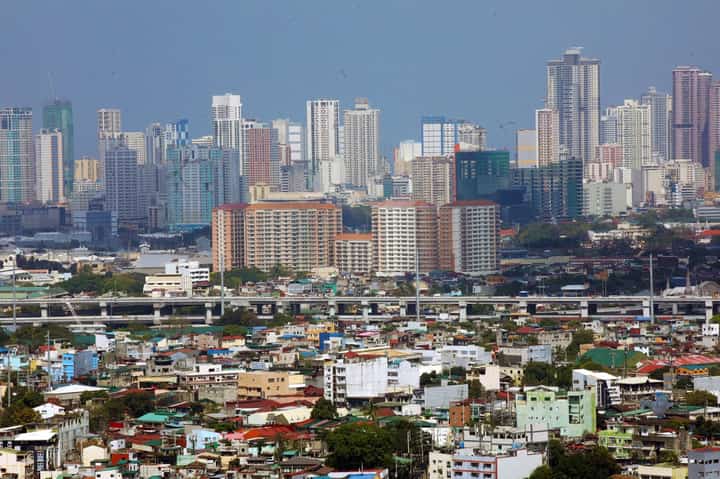
The Philippine economy is not collapsing, but it is losing momentum.
GDP grew by only 2.3 percent in the second quarter of 2026, down from 2.8 percent in the first quarter. First-half growth was just 2.6 percent, below the government’s 3.5 to 4.5-percent target.
More disturbing are the components behind the number. Construction contracted by 14.8 percent. Investment fell by 9.2 percent. Household consumption, which traditionally carries much of the Philippine economy, grew by only 2.8 percent.
It was the weakest quarterly performance since 2021.
Inflation is also hurting purchasing power. Headline inflation reached 6.2 percent in July, with core inflation at 4.2 percent. For the bottom 30 percent of Filipino households, inflation reached eight percent in June.
These are not simply statistics. They tell us that confidence, investment and purchasing power are weakening.
So the question should not merely be: How do we return to five or six percent growth?
The bigger question is: How does the Philippines leapfrog?
Leapfrogging means using technology, geography, infrastructure, foreign capital, and institutional reform to move faster than the conventional development path.
We did it before.
Mobile communications expanded without first building the fixed-line networks of developed countries. The BPO industry created a globally competitive services sector without the country first becoming a traditional industrial power. Digital payments allowed millions to participate in financial transactions without going through the full development of conventional banking.
Now we have another opportunity. But this time, we have to build the foundations. Good governance is often discussed as a matter of morality. It is also economics.
An investor asks basic questions. Can I enforce a contract and protect my property? Can I obtain permits predictably? Can regulations suddenly change? Can government procurement be trusted and commercial disputes resolved before an investment becomes obsolete?
The 2025 World Justice Project Rule of Law Index gave the Philippines an overall score of 0.46, or 97th out of 143 countries and 13th out of 15 in East Asia and the Pacific. Civil justice scored 0.44 and criminal justice only 0.31. These numbers matter because capital has choices.
If doing business in the Philippines carries greater uncertainty, investors can simply go somewhere else.
We therefore need faster commercial justice, digital courts, predictable regulations, transparent procurement and stronger institutional checks. A country cannot leapfrog technologically while remaining institutionally behind.
Investor confidence is infrastructure. It turns opportunity into growth.
The reported 26.5-percent decline in net FDI in the first four months of 2026 compared with the same period last year is troubling. Net FDI had also weakened, with about $7.08 billion recorded during January-November 2025, compared with $9.08 billion during the same period in 2024.
Political, regulatory, and judicial uncertainty is itself a cost of doing business. We need roads, railways, airports, seaports, water systems, and digital networks. But infrastructure should not be viewed as isolated projects. It must support an economic strategy.
This is where the Luzon Economic Corridor becomes important. Properly developed, it can connect industrial zones, ports, airports, logistics centers, energy systems, and technology investments into one productive ecosystem.
But the corridor should not simply serve individual projects.
If a semiconductor plant or data center requires enormous electricity, additional generation and transmission must be part of the plan. If it requires substantial water, sustainable supply, recycling and storage must accompany it. If it requires imports and exports, ports and freight systems must be capable of handling them efficiently.
Every strategic investment should leave the Philippines with greater productive capacity than it found. Recent geopolitical crises have shown how quickly international conflict can become a Philippine inflation problem.
The Philippines remains heavily dependent on imported petroleum. A disruption in the Middle East can therefore affect transportation, electricity, food and virtually every productive activity.
Strategic petroleum reserves should be treated as national economic security. We should examine adequate petroleum storage, diversified supply sources, modern petroleum terminals, ports capable of efficiently receiving very large crude carriers where appropriate, and commercially viable refining or processing capacity.
The objective is not complete energy independence. It is energy resilience.
The same principle applies to electricity. A country seeking semiconductor manufacturing, artificial intelligence, advanced manufacturing and data centers cannot tolerate unreliable or prohibitively expensive power.
This may be the most important test for Pax Silica. It should not simply mean foreign companies building facilities in the Philippines. It should mean Filipino engineers, technicians, universities, and companies moving up the value chain.
We should ask from the beginning: How much technology transfer will occur? How many Filipinos will be trained? How many local suppliers can participate? What research partnerships will be created?
The Philippines should become more capable because these investments are here.
Otherwise, we risk repeating the old model of an enclave economy: foreign capital arrives, resources are consumed, low-value jobs are created, profits leave and environmental costs remain.
That is not leapfrogging. Leapfrogging means using foreign capital and technology to build Philippine capability.
The choice should never be investment or the environment. It should be investment with sustainability.
Major projects must disclose water consumption, energy requirements, waste streams and emissions. Environmental impact assessments must be credible and independently monitored. Communities must have meaningful consultation, and compliance data should be publicly accessible.
We should welcome investment — but not at the expense of the resources on which the next generation will depend.
And then there are the Filipinos. No economic leapfrog can succeed if Filipinos are left behind.
Advanced manufacturing and technology require engineers, technicians, researchers, and skilled workers. Universities must become research and innovation partners, not merely suppliers of graduates.
The eight-percent inflation experienced by the bottom 30 percent is not merely a social statistic. It is an economic warning.
When families are squeezed, consumption weakens. When consumption weakens, businesses suffer.
The long-term answer can not always be subsidies and temporary relief. It must ultimately be productivity —better infrastructure, reliable energy, competitive industries, better jobs and higher wages.
We know what needs to be done: good governance, swift justice, investor confidence, strategic infrastructure, energy security, industrial policy, environmental discipline, and human-capital development. And above all, transparency — so the citizens can see what is being built, how much it costs, who benefits, and whether the government delivers.
Pax Silica and the Luzon Economic Corridor could provide the catalyst. But they cannot substitute for reform.
The Philippines does not lack geography, talent, natural resources, or access to major markets. What we lack is the institutional consistency to convert these advantages into sustained productivity.
That is why the 2.3-percent growth figure should be a wake-up call. First, stop the bleeding. Then leapfrog.
We should not merely aim to return to five or six-percent growth. We should build the conditions for sustained, productivity-driven growth that can eventually exceed it.
Pax Silica can provide the spark. The Luzon Economic Corridor can provide the platform.
But governance, energy security, infrastructure, justice, human capital, environmental discipline and public trust must provide the foundation.
Otherwise, we might build the corridor — but fail to build the country.