
Why we need better overpasses
When thoughtfully designed, overpasses can significantly improve the commutes of the millions of people who rely on them every day.

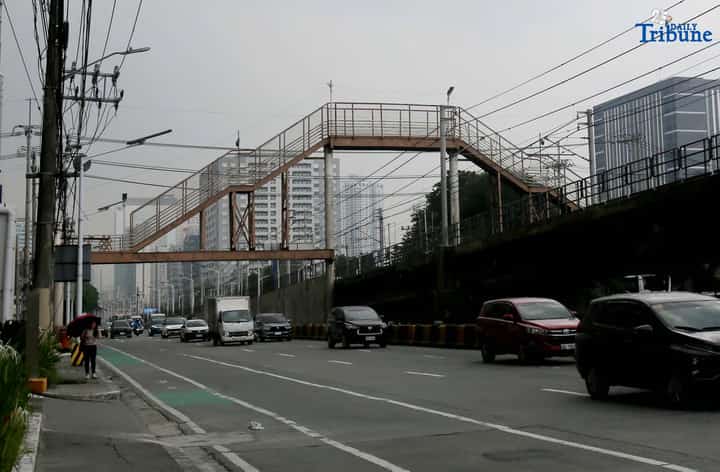
Designed as part of the EDSA Busway improvement program, the new EDSA-Kamuning Footbridge prioritizes accessibility through a lower crossing height, elevators and direct integration with public transport facilities.
Photographs by Analy Labor for DAILY TRIBUNE
Crossing the street is perhaps the most ordinary thing we do in a city. We rarely think about it. We simply look both ways, cross to the other side and continue with our day. Unless, of course, someone asks us to climb the equivalent of a three-story building first.
For years, the EDSA–Kamuning Footbridge was perhaps the country’s most recognizable pedestrian overpass. Known to most Filipinos simply as “Mount Kamuning,” it rose nearly nine meters above EDSA and required commuters to climb more than 150 steps.
When the government replaced Mount Kamuning in 2026, the new overpass was designed to be lower, directly connected to the EDSA Busway and MRT-3 station, and equipped with elevators and wheelchair lifts. Today, it serves a transport corridor that carries more than 750,000 passenger trips each day; the design recognizes that moving people comfortably is just as important as moving them safely.
That quiet redesign reflects a much larger shift in how cities think about pedestrian infrastructure.
Pedestrian overpasses are often mistaken as a uniquely Filipino feature, yet they emerged throughout the world during the 20th century as cities adapted to the rapid growth of automobiles. They are ideally designed for roads where it would be difficult or impractical for vehicles to stop such as expressways, airport roads and railway corridors.
Designed as part of the EDSA Busway improvement program, the new EDSA-Kamuning Footbridge prioritizes accessibility through a lower crossing height, elevators and direct integration with public transport facilities.
Photographs by Analy Labor for DAILY TRIBUNE
The Quezon City Elevated Landscape Promenade reimagines the traditional footbridge by combining pedestrian mobility with public open space, connecting the Quezon Memorial Circle and the Ninoy Aquino Parks and Wildlife Center.
The challenge is that cities change. Roads that were once built primarily to move vehicles gradually become lined with schools, churches, hospitals, markets, offices and transport terminals. Everyday life begins to exist on both sides of the street, and thousands of people naturally need to cross throughout the day. As these roads evolve, providing safe and convenient pedestrian crossings became apparent.
A 2024 study by researchers from the Mindanao State University–Iligan Institute of Technology found that only 38.42 percent of pedestrians observed at four overpasses in Iligan City actually used them. Convenience, safety, security and the physical condition of the bridges proved to be stronger influences than the mere existence of the crossing.
According to the World Health Organization, pedestrians account for nearly one-quarter of all road traffic deaths worldwide, making them among the most vulnerable road users. These figures highlight the importance of having usable and practical overpasses in our cities.
The Quezon City Elevated Landscape Promenade points toward what that future could look like. Opened in November 2025, it connects the Quezon Memorial Circle with the Ninoy Aquino Parks and Wildlife Center, allowing pedestrians and cyclists to cross Elliptical Road safely while extending one public park into another. The promenade becomes part of the landscape itself with its potted gardens, generous walking space, seating areas, bicycle ramps and shaded places where people can pause and enjoy the surroundings.
Pedestrian bridges are ultimately investments in public safety and mobility. But like any piece of infrastructure, they only succeed when they serve the people they were built for. When thoughtfully designed, overpasses can significantly improve the commutes of the millions of people who rely on them every day.