
We should have more murals in our cities
Murals allow artists to bring local memory into public view, while giving residents something familiar to recognize and visitors something worth discovering.
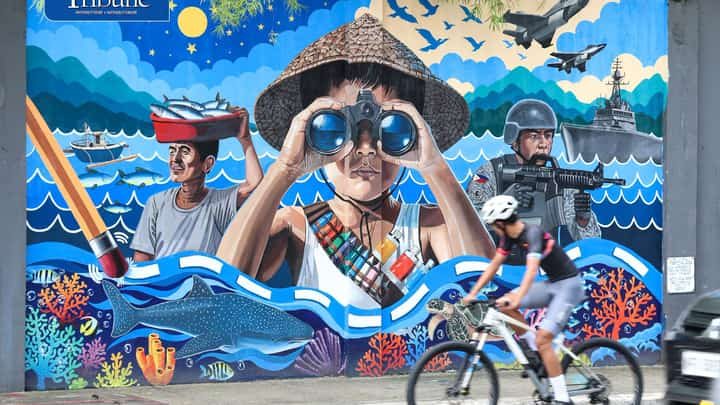
ALONG Bonny Serrano Avenue in Quezon City, a West Philippine Sea mural depicts fisherfolk, marine life and uniformed personnel against a bright blue seascape.
In 2022, an Australian curator came across portraits of market vendors from Barotac Viejo on Instagram. The artists behind them, Iloilo-based Kikik Kollektive, had turned everyday people into subjects worthy of public attention. The curator flew to Iloilo and walked its downtown streets to see their murals firsthand.
Two years later, the collective painted a 25-meter wall at Brisbane’s Gallery of Modern Art. Their work, Tul-an sang aton kamal-aman (Bones of Our Elders), brought Panay’s history to an international audience, with revolutionary figure Teresa Magbanua standing among images of farmers and the mythical Bakunawa.
That journey says something about the value of urban art. A painted wall can preserve stories that might otherwise fade from public memory. It can carry those stories far beyond the neighborhood where they began.
We can see the same idea in Metro Manila in the Himagsikan mural, which depicts Andres Bonifacio and Gregorio del Pilar. Commuters encounter Philippine history along an everyday street, without buying a museum ticket or setting aside an afternoon. The artwork gives that stretch of road a story of its own.
Murals allow artists to bring local memory into public view, while giving residents something familiar to recognize and visitors something worth discovering. Cultural expression is only part of the argument for giving public art space in our cities. These artworks can also influence how people use and perceive their surroundings.
A study published in the journal Cities examined murals in Cincinnati, Ohio, and found a significant association with increased pedestrian foot traffic. The findings suggest why local businesses might benefit when art gives people another reason to explore a street. In a later study, participants reported more favorable impressions of some neighborhoods after viewing the artworks, including greater perceived safety and interest.
The West Philippine Sea mural along Bonny Serrano Avenue shows another public benefit. Its images of fisherfolk and marine life bring a national issue into commuters’ daily view. A wall becomes a reminder that faraway waters sustain real communities. These are just a few examples among the many well-known murals found at UP Diliman and throughout BGC.
Imagine the same approach in other neighborhoods. Local governments could invite artists to depict familiar places or community histories with willing property owners offering walls along busy streets. Walking routes could connect these paintings to local shops, turning an ordinary stroll into a reason to explore.
Quezon City already has an ordinance that directs all 142 barangays to designate art expression walls where artists can paint with permission. Muntinlupa City has taken a similar approach through its Public Art Ordinance, which establishes guidelines for designated public art spaces.
Kikik Kollektive showed how a portrait of market vendors could lead to something far larger. Our cities have stories everywhere and perhaps we should give more of them a chance to be seen.