
Manila in the mail: Postcards as windows into American colonial rule
Ian Morley’s latest book, ‘Representations of American Imperialism in Picture Postcards of Manila, 1898–1946,’ offers novel way of understanding Philippine history.
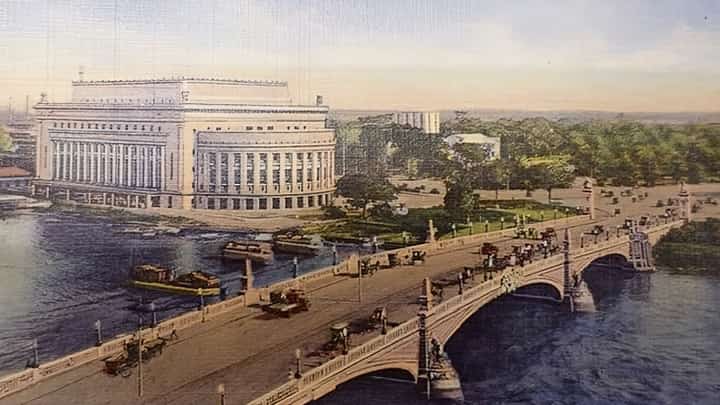
In Philippine history, few periods witnessed imperialism as forceful as the nearly half-century of American colonial rule, from 1898 to 1946.
The colonizers employed various mechanisms, ranging from violence and repression to press propaganda and public works intended to “uplift” Filipinos whom they presumed to be backward.
Traces of this history can be found in accounts, archival documents, books and other publications chronicling the events before, during and after that tumultuous yet hopeful era.
Another less conventional approach is to examine and interpret the postcards produced at the time. These images present the architectural, social and economic changes introduced or facilitated under American rule.
Ian Morley, a historian specializing in the Philippines during the American colonial period and a scholar at the Chinese University of Hong Kong, employs this method in his latest book, Representations of American Imperialism in Picture Postcards of Manila, 1898–1946.
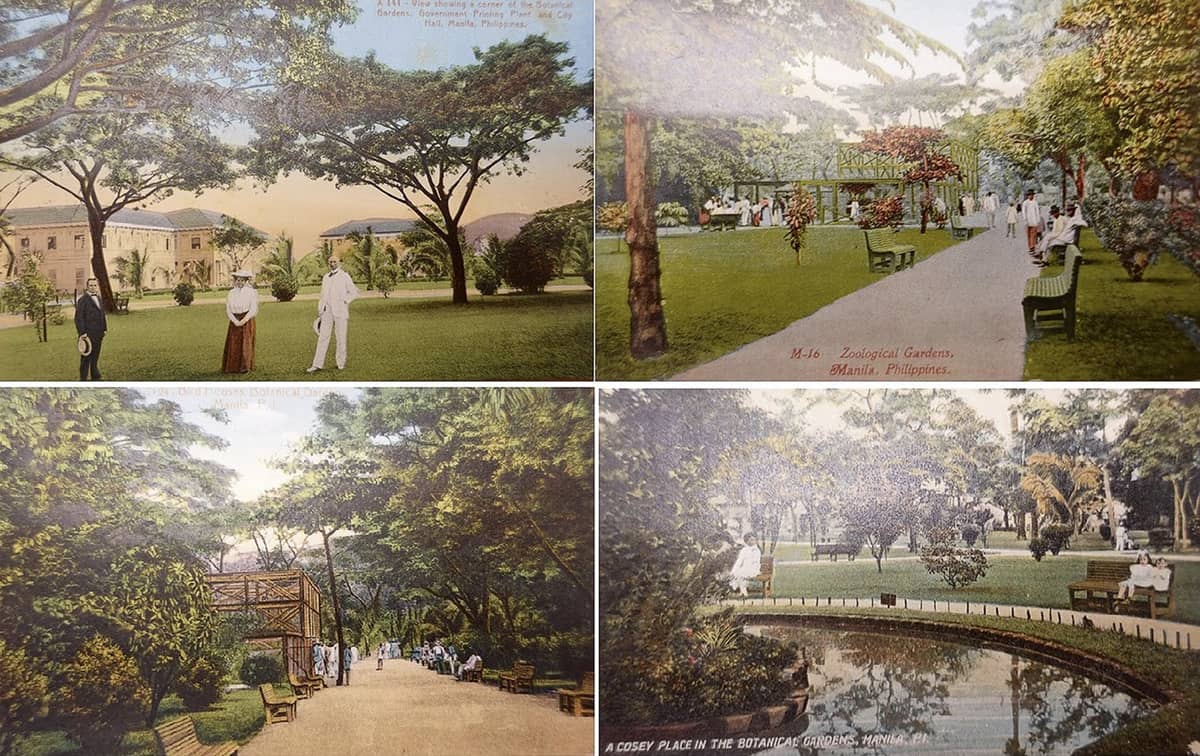
American-era postcards depict Manila’s gardens as verdant spaces for leisure and recreation.
Representations
Published by Palgrave Macmillan, the book offers a critique and analysis of developments in the built environment during the American colonial period, using postcards to examine how social and architectural progress was represented.
It begins by examining depictions of Manila in early American-era postcards, then considers the Americanization of the city through sanitation and beautification projects.
The book also discusses later developments, particularly the Filipinization of the Bureau of Public Works after 1916; the transition toward self-government and the Commonwealth era; and the years leading to Philippine independence from the United States in 1946.
Morley draws attention to an important shift that followed the passage of the Jones Act, or Philippine Autonomy Act, and Act No. 2657 in 1916.
He contends that US-educated Filipino architects Juan Arellano, Tomas Mapua and Antonio Toledo “were responsible for the largest, and most visually impressive, architectural and spatial schemes in downtown Manila.”
He writes that these Filipinos, rather than the Americans, “composed the largest and arguably most beautiful of all colonial-era public buildings in the Philippine capital, including the Legislative Building, Post Office and City Hall.”
“Rather than being puppets of the American colonial state,” Morley writes, the architects “played a significant role in the Filipinization project upon returning to their homeland.”
Many of their buildings survive today, not only in Manila but also in other parts of the country.
Ian Morley’s ‘Representations of American Imperialism in ‘Picture Postcards of Manila, 1898–1946.’
Vintage postcards offer a visual record of the Philippines' changing urban landscape and everyday life through the years.
Many civic structures built during the American colonial period continue to serve as enduring landmarks, illustrating the country’s architectural and historical heritage.
Beyond their original purpose, postcards now serve as valuable records of the country's architectural and social history.
Different layers
Across its 160 pages, the book reveals the many layers of change introduced under American rule and later adapted to local conditions by Filipinos.
These transformations are reflected in postcards from the period, which, according to Morley, “can shed light on the character of Manila’s historic fabric and on Filipinos’ past social mores and customs.”
Taken together, the images register a changing economic landscape marked by consumerism and a society shaped by both colonial propaganda and public works.
The book is an important contribution to scholarship on the Philippines during the American colonial period. It also opens a largely unexplored avenue in historiography by demonstrating how postcards can serve as historical sources.
Morley remains at the forefront of research into the country’s American-era built environment, and this volume offers readers another valuable perspective on that formative period.