
Manong Joe Zaldarriaga’s 40-year fight for truth
In an age where misinformation spreads with a single click, Joe Zaldarriaga believes truth deserves something just as strong and far-reaching as electricity itself: a current of people willing to stand up for it.

Joe Zaldarriaga champions truth in the digital age, advocating for media literacy, critical thinking and responsible communication in the fight against misinformation.
PHOTOGRAPHS BY YUKO SHIMOMURA FOR DAILY TRIBUNE
For four decades, Manong Joe Zaldarriaga has watched the communications landscape transform, from the era of newspapers, radio, and television to a digital world where information travels at the speed of a swipe.
With every technological leap came new opportunities. But it also brought a growing challenge of separating truth from misinformation.
For Zaldarriaga, vice president and head of corporate communications of Meralco, that challenge has become more than part of his profession. It has become his advocacy.
Having spent nearly 40 years in communications, he has witnessed firsthand how the rise of social media has changed the way people consume information.
“I’ve seen the evolution of communications from the time it was tri-media to where we are now, where social media basically just exploded all over the place,” he said. “Now it’s becoming a challenge to determine fact from fiction.”
That realization fueled his support for media and information literacy initiatives, including MediaQuest’s THINKaMuna campaign, which encourages Filipinos to verify information before believing or sharing it.
His advocacy extends beyond Meralco. As treasurer and trustee of the Public Relations Society of the Philippines (PRSP), columnist, and veteran communications practitioner, Zaldarriaga believes fighting misinformation is a responsibility shared by every communicator.
“We owe it not only to ourselves but to the future generations,” he said.
For utility companies like Meralco, the consequences of false information go beyond online debates.
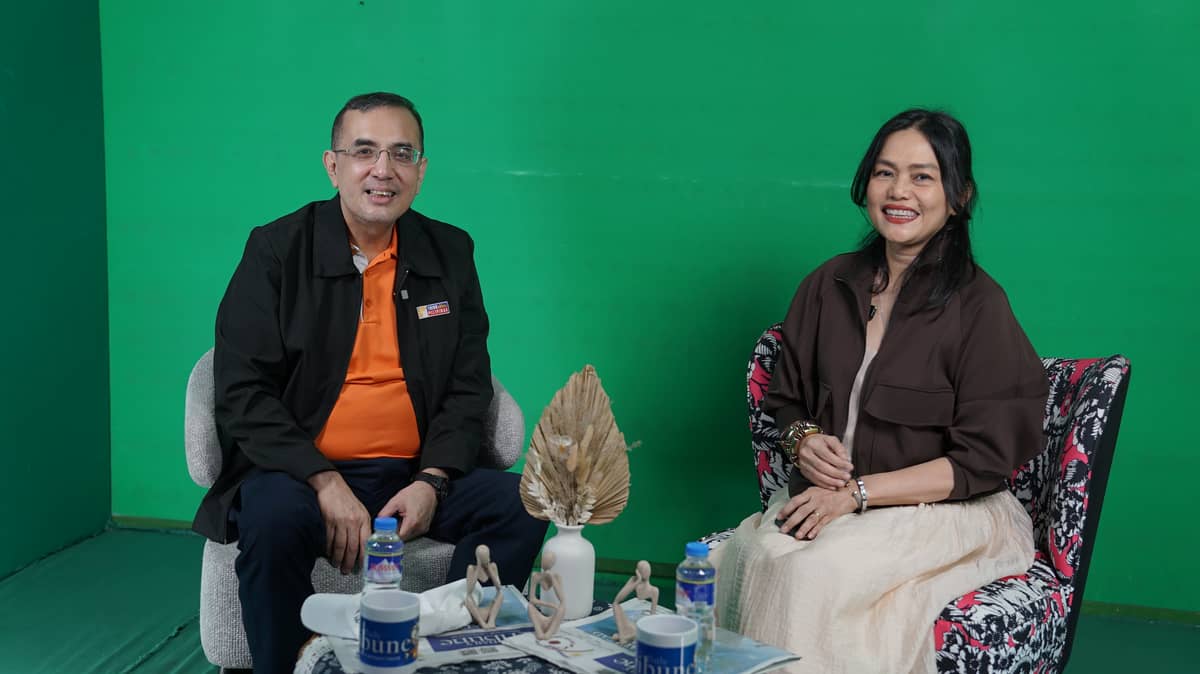
MERALCO vice president and head of Corporate Communications Joe Zaldarriaga with DAILY TRIBUNE’s Managing Editor and Lifestyle editor Dinah S. Ventura.
From misleading posts about electricity bills to viral claims promoting fake energy-saving devices, misinformation can influence consumer behavior and lead people to make costly decisions.
Rather than allowing falsehoods to spread unchecked, Zaldarriaga’s team continuously monitors online conversations, verifies questionable claims, and responds with facts.
“We really have to fight disinformation by telling the truth and by being vigilant in spotting this disinformation, misinformation, and fake news,” he said.
The work is demanding, requiring both discipline and patience. But for Zaldarriaga, it is a responsibility he willingly accepted when he entered the communications profession.
“It’s tiring. It’s taxing,” he admitted. “But I still believe that it’s very worthy to be part of an advocacy that is beneficial to the public by telling the truth and by fighting disinformation, misinformation, and fake news.”
Beyond corporate communications, Zaldarriaga believes ordinary citizens have an equally important role in protecting the truth.
His advice is simple: pause before reacting.
“Double check, triple check, cross-check,” he said. “Validate the information. Vet the information. Look for credible sources.”
While artificial intelligence tools such as ChatGPT, Gemini, and Claude can assist in gathering information, he cautioned against relying on them unquestioningly.
Instead, he emphasized that technology should complement and not replace critical thinking.
“At the end of the day, it’s up to us,” he said. “Critical thinking is probably the first step to determine right from wrong information, fake news from real information.”
He also sees parents, teachers, and schools as the first line of defense against misinformation. Long before algorithms shaped online feeds, he recalled growing up with dictionaries, encyclopedias, libraries, and books which are resources that encouraged curiosity and careful thinking.
His advice to the younger generation remains refreshingly simple.
“Read a book once a month,” he urged. “Books help you discern and understand what is right from wrong, what is real from fake.”
For communicators, however, Zaldarriaga believes speed matters just as much as accuracy.
When misinformation begins circulating online, silence allows it to spread.
“Call it out immediately,” he stressed. “Every minute, every second, every hour counts.”
Still, he emphasized that correcting falsehoods should never come at the expense of civility.
“The best way to deal with someone who is toxic and mean in social media is to fight it with kindness and being very respectful,” he said.
After four decades in communications, Zaldarriaga remains convinced that the battle against fake news cannot be won by one company, one institution, or one individual alone.
“We need to come together to fight this scourge of fake news,” he said.
In an age where misinformation spreads with a single click, he believes truth deserves something just as strong and far-reaching as electricity itself: a current of people willing to stand up for it.