
Mayon sulfur emissions hit 26-year high
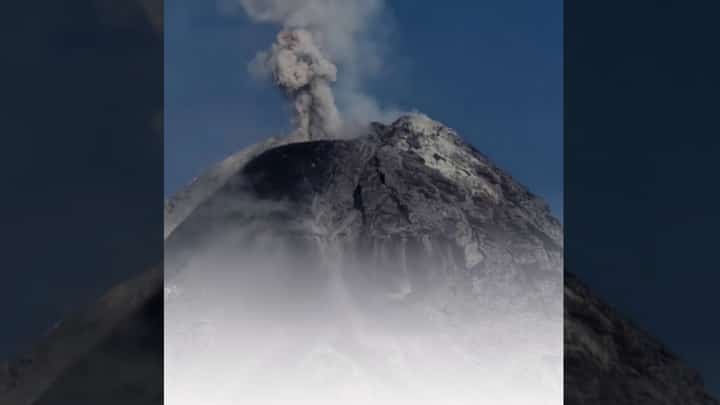
RESTLESS giant An ash plume crowns Mayon Volcano as Phivolcs records its highest sulfur dioxide emissions in over two decades, signaling heightened volcanic unrest.
PHOTOGRAPH courtesy of phivolcs
Mayon Volcano emitted its highest level of sulfur dioxide in 26 years on Saturday, with gas emissions nearing those recorded during its 2000 explosive eruption, the Philippine Institute of Volcanology and Seismology (Phivolcs) said.
Phivolcs said sulfur dioxide emissions from Mayon’s summit crater averaged 13,128 tons per day on 11 July — the highest recorded since 2000.
The agency said the reading was only slightly lower than the 13,500 tons per day measured during the volcano’s explosive eruption in February 2000.
The Smithsonian Institution’s Global Volcanism Program also recorded sulfur dioxide emissions of 14,500 tons per day on 2 March 2000.
Phivolcs said the sudden increase in sulfur dioxide emissions has been accompanied by a rise in low-frequency volcanic earthquakes, which are associated with volcanic degassing, minor Strombolian activity at the summit crater and increased rockfalls caused by the collapse of newly emplaced lava flows.
Mayon remains under Alert Level 3, indicating a relatively high level of volcanic unrest and the possibility of hazardous eruptions.
Health risks
The agency warned that the ongoing eruptive activity could still escalate into an explosive eruption and advised the public to stay out of the six-kilometer permanent danger zone and comply with the instructions of local authorities.
Sulfur dioxide is a colorless volcanic gas released as magma rises toward the Earth’s surface. High concentrations can affect air quality and pose health risks, particularly for people with respiratory conditions.
Previous studies have shown that Mayon’s ash and sulfur dioxide emissions can have far-reaching environmental impacts.
A 2021 study found that ash and sulfur dioxide from the volcano’s January 2018 eruption were carried by prevailing winds as far as Brunei and Malaysia’s Sarawak state, where elevated sulfur dioxide levels and vegetation damage were observed.
Communities surrounding Mayon have also experienced health effects from volcanic emissions.
Following an eruption on 2 May this year, the municipality of Guinobatan in Albay reported increased cases of coughs, colds and respiratory infections.
The Department of Health subsequently advised residents to wear masks to reduce exposure to volcanic ash and airborne particles.