
Capoeira Painting: Henri Lamy dances with colors in latest exhibit

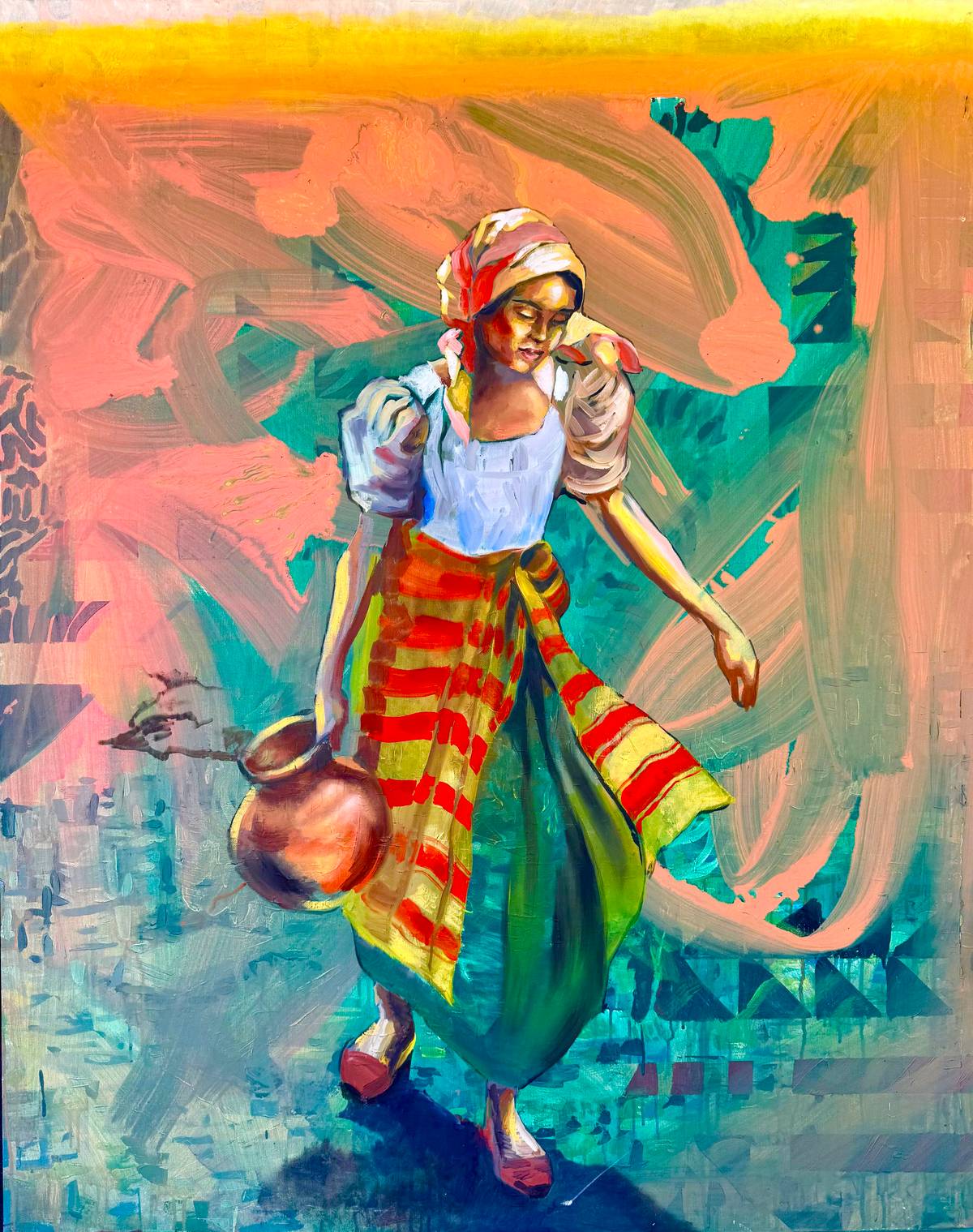
‘Amorsolo, 5,’ oil and acrylic on canvas, 114 x 144 cm.
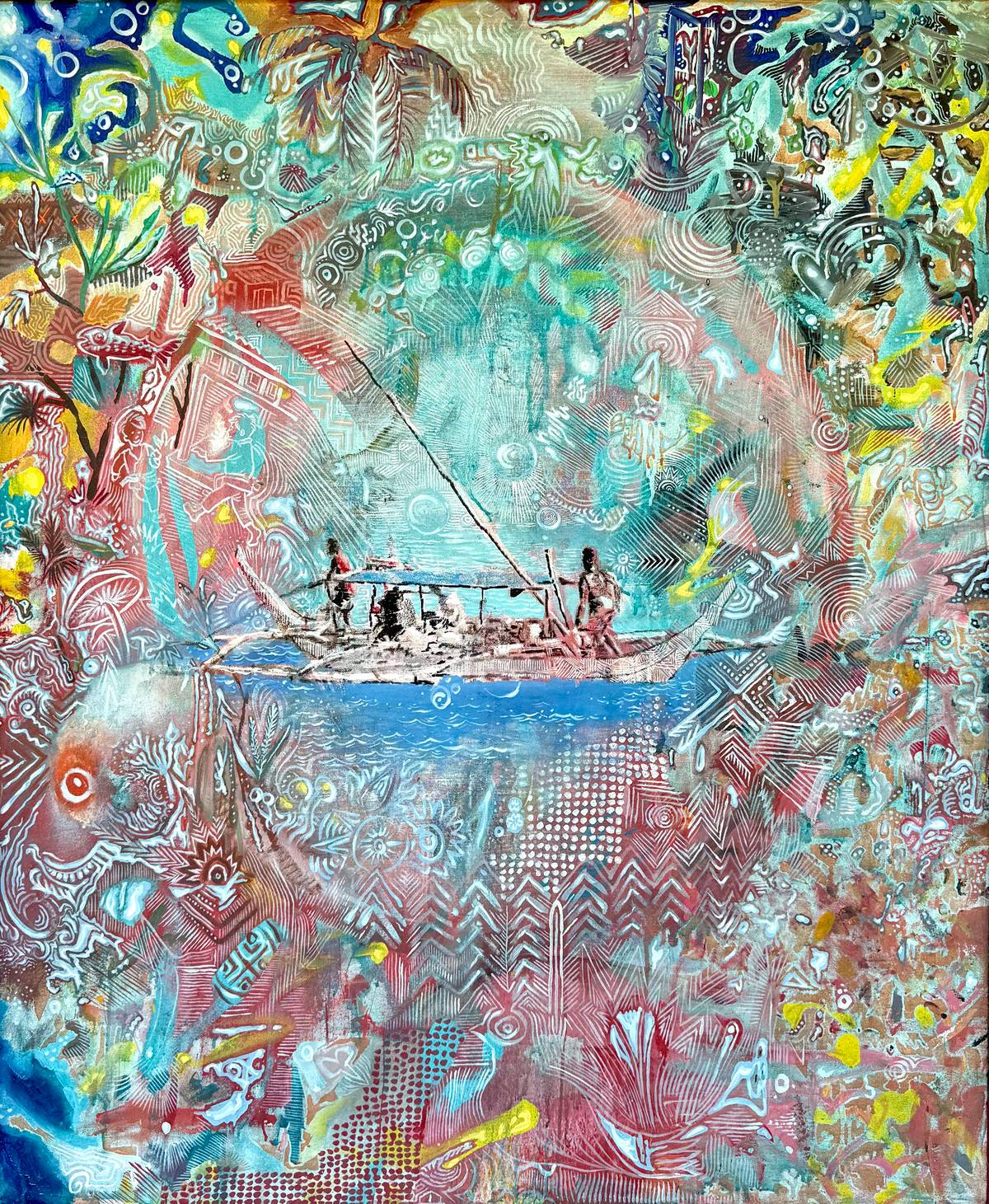
‘Bangka 4,’ oil and acrylic on canvas, 120 x 145 cm.
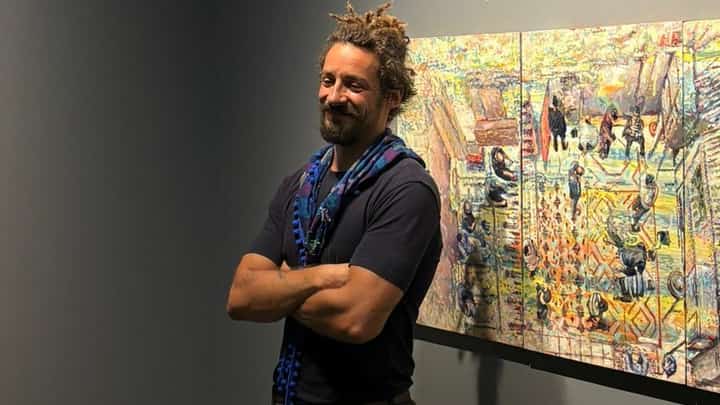
French figurative painter Henri Lamy has long found inspiration from places he visits and the people he meets. Since then, he has happily settled in the Philippines and adapted it as his home, where he has nurtured lasting ties with appreciative local communities through creative collaborations, social initiatives, and residency programs.
These precise and specific series of unforgettable experiences have now harmoniously come together in Maharlika & Dakila, his latest solo exhibition at Alliance Française de Manille, where his deep admiration and gratitude for the country take center stage.
Time to meet Henri Lamy. Born in Lyon, France, in 1985, he spent his early formative years drawn to faces, gestures, and moments. He then picked up palette knife painting, followed by his time at the artist-run residence 59 Rivoli in Paris.
Continuous travel became a crucial part of his ever-growing artistic expressions, as it freely allowed him to document actual and genuine encounters of cultures through portraits and scenes.
In 2014, Henri fruitfully combined another burning passion with painting by evolving what he calls Capoeira Painting. Brilliantly inspired by the Brazilian martial art, it transforms the very act of painting into a compassionate physical performance — movement, rhythm, and splashes of colors become part of the depiction and composition of the finished image. Rather than carefully placing, positioning, locating, and arranging every stroke, he freely bows down to motion to lead, steer, and direct the entire spontaneous process.
His relationship with the Philippines has only grown stronger — make it formidable — over time. Together with his supportive wife, Maïa d’Aboville, he co-founded Ugnayan sa Poblacion in 2017, an esteemed residency program rooted in community life. He has likewise collaborated with organizations such as the Stairway Foundation and Project Pearls for neighborhood education and social development thrusts.
The exhibition’s title draws from two Filipino words: Maharlika speaks of nobility, while Dakila represents greatness. I soon learned these two terms are also the names of his two children!
We were welcomed by vivid portrayals that shed light on everyday life across our archipelago. Hardworking laborers, colorful jeepneys, lively streets, sea crossings, and familiar Filipino fare all found their way onto canvases. Of note were rural landscapes, which recalled the warmth and light associated with the very first Philippine National Artist for Visual Arts Fernando Amorsolo.
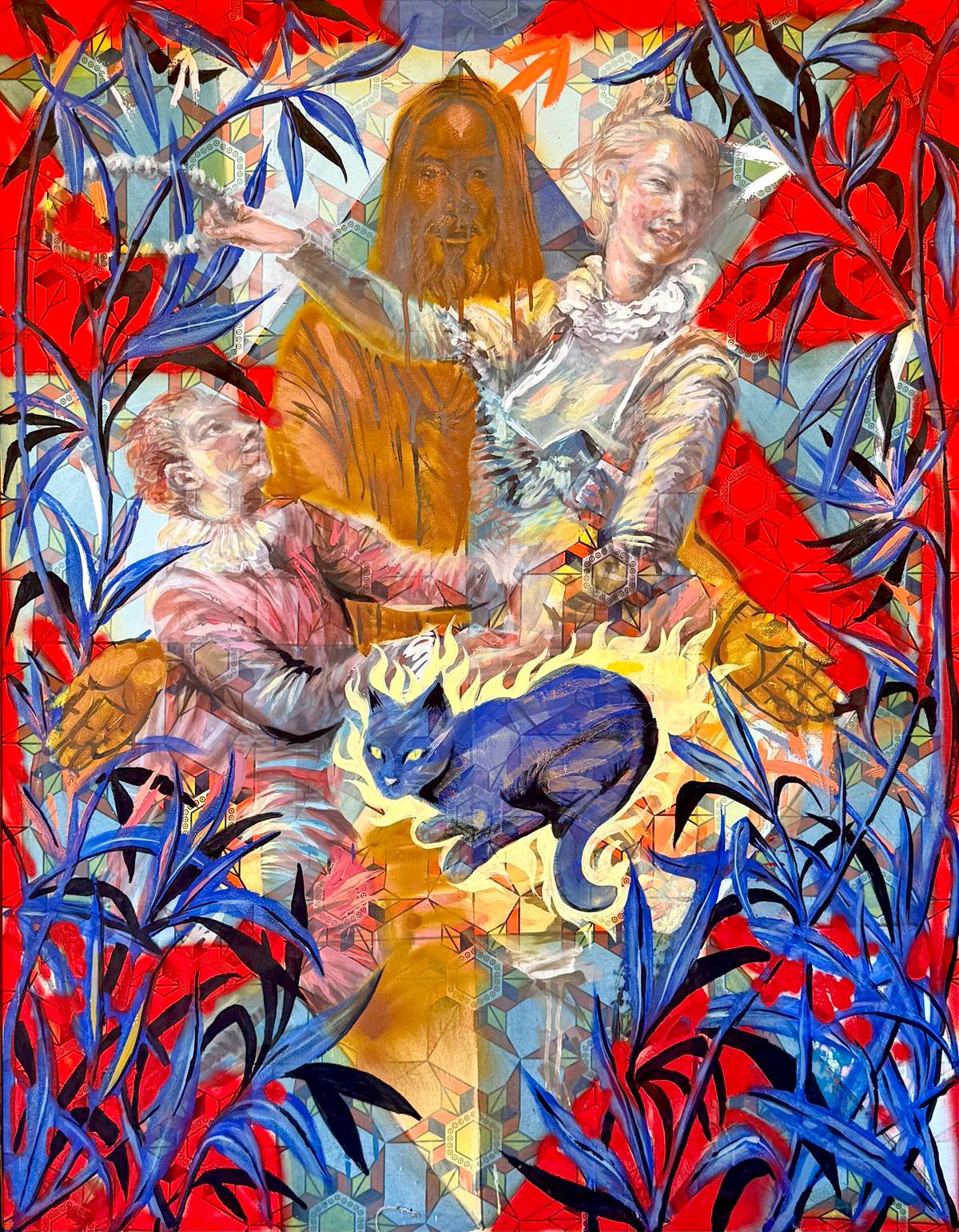
‘Fire Cat,’ oil and acrylic on canvas, 110 x 140 cm.
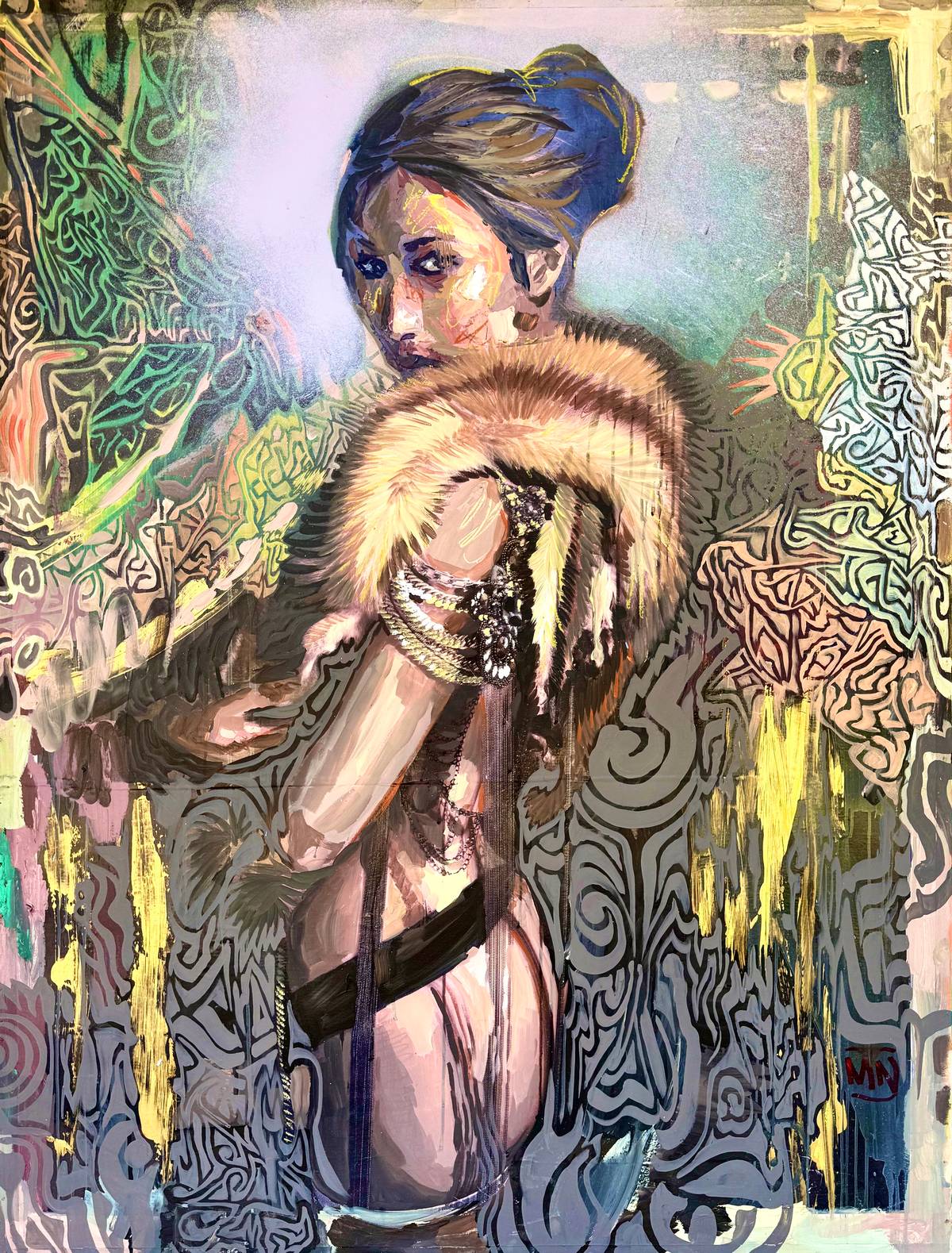
‘Solenn,’ oil and acrylic on canvas, 131 x 100 cm.
Some other notable works included Kikiam, Daang Eskuela, Between Cats and Dogs, and Conquest. Each image balanced recognizable subjects with unpredictable splashes of color brought about by expressive movement. These were juxtaposed by geometric patterns and layered textures, which brought a distinctly contemporary character to each creation.
On opening night, Henri presented an on-stage act — a live Capoeira Painting performance, in which every physical action became part of his creative process. It showed how paint slowly dripped onto canvas through choreographed gestures and emotional dances. The result? Motion is encapsulated in still-life obras — all exuding sheer energy and explosive dynamism.
Maharlika & Dakila likewise reflected Henri’s life in France and the Philippines — his countless experiences in both countries have shaped his personal approach, which thrives on exchange, conversation and cultural discovery.
Some may view him just as a traveler. Yet, we must undoubtedly admit — with the flair of an observant Frenchman in our midst — he has a keen eye for what makes the Philippines truly Filipino.
Bravo, Alliance Française de Manille!
¡Enhorabuena, Henri Lamy!