
Celebrating Philippine art scene masters and modernists
Now on its fifth year, the exhibit celebrated the pulse of Philippine modern and contemporary art, featuring the unique points-of-view of the Filipino creative mind.

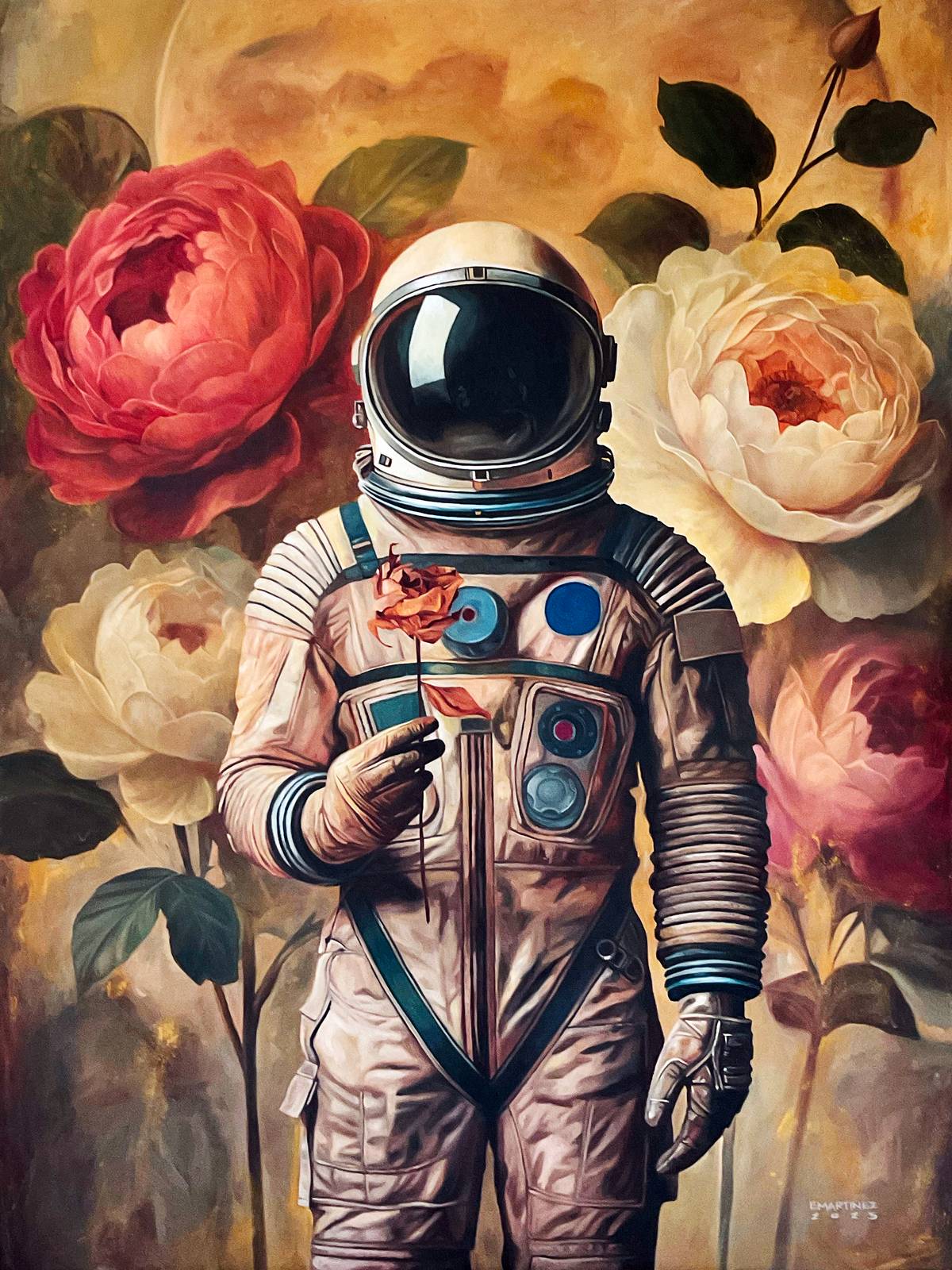
JOSE Edwin Martinez's 'Life in Transitions' 48 in x 36 in, oil on canvas, 2025.
courtesy of MoCAF
Pablo Picasso, one of the most widely influential artists of the 20th century, once declared that “art washes away from the soul the dust of everyday life.”
In the Philippines, the art scene has evolved into a dynamic creative space where both masters and modernists are engaged in a free-flowing conversation to, dare we say, humanity’s greater benefit. This is evidenced by the rising popularity of art fairs and exhibitions among art connoisseurs, enthusiasts and art students alike.
The Modern and Contemporary Art Festival (MoCAF) was among those that continued to showcase the country’s expanding art scene. They put the spotlight on modern masters and cutting-edge contemporary artists from both here and abroad — introducing art appreciation to new audiences while also building a community for up-and-coming artists.

CHINO Yulo's 'Beating Like the Sound of Love,' electro coated aluminum, 2025.
This year’s festival, which ran until 5 July at the Marquis Events Place in Bonifacio Global City, Taguig City, was participated in by over 50 local and international galleries representing hundreds of visual artists, artisans and other creatives. Local galleries like Ysobel Art Gallery, Fundacion Sansó, Art Underground, M Galerie and White Walls Gallery stood shoulder-to-shoulder with participating international galleries Shikisaisha Gallery (Japan), Gallery Kogure (Japan), White Space Art Asia (Singapore) and Kate Contemporary Madrid (Spain).
A highlight of MoCAF 2026 was a special exhibit lineup by some of Philippine arts’ prominent painters and sculptors. Glass sculpture royalty R.A.M. — Ramon, Anna and Michael Orlina — presented Horizons & Memories; while Jerica See revisited tradition in Returning To Sunday. Grafitti and comics-inspired art were at the heart of artwork by Jappy Agoncillo, as well as the collaborative effort between Imao and Tarantadong Kalbo. For the first time, digital artists and illustrators were featured in a partnership with Art Caravan, affirming digital creativity as a valid and celebrated art form.
Young artists also found their own dedicated space at this year’s festival via MoCaf Discoveries, considered to be a springboard for up-and-coming talent to launch their work. According to festival director Coleen Wong, “MoCAF has always been envisioned as a space that feels welcoming and safe, not just for artists and creatives, but also for the public. Whether you’re a collector, an artist, or someone simply curious about art, there will be something to see, experience and take part in.”
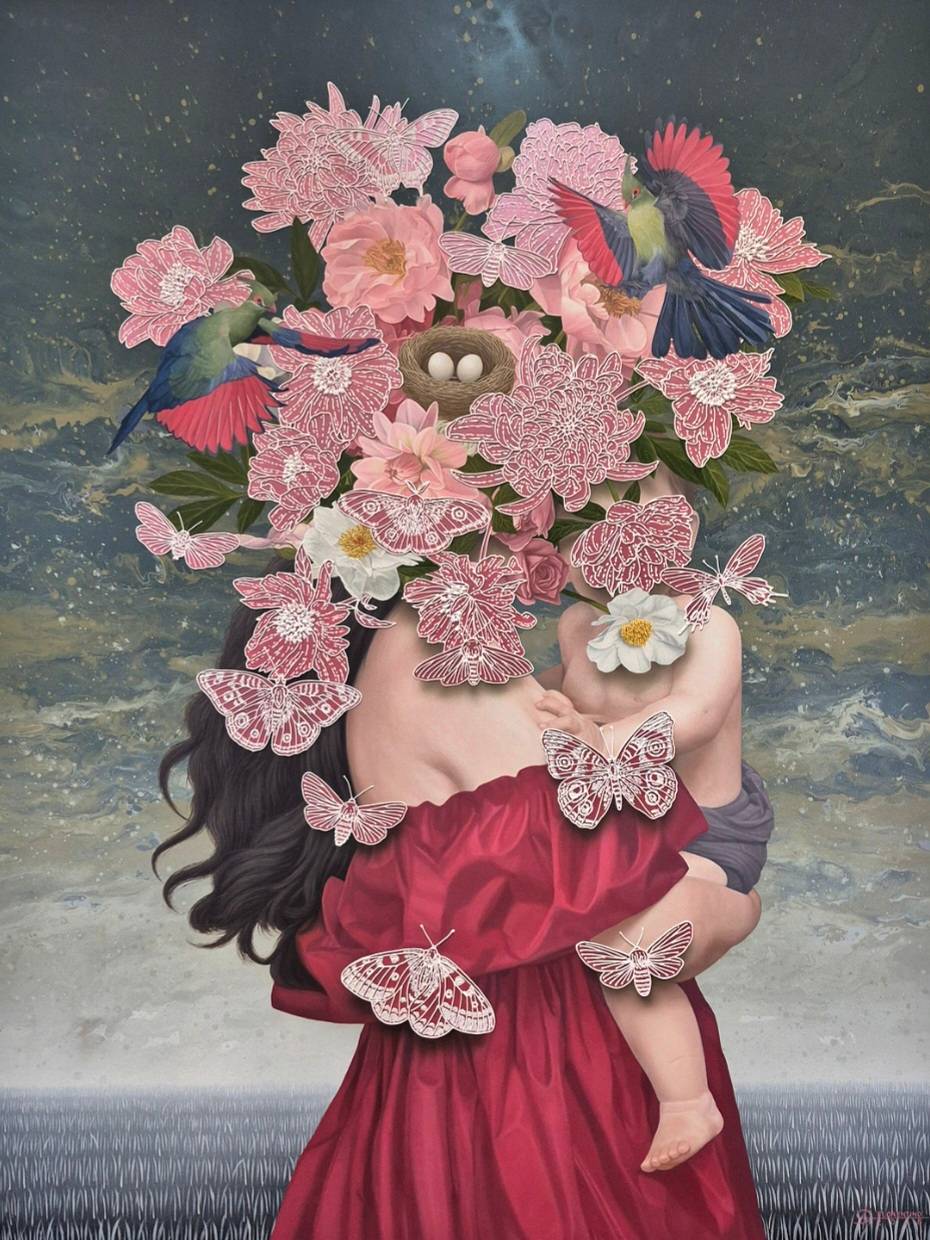
ALVIN Florentino's 'In Her Arms,' 4 x 3ft, oil in canvas, 2025.
Of course, art advocacy continued to be top-of-mind for festival organizers, pushing for greater inclusivity and access beyond the event itself. Among their programs was support for tertiary education for art scholars under ScholarSip by Fundacion Sansó.
As Henri Matisse said, “Creativity take courage,” which makes art essential to the human existence. MoCAF 2026’s expended exhibition was a representation of this bravura, rooted in the festival’s founding belief: that contemporary art is not the exclusive domain of the few, but a living, growing conversation that belongs to everyone willing to take part in it.