
One for three: Links among heart, kidney, metabolic diseases


THE speakers during the ‘Kapihan at Ugnayan: Usapang Kidneys, Puso at Metabolismo.’ From left, upper portion: Dialysis PH Support Group Inc. president Rey Abacan Jr. and Diabetes Advocacy Society Inc. president Cynthia Clemen Yu Duntz. Lower portion, from left: Jay Vincent Mateo, Achilles Comboy, Grace Raymundo and Maria Lorna Mamuyac.
Photograph by Gwen Bergado for DAILY TRIBUNE.
Unknown to a lot of people, the heart, kidney and the metabolic system are closely interconnected. Meaning, once one organ is affected, there is a higher chance that complications in other systems would also arise.
This explains why Boehringer Ingelheim recently joined forces with Diabetes Advocacy Society Inc. and Dialysis PH Support Group Inc. (DASI) for a Kapihan (coffee) session last Thursday afternoon to address the growing problem among Filipinos, hoping to reach more to teach about the complications of non-communicable diseases such as Chronic Kidney Disease (CKD), hypertension and diabetes.
Rey Abacan Jr., Dialysis PH Support Group president, a dialysis patient since 2010, underscored the importance of knowing and acknowledging the consequences of being negligent of one’s health.
“People should know that once you start doing dialysis, you will be doing it for a lifetime,” Abacan told DAILY TRIBUNE.
According to a study by Capitol Medical Center, one in 10 Filipinos or around 13 million people are affected by CKD as of 2021.
On the other hand, cardiovascular diseases, fronted by hypertension, is considered as a leading cause of death and disability worldwide.
Linked to serious complications like amputations and stroke, diabetes affects about 7.1 percent of adults aged 20 to 79 years old as of 2021.
Eat your greens
For her part, DASI president Cynthia Clemen Yu Duntz highlighted the role of food intake when it comes to acquiring non-communicable diseases such as CKD, hypertension and diabetes.
“One thing about Filipinos, they always aim to get full when they eat. They do not stop eating until they get their fill,” she shared during the forum.
Meanwhile, DASI officer Grace Raymundo shared that families and individuals could try following the Pinggang Pinoy, the healthy food plate for Filipinos composed of rice, fish, fruits and vegetables but in balanced amounts.
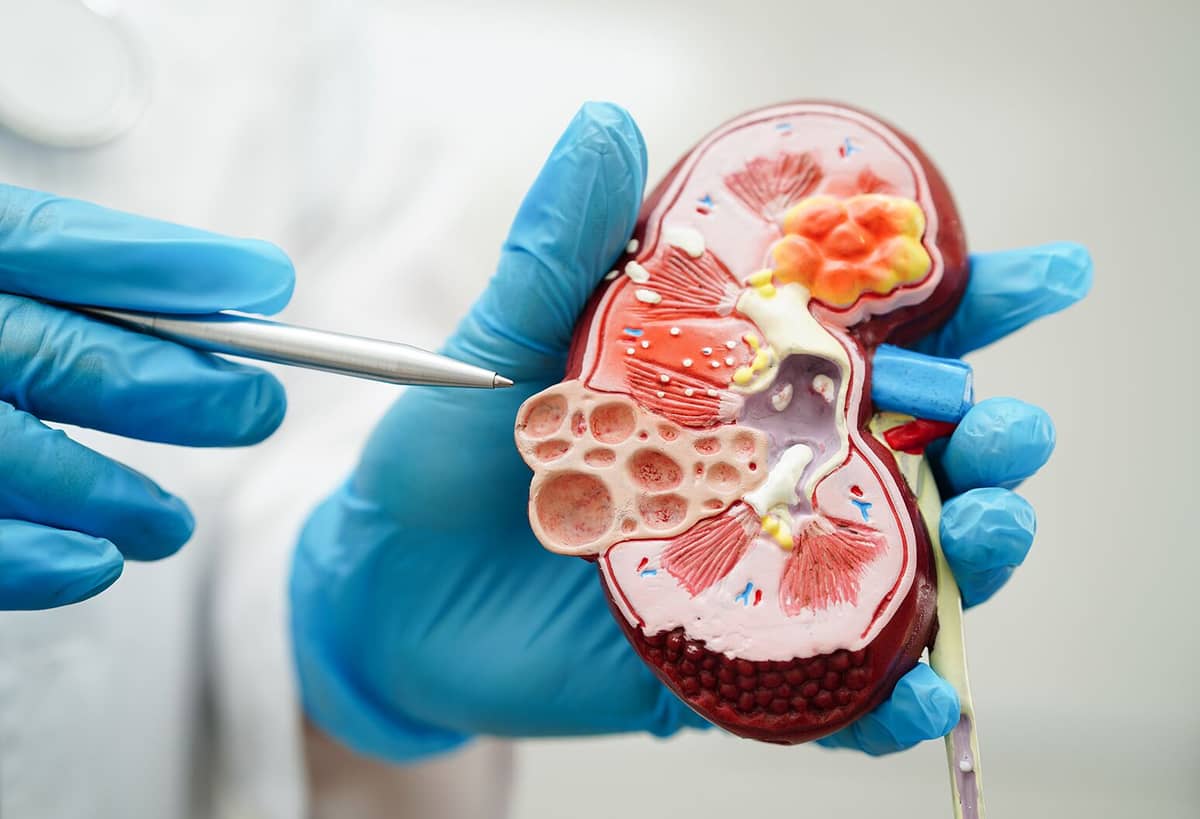
REGULAR kidney screening and healthy lifestyle choices are key to preventing chronic kidney disease, health advocates said
Photo courtesy of Unsplash/Ali Hajiluyi
Getting a transplant: The rigorous process
According to Abacan, who is set for a kidney transplant after almost a decade of waiting, a person with a damaged kidney will undergo a lot of tests before getting their organ replaced.
“Right now, I’m undergoing what is called a kidney transplant workup. The workup is the process that you go through to check your body to see if you can have a kidney transplant. So, we go through some clearances,” Abacan said.
“Some are for cardio, some are for vascular,” he added.
In his case, none of his relatives have a kidney transplant for him, that is why he is waiting if there is an available kidney from the Human Organ Preservation Effort (HOPE) office of the National Kidney Transplant Institute (NKTI).
After waiting for nearly a decade for a transplant, Abacan said that what kept him going is the members of their group who also obtained their replacement after waiting for a long time.
Government efforts
Abacan also mentioned the improvement of government initiatives in response to growing CKD cases.
“From double digits in the early 2010s, it has improved to 156 free dialysis sessions for those who need to undergo dialysis,” Abacan stated.
“Senator Raffy Tulfo also released the Accessible Kidney Care Act for prevention, that’s what we want them to push,” he added.
Jay Vincent Mateo of the Dialysis PH Support Group also mentioned the Philhealth program YAKAP (Yaman ng Kalusugan Program), which is focused on provision of medicines and services to those in need.
Stronger solutions, however, are being sought by those diagnosed and advocate for fighting CKD and diabetes. Among their suggestions is placing warning signs on food containing high amounts of sodium and sugar.
“We know that our countrymen are fond of salt and sweets. We have a beverage tax reform. We want you to know that you’re getting closer to other senators,” Mateo affirmed.