
Summer drinks and diabetes: Which thirst quenchers are safe?
In an exclusive interview with ‘DAILY TRIBUNE,’ Dr. Tiu reminded Filipinos to be extra careful of the beverages they take especially as they tend to drink more during summer.


Diabetes is now the fifth cause of death among Filipinos, registering 12,360 fatalities as of April 2025, the Department of Health’s (DoH) latest data shows.
Half of those who have diabetes, Diabetes Philippines president and chair Dr. Fatma Ibba Tiu said in a Makati press conference late last month, are undiagnosed.
As such, in an exclusive interview with DAILY TRIBUNE, Dr. Tiu reminded Filipinos to be extra careful of the beverages they take especially as they tend to drink more during summer, since sugary drinks are among the causes of diabetes.
“We’ve identified that one of the hidden sources of sweets and calories are our drinks that are very popular nowadays,” Dr. Tiu said.
Not all sweet beverages, however, could cause diabetes, so Filipinos may still indulge during the scorching hot weather.
Dr. Tiu broke down Filipinos’ favorite drinks and shared which ones are “safe” to take at certain amounts and are less likely to cause the fifth killer of Filipinos.
‘Zero’-sugar sodas
According to Harvard School of Public Health, a standard 12-ounce or 355 ml can of regular soda usually contains 35 to 45 grams of sugar — roughly equal to nine to 11 teaspoons of sugar per serving. Harvard recommends no more than nine teaspoons or 36 grams of sugar per day for men; nothing over six teaspoons or 24 grams for women; less than six teaspoons (24 grams) for kids two to 18, and no added sugar for children under two.
For those who love sodas, especially the ice-cold ones that feel like a touch of heaven on the throat on a very humid day, Dr. Tiu recommended “zero-sugar” or “diet” carbonated drinks since the sweetener used for these is aspartame.
For those who do not have diabetes and love sodas, “one can is fine” for everyday zero-sugar soda consumption, said the doctor.
“These (zero-sugar drinks) do not use fructose, so they are allowed to be taken by diabetics, but to a certain level. It’s not that they could take it without limits. Anything in excess is not good,” she stressed.
“Let’s say, they may have zero sugar, but they might have a lot of sodium, which is also not allowed among diabetics with hypertension. So diabetics are allowed to drink ‘zero’ only up to a certain level.”
Stevia, according to the doctor, is also a sweetener like aspartame.
Estimated to be 200 times sweeter than sugar, aspartame has been used as an alternative sweetener since the ‘80s because it metabolizes in the gut as methanol, phenylalanine and aspartic acid that are found to be generally safe in the body if aspartame is taken at recommended daily levels of 40 mg/kg.
Sugar, on the other hand, regardless of color, breaks down into glucose and fructose. Glucose, said the US’ National Institutes of Health, raises blood sugar directly and prompts insulin release, while fructose is more damaging to the liver, contributing to fatty liver and insulin resistance.
Aspartame, however, has been classified by the World Health Organization’s International Agency for Research on Cancer (IARC) as “possibly carcinogenic to humans” (Group 2B), based on limited evidence of a link to liver cancer.

Milk tea and ‘halo-halo’
Even milk tea, which is frequently demonized as a cause of diabetes, can still be enjoyed by those who have the disease or have a family history of it, said Tiu, for as long as one follows the sugar limitations set by doctors.
“I’ve noticed that milk tea shops give customers choices on the sugar level to be put into their drinks. So I advise those who order milk tea to choose the lower level of sugar,” she recommended.
Be wary, too, of the amount of sugar found in tapioca pearls (boba) or sinkers being added into milk tea. Every bubble milk tea drink customarily contains one-fourth cup of tapioca pearls, which is estimated to have seven to more than 15 grams of sugar — almost half of the daily recommended sugar allowance for men; more than half for women and kids two to 18; and totally not suitable for children under two.
For milk tea lovers who want to do some due diligence, it is advised to make their own milk tea instead to be wary of its sugar content. Alternatively, one can also opt not to have sinkers added into the milk tea or if possible, ask that the tapioca pearls be rinsed before putting into one’s drink to remove excess syrup.

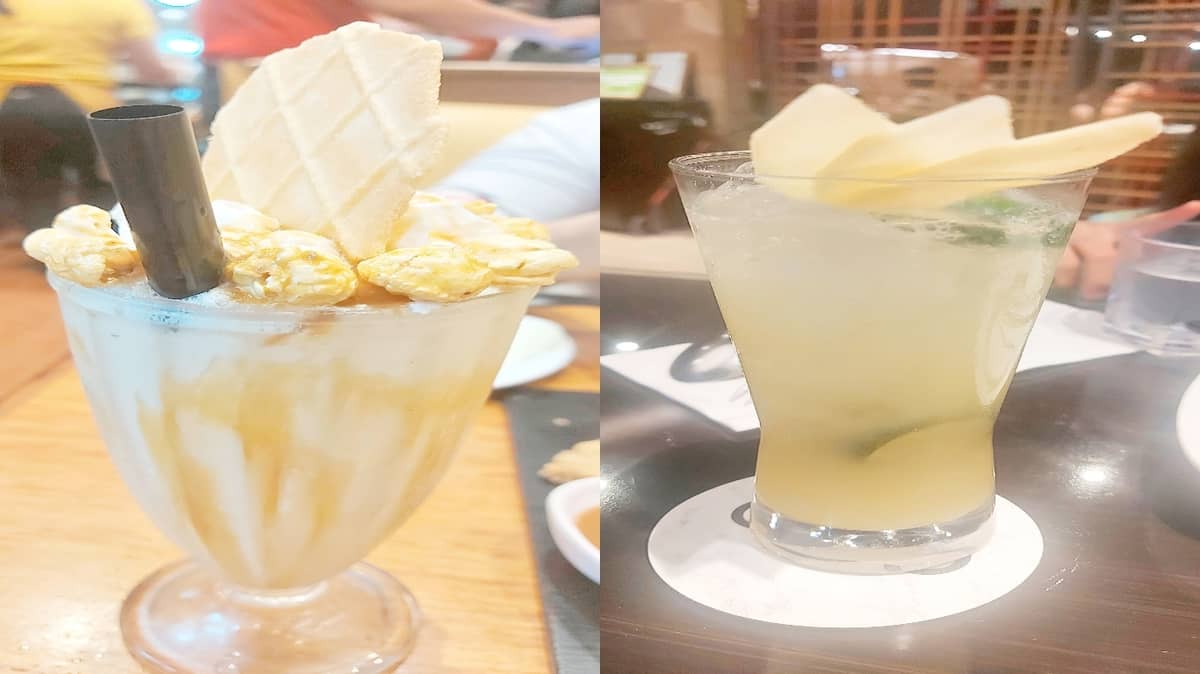
THESE drinks might look tantalizing, but remember, looks can kill! When in doubt of a beverage’s sugar content, nothing beats a plain glass of water in thirst-quenching and diabetes prevention.
The same is recommended for those who crave the Filipino delicacy halo-halo especially during summer — do away with syrup and in adding a lot of sugar!
Fruit shakes
Fruits, according to Dr. Tiu, are allowed among diabetics, for as long as they and non-diabetics alike follow the DoH’s “Filipino Plate” or Pinggang Pinoy model of recommended amounts per meal. According to the Pinggang Pinoy, to be able to meet the daily nutrition requirement, half of the plate for every meal should contain Glow foods (fruits and vegetables) — of which fruits, a major source of fructose that can cause diabetes at high levels, should only be equivalent to only one serving or one-fourth of the plate, Tiu clarified.
Dr. Tiu green-lit one pisngi (cheek or side) of a mango per meal for diabetics and diabetes prevention. This means only one pisngi of the mango, or its equivalent in other fruits, is also the limit for any fruit shake per meal serving.
“What is healthy for diabetics is healthy for all,” Dr. Tiu attested.
As for the rest of what should be in the Pinggang Pinoy, rice or other grains from the Go food group should only occupy a fourth of the plate, while the other one-fourth should have Grow foods from protein sources like fish, meat and beans.
Of course, according to Pinggang Pinoy, a glass of water should come with every meal! When in doubt of a fruit shake’s sugar content, nothing beats a plain glass of water in thirst-quenching and diabetes prevention.
Meal replacements and food supplements
Because of today’s busy lifestyles, coupled with rising costs in fuel and basic commodities like food, following the Pinggang Pinoy has been challenging for many Filipinos. Thus, many have relied on meal replacements and food supplements from wellness companies like LAC to meet their daily nutrition and energy needs.
For this summer, for instance, the Philippine Atmospheric, Geophysical, and Astronomical Services Administration (PAGASA) reported heat index readings reaching the “Extreme Caution” range of 33 to 41 degrees Celsius. Recognizing the growing health risks associated with extreme heat, LAC responds with new releases, such as Taut Sunshield, which provides internal ultraviolet (UV) defense through 1,000 mg of Brilliant White Tomato or golden tomato powder per dose, which is claimed to be enhanced with vitamin C for reducing skin sensitivity, supporting skin resilience and protecting against sun-induced irritation and premature signs of aging.
Touted as a “skin-nourishing supplement,” Taut White has been formulated with L-Glutathione, grape seed extract, olive leaf extract, vitamin C and artichoke extract, which reportedly help promote antioxidant protection and maintain an even, healthy-looking skin tone.
For those whose fitness goal is a “bikini body” for summer, slimming supplements have become popular. Among the latest in the market is LeanCut Belli Lean, which combines Medium Chain Triglycerides (MCT), which are readily converted into energy to reduce fat storage, with a proprietary mix of corn silk, lemon balm, red vine leaf, lotus leaf, and Eucommia leaf extracts that reportedly support fat metabolism, belly wellness and relief from water retention.
But are all these food supplements and meal replacements safe for diabetics and those wanting to prevent the disease?
According to Dr. Tiu, whether it is a packaged drink bought from a kiosk or a convenience store, or a food supplement that you can add into water, soup or any drink, the rule of thumb is to always check the label.
“Always read labels because different beverages entail different preparations and contents, so we should always check the sugar percentage. If it’s very high, let’s avoid that drink. Let’s not go beyond two to five percent sugar content. If say, you see that 20 percent of the drink is sugar, it is no longer a drink, it is sugar! So let’s avoid it,” Dr. Tiu cautioned.
That other liquid — pee
Speaking of drinks and liquids, Dr. Tiu reminded that if you see ants marching toward your pee, even once, then you should already consult a doctor.
With over four million Filipinos with diabetes and millions more undiagnosed, Watsons Philippines and Diabetes Philippines, Inc. partner anew to launch a nationwide free diabetes screening program. Starting this month, 22 Watsons stores nationwide will provide diabetes detection services for free.
“To determine diabetes, blood sugar is really the one being tested, so you really have to see the doctor to be sure,” Dr. Tiu enthused.