
Unlocking the country’s carbon capital
‘The partnership with Archeda reflects a shared commitment to help shape the future of climate action in the Philippines.’

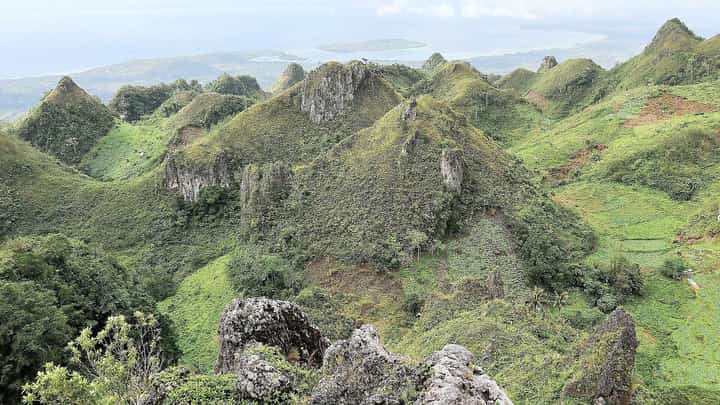
THE Manatalongon Mountain Range in the Central Cebu Protected Landscape. The Philippines remains underrepresented in global carbon markets, and large-scale forest carbon projects harnessing this potential through satellite data are still at an early stage.
PHOTOGRAPH COURTESY OF WIKIMEDIA
A new phase of CarbonPH, Aboitiz Foundation’s flagship project to protect, restore and sustainably manage over 40,000 hectares of forests and watershed areas in Cebu, is underway as the corporate social responsibility arm of the Aboitiz techglomerate and Japanese carbon development and solutions company Archeda collaborate on the undertaking.
Under the signed memorandum of understanding of the two organizations, Archeda will serve as the tech and carbon project specialist that will help CarbonPH generate credits and attract investors using satellite, artificial intelligence and its carbon market expertise. Specifically, it will map forests, track land‑use change, and estimate biomass and carbon over large areas of the Central Cebu Protected Landscape to determine which area can realistically become forest carbon projects.
Aside from building the monitoring, reporting, verification (MRV) systems for CarbonPH, Archeda will help design baselines, additionality, leakage assumptions and long‑term monitoring plans aligned with the Japan‑Philippines Joint Crediting Mechanism and integrating social and environmental safeguards so that resulting credits meet “high‑integrity” expectations of international buyers, according to the company.
Further, it will explore innovative financing and commercialization pathways for the forest carbon projects, including linking CarbonPH to companies needing trusted carbon credits.
As CarbonPH moves from design to actual tree planting, restoration and watershed recovery in Cebu, Archeda is expected to maintain and improve the remote‑sensing and AI systems so that monitoring remains robust over decades.
“The partnership with Archeda reflects a shared commitment to help shape the future of climate action in the Philippines through credible, high-integrity forest carbon development,” Ginggay Hontiveros-Malvar, president of Aboitiz Foundation, said.
“At Archeda, our mission is to unlock the hidden value of the Earth,” said Hiromasa Tsumura, chief executive officer of Archeda. “We believe satellite technology can play an important role in addressing climate challenges by improving transparency, strengthening trust, and enabling better decision-making. Through this partnership, we hope to demonstrate how technology can help create climate solutions that benefit both people and the planet.”
Both organizations see the opportunity to establish a model for high-quality forest carbon development that can serve as a reference not only for the Philippines, but also for other countries pursuing credible climate action pathways.