
Exposing Root of rot

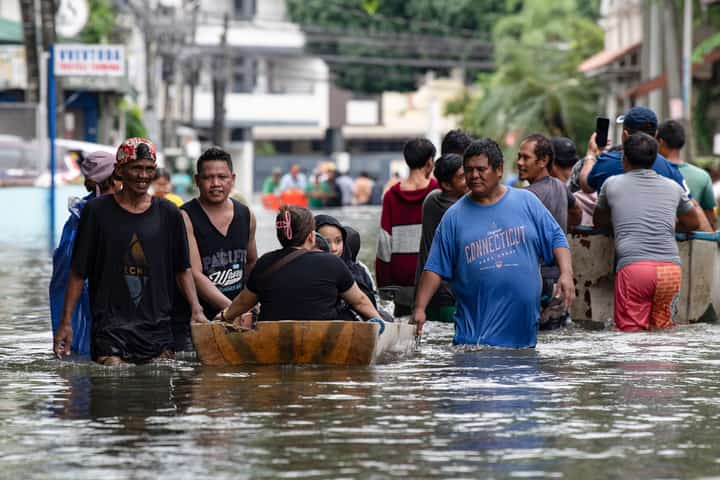
RESIDENTS use improvised rafts to navigate a flooded street in Cainta, Rizal, east of Manila, on 22 July 2025, after torrential monsoon rains submerged communities.
Daily Tribune images/ Agence France-Presse
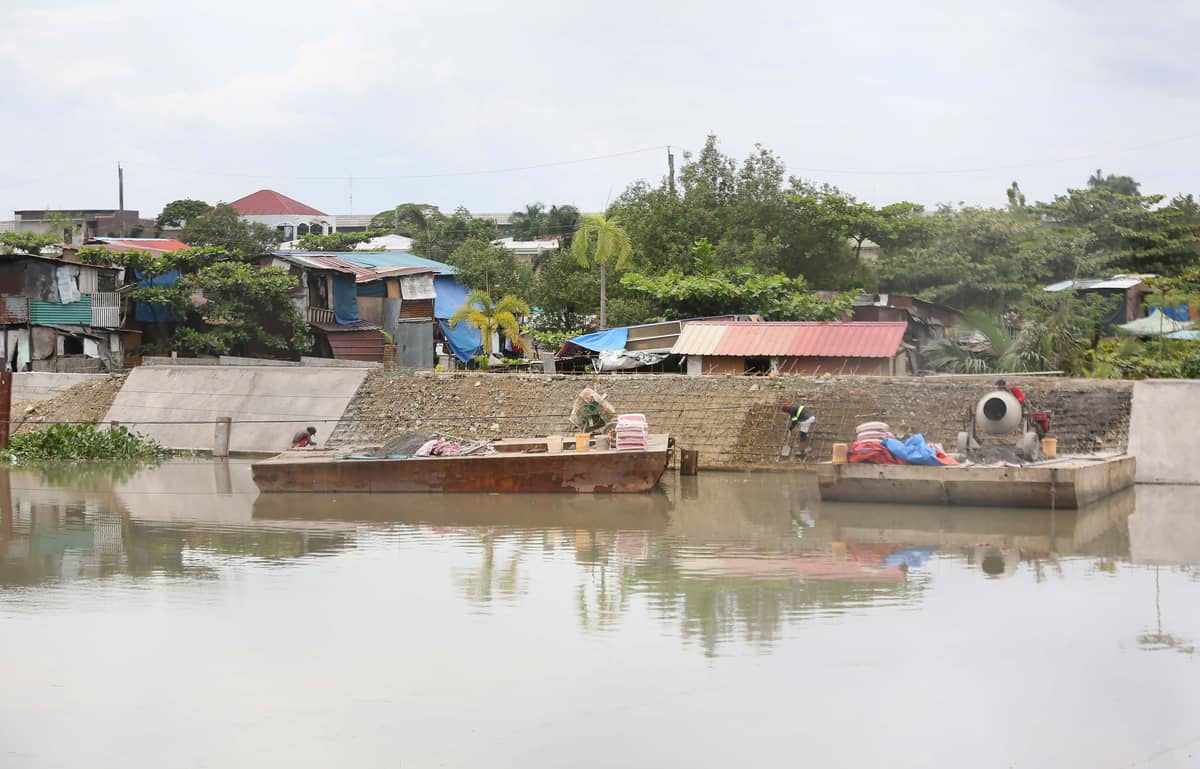
WORKERS hired by contractors of the Department of Public Works and Highways Bulacan 1st District Engineering Office carry out concrete laying for a riverbank protection structure along a waterway in Barangay Santa Cruz, Guiguinto, Bulacan, on Friday, 19 September 2025.
Grit means telling the story as it is, a principle the DAILY TRIBUNE has consistently upheld.
Corruption is deeply rooted in the Philippines. It did not begin under the administration of President Ferdinand Marcos Jr., but many critics argue that it has grown in scale, boldness and impunity during his term.
The DAILY TRIBUNE provides a fearless platform for critical discussions on the misuse of the national budget and the abuse of public funds. Its weekly program, Straight Talk, embodies the newspaper’s enduring motto:
“Without Fear, Without Favor.”
At the heart of bureaucratic corruption is a deeply entrenched principal-agent network involving elected officials and senior government appointees. In this system, those who wield authority are accountability against a political rival," he said.
"We clearly did not see much of the accountability for those at the very top." Where the wound festers The rot also clearly manifested in the health care system, which health advocate Dr. Tony Leachon argued has been critically weakened by chronic underfunding, policy failures, and the diversion of funds intended for universal healthcare.
He likens the country's healthcare system to a patient in the intensive care unit "about to die,"
blaming weak leadership, alleged corruption, and the failure of government officials to prioritize public health. Leachon argued that despite the enactment of the Universal Health Care Act, Filipinos continue to bear one of the highest out-of-pocket healthcare costs in Southeast Asia because the law has not been fully implemented.
A major focus of the interview is the alleged diversion of PhilHealth funds. Leachon said the government has withheld hundreds of billions of pesos that should have been allocated to PhilHealth, including the controversial P60-billion transfer, which the Supreme Court declared unconstitutional. He argued that government subsidies required under the Universal Health Care Act have steadily declined, culminating in zero subsidy for PhilHealth in the 2025 national budget. According to him, this has created a funding gap exceeding P330 billion, which he estimates has now ballooned
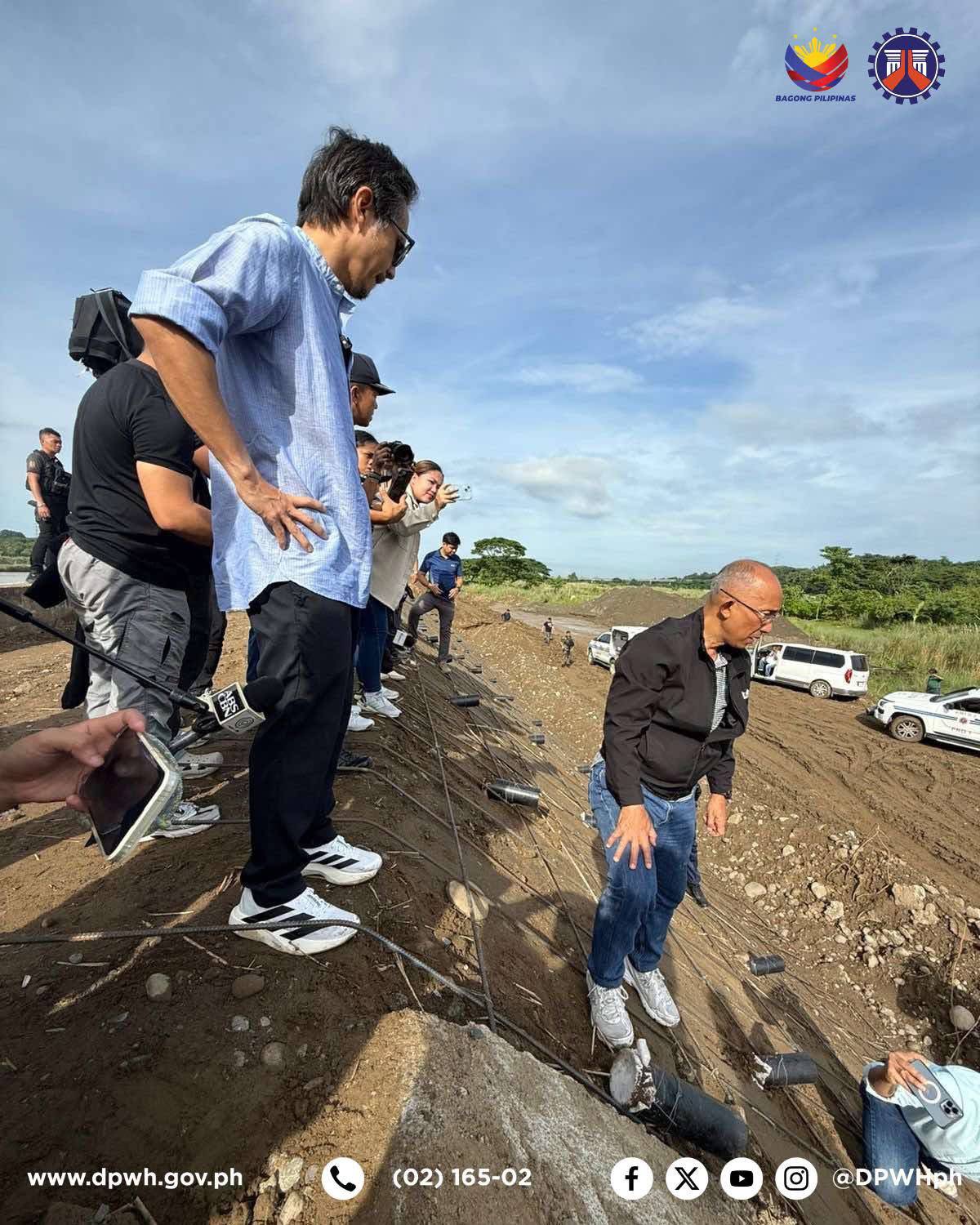
DEPARTMENT of Public Works and Highways Secretary Vince Dizon and Baguio City Mayor Benjamin Magalong inspect what they described as a ‘super substandard’ flood control project in Barangay Acao, Bauang, La Union, on 16 September 2025.
"We want to be optimistic that it's beyond theater," Africa said. "But there's more evidence to show that these anti-corruption drives are more episodic than really a systematic reform movement." He said the national budget continues to reflect what he described as "pork barrel" politics and traditional forms of corruption, arguing that accountability efforts have yet to produce meaningful institutional reforms.
According to Africa, corruption in the Philippines extends beyond individual wrongdoing and is rooted in what he described as elite capture of both the fiscal process and economic policymaking. "Unfortunately, we have elite capture of the fiscal process," he said.
"We should also count as corruption oligarchic capture of the economic policy process." Africa argued that the close relationship between political parties and some of the country's wealthiest families has reinforced the concentration of both economic and political power, making genuine reforms more difficult. He also identified political dynasties, campaign finance practices, and entrenched elite influence as institutional factors that continue to perpetuate corruption.
Although he acknowledged that some recent investigations have resulted in greater budget accountability, Africa maintained that enforcement has been uneven. "We did see a little bit of budget where Congress turns its members' wish lists into law. Associate Justice Ramon Hernando did not bother with diplomatic restraint.
He coined IHUAS or "I hate unprogrammed appropriations" since, he said, the UA is so heavy it won't fit in one suitcase. It needs several. The image lands because everyone in that session hall has spent the year reading testimony from the "Brave 18" ex-Marines about cash-stuffed luggage moving through flood-control kickback chains tied to Department of Public Works and Highways (DPWH) allocations that have repeatedly migrated from programmed to unprogrammed status.
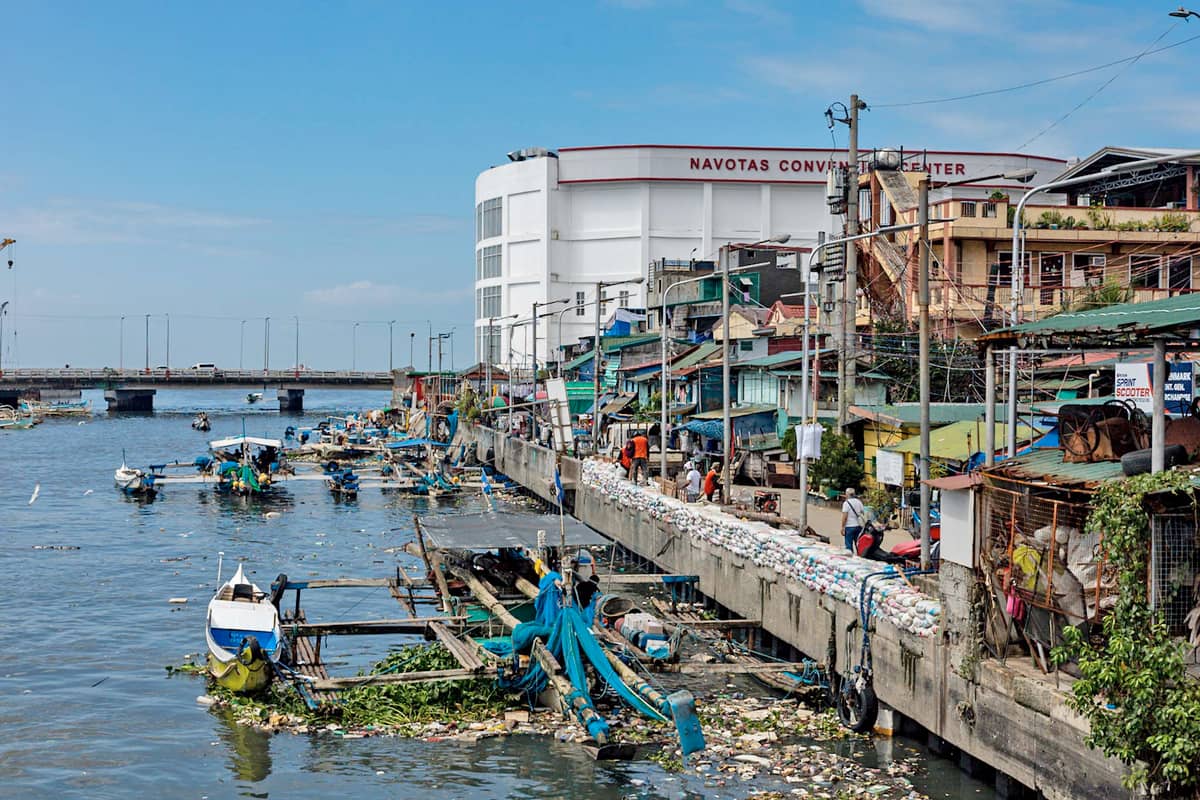
CONSTRUCTION workers from the Department of Public Works and Highways rebuild a section of a seawall damaged by super typhoon ‘Uwan’ in Barangay Bagumbayan South, Navotas City, on 12 November 2025.
The North-South Commuter Railway and the Metro Manila subway are among projects whose funding was reclassified as "standby" to allow the Bicam to park several legislators' pet projects. Anti-graft drive selective The government's anti-corruption campaign has largely been selective and has failed to address the deeper structural causes of corruption, according to IBON Foundation executive director Sonny Africa.
Speaking on Straight Talk, Africa said recent anti-corruption initiatives have shown signs of targeting specific individuals while leaving intact the political and economic structures that enable corruption. which is standby spending, triggered, on paper, only when government revenue beats the target.
Senior Associate Justice Marvic Leonen sought an explanation from Solicitor General Darlene Berberabe on how the UA, which stood at P251.64 billion in 2022, hit P807.16 billion in 2023, more than triple, in the first budget of the Marcos administration.
It was sustained at P731.4 billion in 2024, P531.7 billion in 2025, and P150.9 billion in 2026, even after Malacañang vetoed seven of 10 line items, a number the Palace called the "bare minimum," conveniently omitting that the minimum was still the product of a process nobody outside the Department of Budget and Management (DBM) reviews. In the past 20 years, Congress approved UA exceeding the President's own proposal only five times. Three of those five were in the last three budgets. According to University of the Philippines School of Economics (UPSE) professor emeritus Solita Monsod, the UA has become "the place to hide lump sum appropriations," particularly those the Bicam inserted after both chambers have already passed their separate versions, in a process devoid of a legislative vote or debate.
The Bicam is supposed to reconcile two bills. It has become the laundromat which is standby spending, triggered, on paper, only when government revenue beats the target. Senior Associate Justice Marvic Leonen sought an explanation from Solicitor General Darlene Berberabe on how the UA, which stood at P251.64 billion in 2022, hit P807.16 billion in 2023, more than triple, in the first budget of the Marcos administration. It was sustained at P731.4 billion in 2024, P531.7 billion in 2025, and P150.9 billion in 2026, even after Malacañang vetoed seven of 10 line items, a number the Palace called the "bare minimum," conveniently omitting that the minimum was still the product of a process nobody outside the Department of Budget and Management (DBM) reviews. In the past 20 years, Congress approved UA exceeding the President's own proposal only five times.
Three of those five were in the last three budgets. According to University of the Philippines School of Economics (UPSE) professor emeritus Solita Monsod, the UA has become "the place to hide lump sum appropriations," particularly those the Bicam inserted after both chambers have already passed their separate versions, in a process devoid of a legislative vote or debate. The Bicam is supposed to reconcile two bills. It has become the laundromat system, those who wield authority are structurally incentivized to extract resources from the very institutions they are entrusted to lead. Career bureaucrats, the agents, cooperate or face stalled careers, reassignment or worse. The abusive system is built into the architecture of a unitary executive, weak legislative oversight and an underfunded judiciary.
The enabling conditions are the opacity in budget execution. The Department of Budget and Management (DBM) holds extraordinary discretionary power over the release of allotments. Agencies depend on political goodwill to fund their own operations. The Supreme Court has been handling the budget cases since 16 June, when the last round of oral arguments closed, and the parties were ordered to file their memoranda. Four consolidated petitions involving three General Appropriations Acts - 2024, 2025, 2026 are at bar.
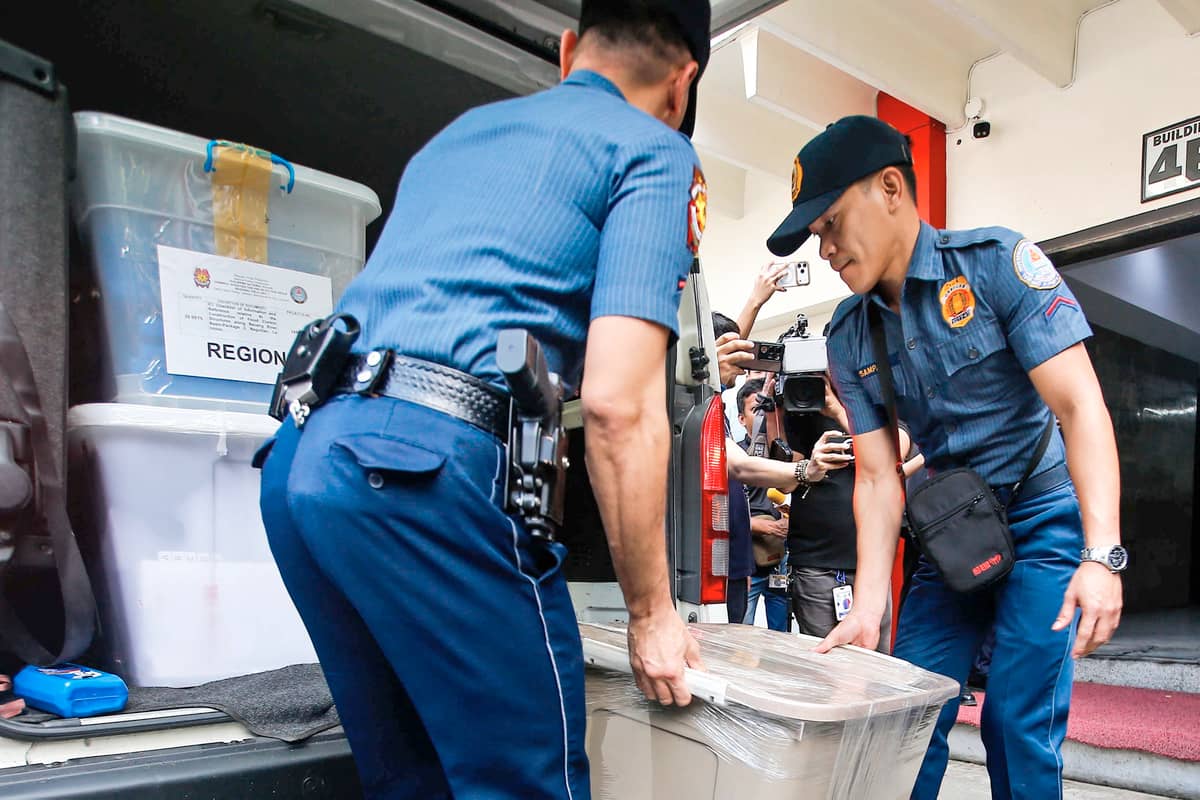
PHILIPPINE National Police personnel unload boxes of documents linked to an investigation into flood control projects in La Union at the Independent Commission on Infrastructure compound in Taguig City on 1 December 2025
The debate centers on the Bicameral Conference Committee (Bicam) that turns a line-item appropriations bill into a lump-sum slush fund, a practice that runs counter to Constitutional limits. Such items are lumped under Unprogrammed Appropriations (UA), individual wrongdoing alone. He called for sweeping public-sector reforms, stronger administrative capacity, an overhauled procurement system, and updated legislation to keep pace with evolving forms of graft.
Marcos overpromised
underdelivered Dionisio aimed for the Marcos administration’s anti-corruption record, saying it has overpromised and underdelivered. Repeated announcements without follow-through — prosecutions, convictions, concrete reforms — have steadily eroded public confidence in the campaign against corruption, he said. Asked about President Marcos’ sliding approval ratings, Dionisio said the President, as head of government, inevitably shoulders responsibility for the country’s compounding crises: inflation, the global energy crunch, education shortfalls and disaster response failures.