
Where Rizal, Ilustrados hung out in Madrid
Founded in 1856, Viva Madrid is one of the city’s oldest and most iconic taverns, located in the historic Barrio de las Letras, home to celebrated Spanish writers like Miguel de Cervantes and Lope de Vega.


Home to propagandists
This Independence Month and the birth month of Philippine National Hero Dr. Jose Rizal, let us revisit the places where Rizal and his friends, Felix Resurreccion Hidalgo, Juan Luna and other Ilustrados used to meet, debate, write and socialize in Madrid, Spain.
Our first stop, where Rizal is honored with a historical marker: Viva Madrid.
Founded in 1856, Viva Madrid is one of the city’s oldest and most iconic taverns, located in the historic Barrio de las Letras, home to celebrated Spanish writers like Miguel de Cervantes and Lope de Vega.
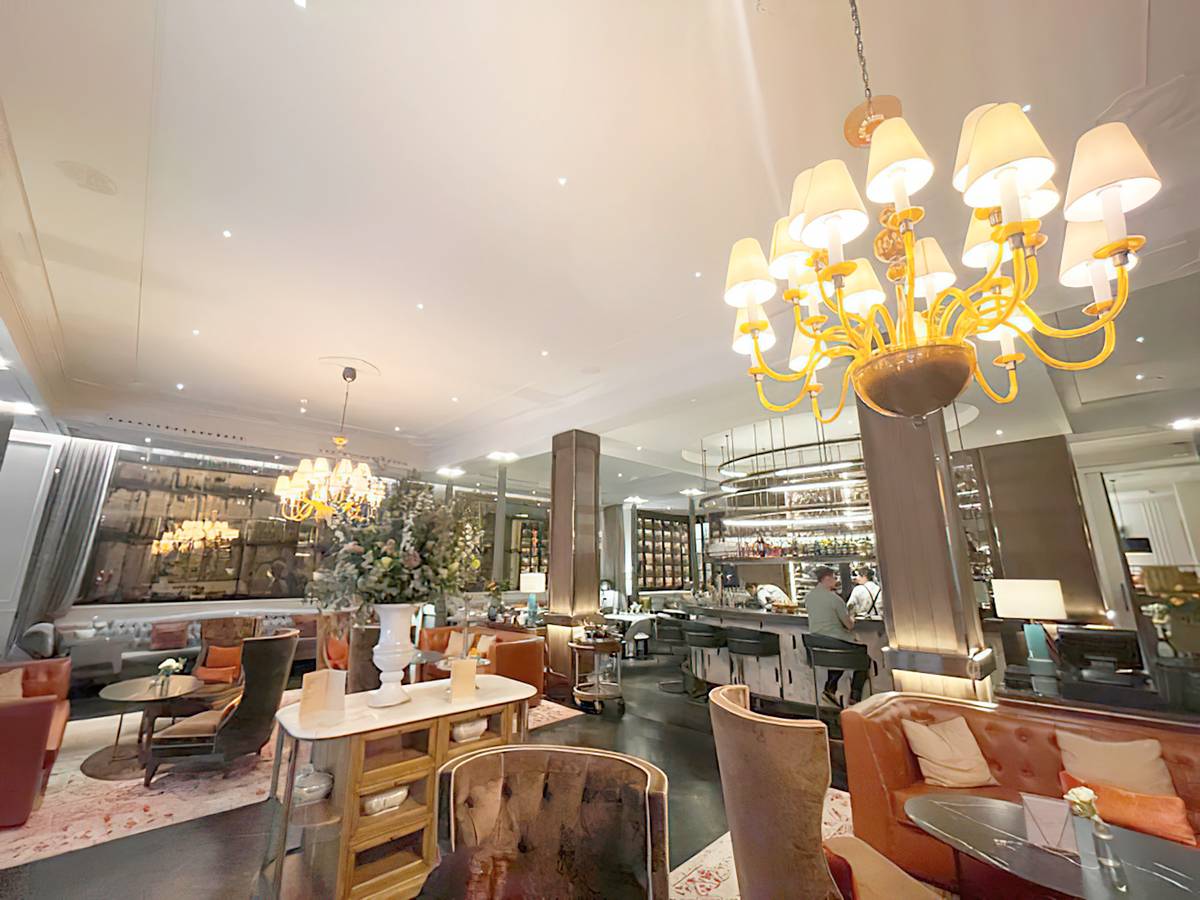
LOBBY in all its timeless charm — high stucco ceilings, warm lighting, and original details beautifully preserved.
Viva Madrid has long been known for its colorful tiled azulejos exterior depicting Plaza de Cibeles, a square with a neo-classical complex of marble sculptures and fountains that has become a symbol of Madrid. The tavern served as a popular hangout for 19th-century Filipino reformers, including Rizal.
During the 1880s, Dr. Jose Rizal lived in an apartment around the corner on Calle Echegaray, renamed in honor of the Spanish dramatist and Nobel laureate José Echegaray. Formerly known as Calle del Lobo (Wolf Street), Calle Echegaray is near Viva Madrid, so Rizal frequently met his compatriots there to dine on tapas, drink wine and plan libertarian reforms for the Philippines. It was also a frequent watering hole for propagandists like Graciano López Jaena.
Los Gabrieles: Skeletons and the ‘Sistine Chapel’
The famous “skeleton” murals of Los Gabrieles restaurant on Calle Echegaray in Madrid left a permanent mark on Philippine literature when national hero Dr. Jose Rizal wrote to his sisters to describe these satirical and macabre artworks depicting a band of skeletons playing musical instruments.
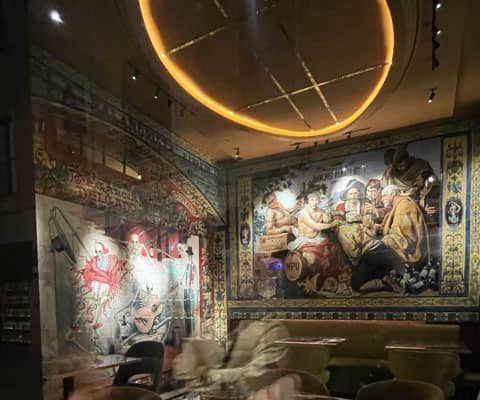
INTERIOR of Los Gabrieles, a historic tavern in Madrid, Spain, reopened in 2026 after a lengthy closure.
Before Los Gabrieles was established in 1907 as a hub for artists and flamenco, the murals had already been there at the restaurant’s predecessor, an affordable dining hall with private back rooms, where the ceramic tile murals served as the dark and Bohemian backdrop for Rizal, Marcelo H. del Pilar and their fellow Ilustrados, or Filipino intellectuals, to debate their homeland’s future.
During that time in the 1880s, while the Philippines was under strict Spanish colonial and clerical rule that made free speech, open political organization and non-religious publishing impossible, Madrid was experiencing a wave of liberal political philosophy, making it a breeding ground for reformists like Rizal and the Ilustrados.
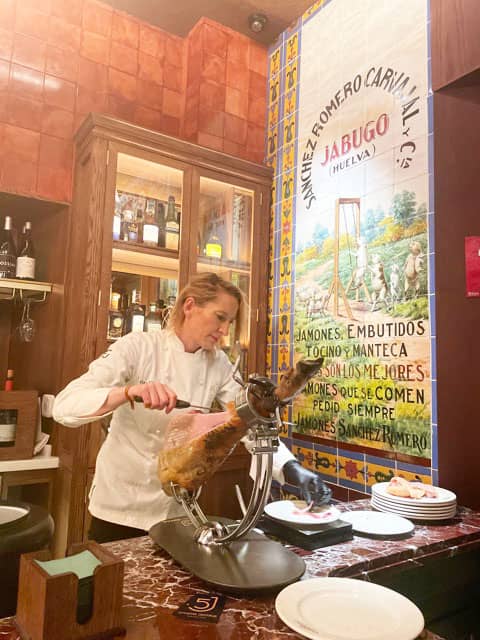
THE meat is hand-carved into thin slices, a process meant to be performed slowly to release the nutty flavor of the ham.
Following more than two decades of closure, Los Gabrieles recently reopened after a significant restoration that included the famous skeleton murals and other hand-painted 20th-century ceramic murals that earned it the moniker “the Sistine Chapel of Tiles.”
Apart from Rizal and his compatriots, the place was frequented by famous bullfighters and celebrities like Federico García Lorca, Ava Gardner and Javier Bardem. Today, while keeping its historic 19th-century tavern aesthetic, Los Gabrieles operates as a modern cocktail and aperitif bar, serving tapas, vermouth, classic drinks and some of the best Jamón Ibérico (Iberian ham) in all of Madrid.
Afternoon tea at Gran Hotel Inglés
On 25 June 1884, Hotel Inglés on Calle Echegaray, Madrid, hosted a grand celebratory banquet honoring two Filipino painters who won major awards at the Madrid Exposition: Juan Luna (who won gold for Spoliarium) and Félix Resurrección Hidalgo (who won silver for Virgenes Cristianas Expuestas al Populacho).
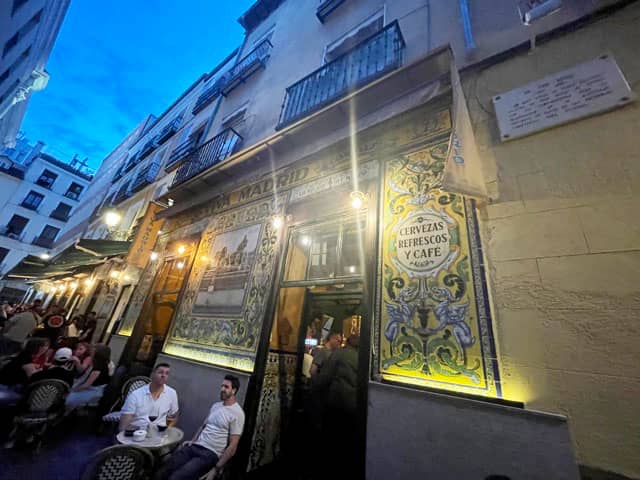
VIVA Madrid, a historic tavern in Madrid, Spain was established in 1856 and is known for its traditional tapas, cocktails and colorful ceramic tile facade.
During this banquet, the 23-year-old Jose Rizal delivered a legendary, fiery speech. First, he praised his friends’ masterpieces as symbols of freedom, then challenged the Spanish colonial establishment by declaring that genius knows no geographical boundaries and that the “indio” could equal or even surpass the colonial masters if given the chance. This speech is widely considered a foundational moment in the Philippine Propaganda Movement.
Now known as the Gran Hotel Inglés, the 19th-century five-star grand deluxe hotel is the city’s oldest hotel, having opened in 1886. It has since been restored as an Art Deco-style boutique hotel and was a 2024 recipient of the prestigious One Michelin Key, recognizing it as one of the most exceptional hotels in Spain.
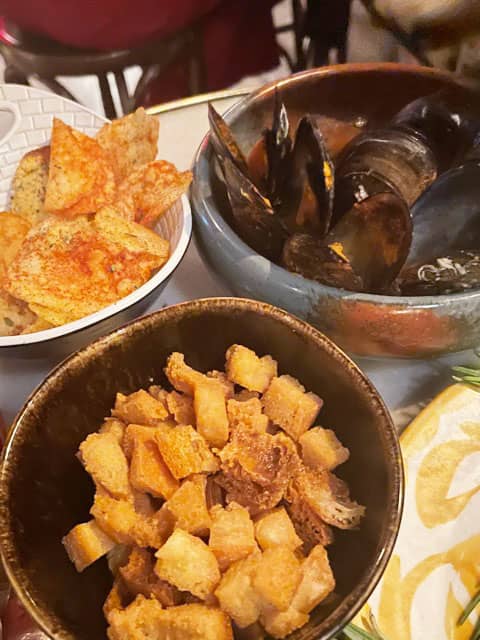
MUSSLS with seasoned chips and snacks.
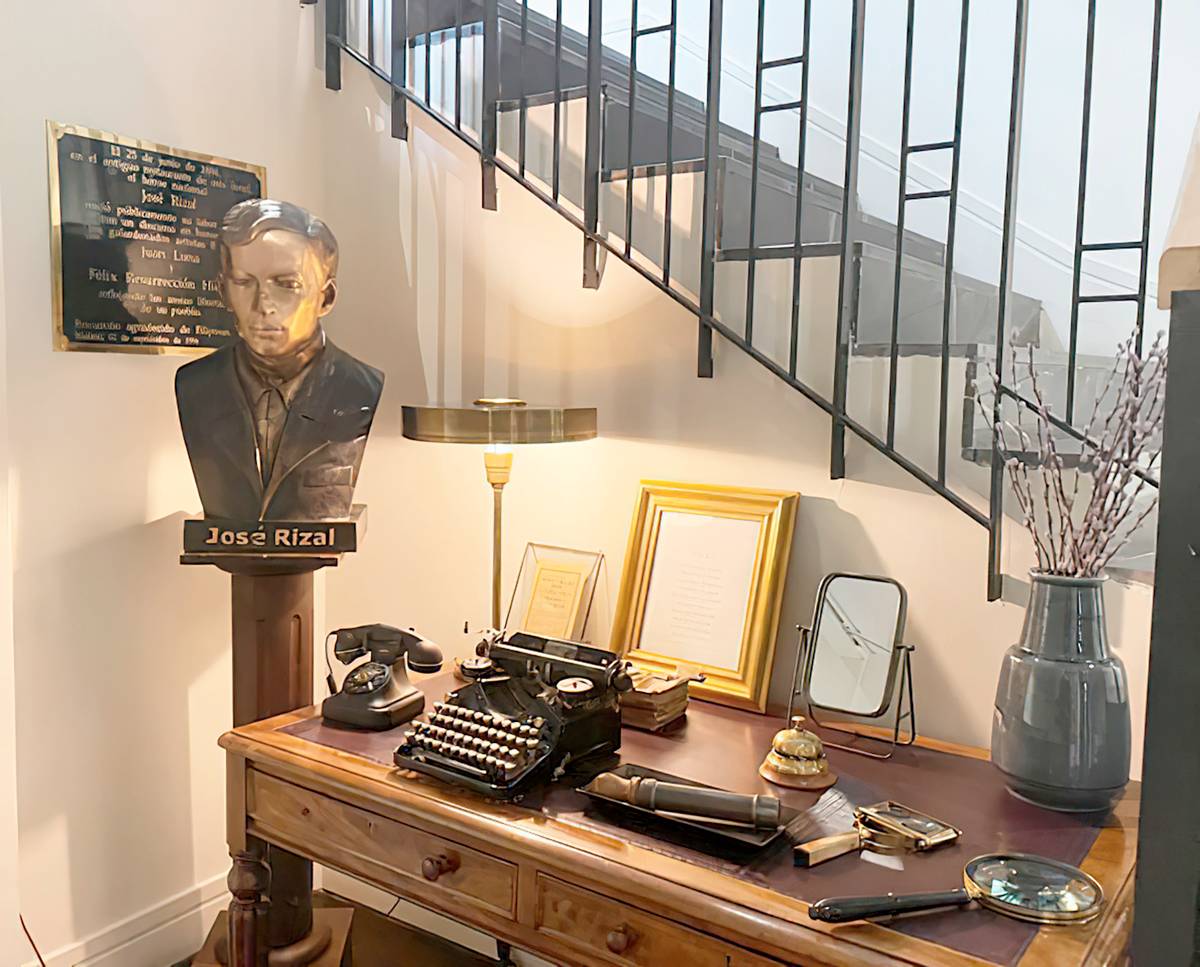
In 2022, the Philippine Embassy in Madrid, along with the National Historical Commission of the Philippines (NHCP), donated a bronze bust of Jose Rizal to the hotel. The hotel proudly displays Rizal’s bust in the lobby, along with historical mementos and plaques.