
Samar cobra rescued, released in Matalam

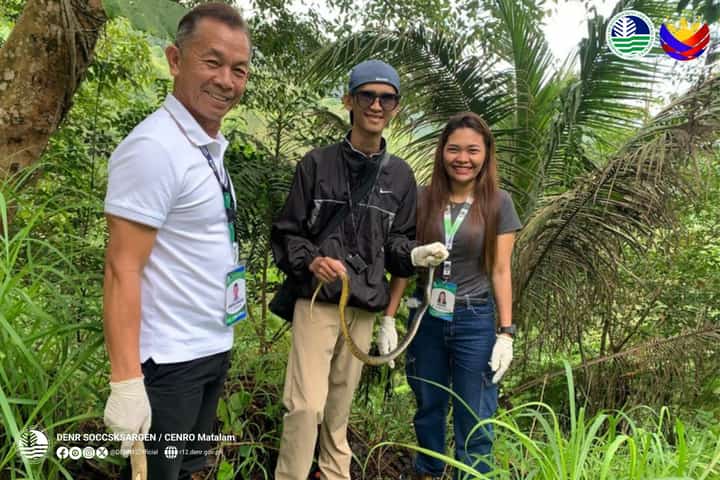
Residents reported that a Samar cobra (𝘕𝘢𝘫𝘢 𝘴𝘢𝘮𝘢𝘳𝘦𝘯𝘴𝘪𝘴) was in their area, prompting the Bureau of Fire Protection (BFP) to capture the animal and return it to its natural habitat in Matalam, Cotabato on 23 June 2026.
Wildlife personnel conducted a health and morphological assessment before the release and found the snake to be an adult male, measuring 0.4 meters in length and weighing approximately 280 grams.
The examination showed no injuries, confirming that the highly venomous cobra was fit to return to the wild.
The Samar cobra is endemic to the southern Philippines and is primarily found in the Visayas and Mindanao island groups.
Although the species is often feared due to its venom and is sometimes killed when encountered near communities, it plays a crucial role in maintaining ecological balance. Wildlife authorities stressed the need for stronger Information, Education, and Communication campaigns to help residents understand the species and promote safe coexistence with wildlife.
Under Department of Environment and Natural Resources Administrative Order No. 2019-09, the Samar cobra is classified as an Other Threatened Species.
While it is not currently listed as critically endangered, endangered, or vulnerable, the species requires strict monitoring and protection because it may become more threatened by habitat pressures and human persecution.
Authorities encouraged the public to report wildlife sightings to concerned agencies instead of harming or killing animals found in residential areas.