
Budget watchdog: Public must be part of process
Budget documents run thousands of pages long and are filled with technical language that can be difficult for the public to decipher.


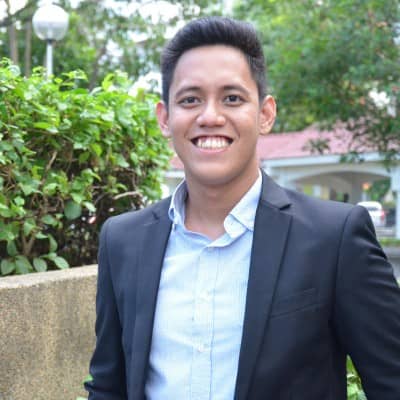
TRACKING every peso People’s Budget Coalition co-convenor AJ Montesa is an advocate of inclusive recovery through better, more transparent spending of taxpayer money. He has been pushing back against pork barrel and patronage politics in the national budget process.
Photograph courtesy of People’s Budget Coalition
For AJ Montesa, the national budget should not be a document understood only by politicians, bureaucrats and policy experts. It should belong to the public.
As an adviser to the People’s Budget Coalition, Montesa has spent the last six years helping ordinary Filipinos navigate one of the government’s most technical and often least-understood processes — the allocation of public funds.
Speaking on DAILY TRUBUNE’s Straight Talk on Wednesday, Montesa described a mission rooted in a simple belief, which is that citizens deserve a seat at the table where decisions on public spending are made.
“We should have people in the room where it happens,” he said.
That conviction helped shape the People’s Budget Coalition, which began during the Covid-19 pandemic in 2020.
What started as an effort to monitor budget realignments for pandemic response has since grown into a network of around 60 organizations composed of civil society groups, people’s organizations, church leaders, academics and sectoral representatives.
The coalition emerged at a time when the government was redirecting resources to address a public health crisis.
Montesa and fellow advocates wanted to ensure that spending reflected the needs of ordinary Filipinos, from healthcare requirements to transportation concerns for essential workers.
Behind the coalition’s work is a challenge that Montesa says often keeps citizens away from budget discussions: complexity.
Budget documents run thousands of pages long and are filled with technical language that can be difficult for the public to decipher.
Yet Montesa believes the information is already there for anyone willing to look closely.
Transparency key to clean budget
“What we do is we try to work line by line,” he said.
That means poring over voluminous budget documents, conducting technical analyses, working with grassroots organizations and helping communities determine whether government projects were properly implemented.
The task has increasingly drawn Montesa into debates over flood-control spending, one of the most scrutinized areas of public expenditure in recent years.
“We’re not saying that all flood control projects are pork barrel because, of course, we experience flooding. We definitely need flood control projects, right? That’s a different story altogether. What we’re pointing out is the process by which the amount itself is formulated, where the funds go, which district engineering office receives them, and which projects are identified,” according to Montesa.
If that process is driven purely by political interests rather than by technical considerations or multisectoral consultation, that’s where the system becomes vulnerable to corruption. That’s where it becomes susceptible to pork barrel politics, which gives the spoils to the victor, so to speak.
According to him, a gap often emerges between technical planning and political decision-making.
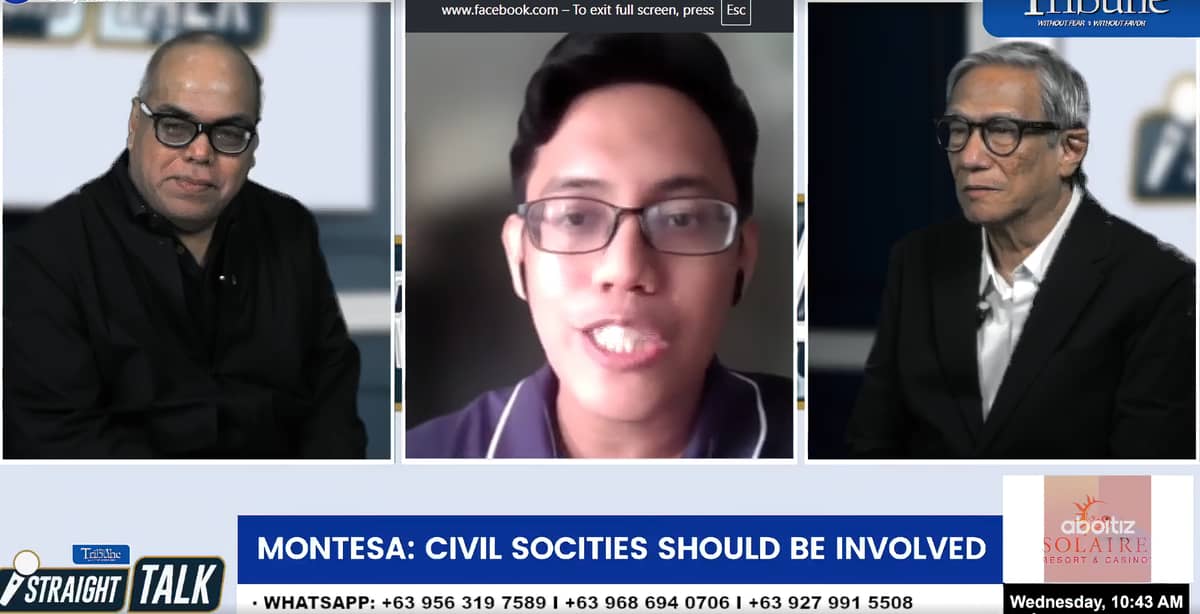
SMARTER flood spending The rain-drenched country needs flood-control projects, but the government must change how funds for them are spent, Philippine Budget Coalition co-convenor AJ Montesa (middle) explained to Straight Talk hosts Chito Lozada (left) and Teddy Montelibano.
Screengrab from Straight Talk
While government agencies formulate spending proposals based on data and planning requirements, he said congressional amendments can alter allocations once budgets enter the legislative process.
For Montesa, transparency is the key safeguard.
“We’re not against legislators, congressmen, and senators enacting a budget as they see fit,” he said.
“However, I think the process needs to be more transparent.”
That advocacy has taken the coalition beyond monitoring and into reform efforts.
Montesa pointed to engagements with lawmakers, including initiatives during the tenure of former Senate Finance Committee chairman Sherwin Gatchalian that opened budget amendment tracking to public scrutiny and required local government units to submit documentation for certain spending proposals.
As leadership in Congress changes, Montesa said he hopes such reforms will continue.
“We hope that he will continue to make all of these public documents open,” he said of Senator Mark Villar.
But perhaps the coalition’s most consistent message is that budget oversight should not be left solely to government institutions.
Montesa has repeatedly pushed for a legislated and funded multisectoral body that could independently review infrastructure projects and budget controversies, arguing that public trust can only be rebuilt through greater transparency and citizen participation.
For him, accountability is not merely about investigating anomalies after they happen. It is about creating systems that allow citizens to follow public money every step of the way.
“They have to really change the system and show us that they deserve our trust again,” Montesa said.